

How to Decorate a Bedroom with Natural Materials
There’s a specific kind of calm that comes from a bedroom built around natural materials — wood, linen, wool, rattan, stone — and it’s not just aesthetic. In my experience, rooms full of synthetic finishes and mass-produced furniture tend to feel a little flat no matter how well they’re arranged, while a room grounded in real materials has a warmth and texture that’s hard to fake. Natural materials also tend to age well, which matters a lot in a room you’ll be spending years of your life in.
I’ve noticed that people often assume decorating with natural materials means an expensive overhaul — solid wood furniture, custom linen bedding, a full rattan headboard. A mistake many homeowners make is thinking it’s all or nothing, when really this approach works in layers. You don’t need to replace everything at once. A few well-chosen natural elements, added gradually, can shift a bedroom’s whole feel without requiring a complete furniture swap.
This article walks through how to decorate a bedroom with natural materials step by step, covering everything from bedding and furniture to lighting and wall treatments. You’ll get the reasoning behind why certain materials work so well together, along with practical, budget-conscious ways to bring each one into your space. Whether you’re starting from scratch or slowly updating an existing bedroom, these ideas are meant to be approachable at any stage.
One thing that works especially well with natural materials specifically is mixing textures rather than matching them exactly. That’s the thread running through everything below, and it’s a big part of why bedrooms built this way tend to feel layered, collected, and genuinely calming.
Table of Contents
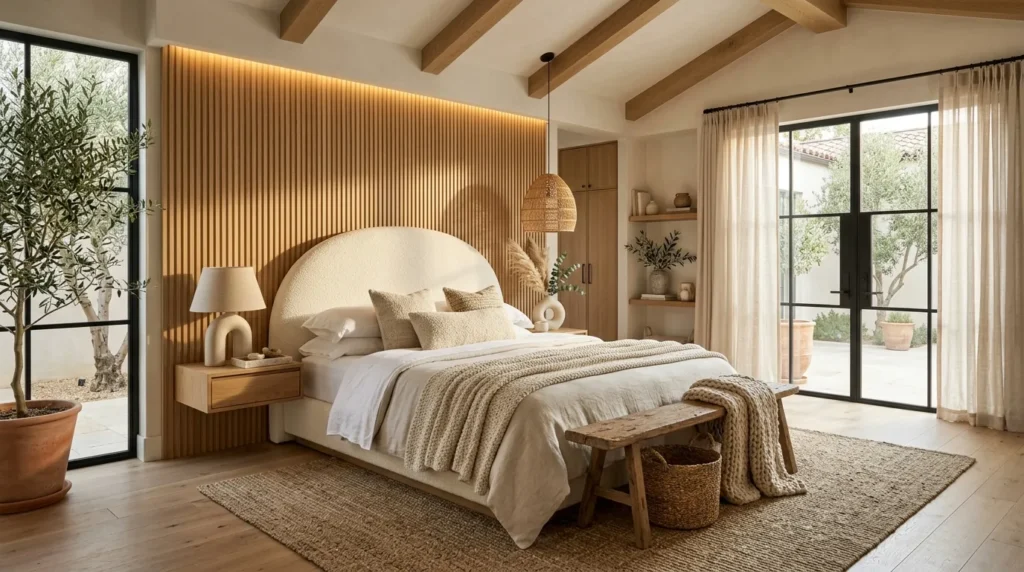
- Solid Wood Furniture Pieces — Anchoring the room in durable, warm materials.
- Linen Bedding Layers — Breathable, textured fabric for everyday comfort.
- Wool and Jute Area Rugs — Natural fiber flooring that adds warmth underfoot.
- Rattan and Wicker Accents — Lightweight texture for lamps, mirrors, and storage.
- Stone and Ceramic Details — Small tactile elements for surfaces and decor.
- Woven Window Treatments — Natural fiber shades and curtains for soft light.
- Untreated Wood Wall Accents — Simple wall treatments using raw material texture.
- Natural Fiber Lighting Fixtures — Warm, textural lighting beyond basic lamps.
- Dried and Potted Botanicals — Bringing organic life into the room.
- Cotton and Wool Throw Layers — Soft, breathable textiles for everyday warmth.
1. Solid Wood Furniture Pieces
Quick Benefits
- Provides durable, long-lasting furniture that ages well
- Adds warmth that synthetic materials can’t replicate
- Works across a wide range of design styles
- Available secondhand at a fraction of new retail cost
- Anchors the room’s natural material palette
Why It Works
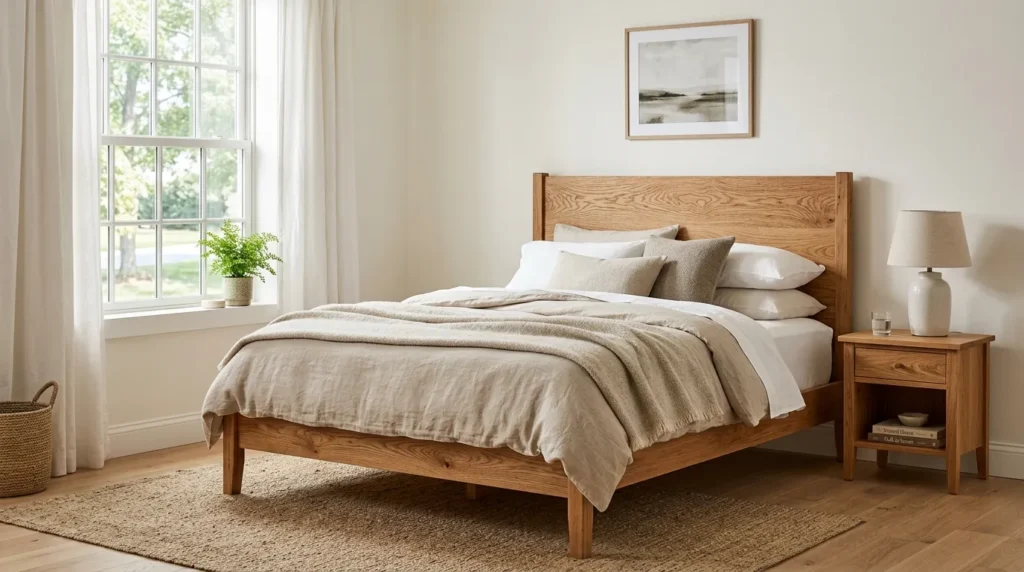
Furniture is the largest visual presence in most bedrooms, which makes it the natural starting point for a natural-materials approach. Solid wood — whether oak, walnut, pine, or reclaimed timber — brings a warmth and richness that engineered wood or laminate simply can’t match, both in how it looks and how it feels to actually live with over time. That’s why many designers recommend prioritizing solid wood for at least the bed frame and one or two other key pieces, since these larger items set the tone for everything else in the room.
How To Style It
Start with your bed frame, since it’s the largest piece in the room and has the biggest visual impact on the overall material story. If a full solid wood bed isn’t in the budget right away, a solid wood nightstand or dresser is a smaller, more affordable place to start. Secondhand marketplaces and estate sales are excellent sources for solid wood furniture, often at a fraction of new retail prices, and older pieces are frequently better constructed than budget new alternatives. Look for visible wood grain and joinery as signs of solid construction rather than a printed wood-grain laminate.
2. Linen Bedding Layers
Quick Benefits
- Breathable and comfortable for everyday sleep
- Adds natural texture to the room’s largest textile surface
- Softens and looks better with age and washing
- Available at a range of price points
- Pairs easily with most other natural materials
Why It Works
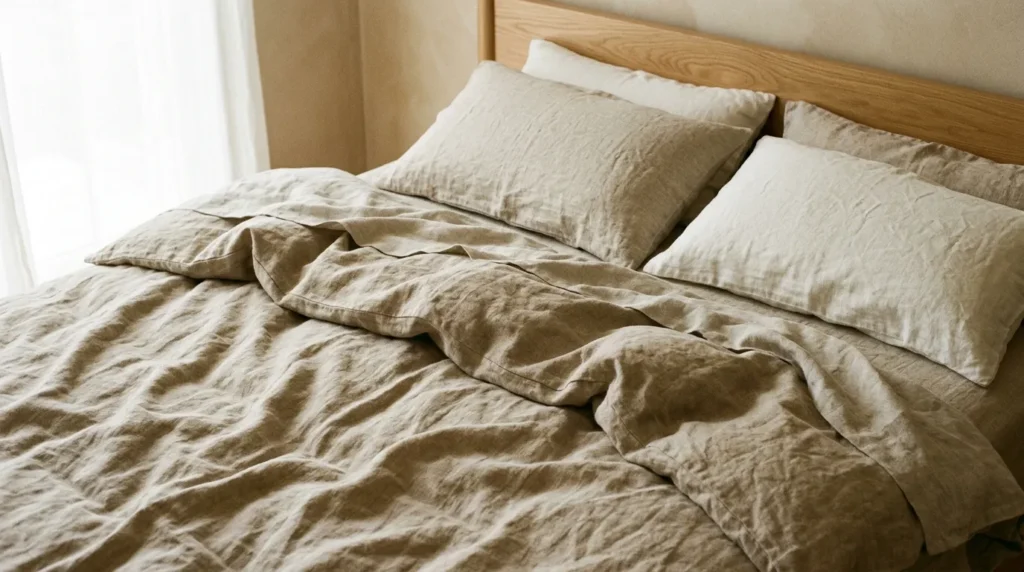
Linen has become a go-to choice for natural-material bedrooms because it does double duty: it’s genuinely comfortable and breathable for sleeping, and it brings a relaxed, textured look that synthetic blends can’t replicate. In my experience, linen bedding also tends to look better over time, since the fabric softens and develops a slightly rumpled, lived-in texture with each wash rather than looking worn out. A mistake many homeowners make is expecting linen to look perfectly crisp and pressed, when the slightly relaxed, textured look is actually part of the appeal.
How To Style It
Choose a linen duvet cover and pillowcases in a warm neutral tone — oatmeal, sand, or soft white all work well and age gracefully. If a full linen bedding set isn’t in the budget, start with a linen duvet cover alone, since it has the largest visual impact and can be layered over your existing sheets. Wash and dry linen according to the care instructions, since proper laundering actually improves the fabric’s texture and softness over time. Pair linen bedding with a wool or cotton throw blanket for added warmth and textural contrast.
3. Wool and Jute Area Rugs
Quick Benefits
- Adds warmth and softness underfoot
- Natural fibers tend to be more durable than synthetic blends
- Available in both plush and flat-weave textures
- Anchors the furniture arrangement visually
- Works well layered or used alone
Why It Works
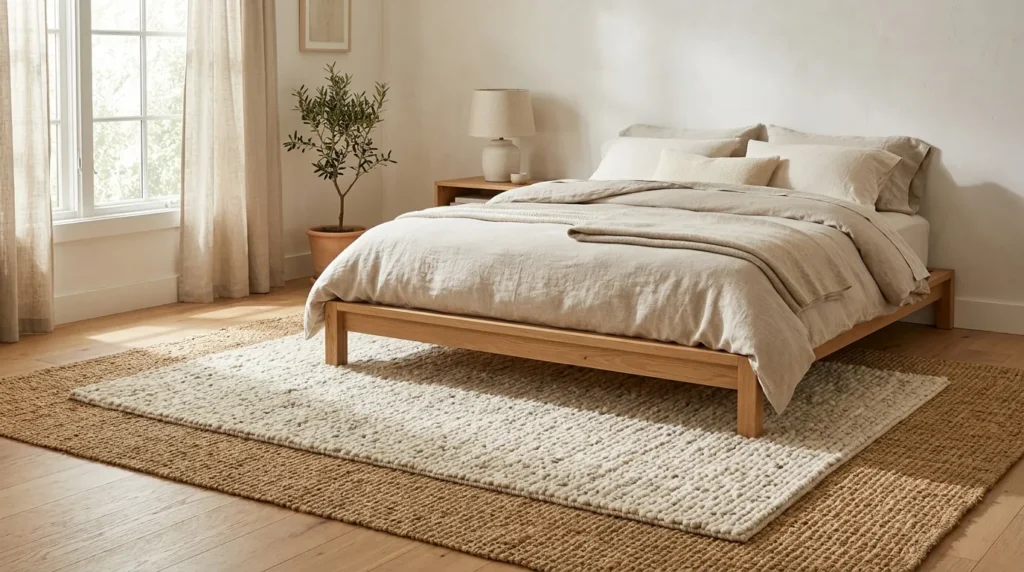
Flooring is often overlooked in natural-material decorating, but a wool or jute rug does significant work both physically and visually — softening the first steps out of bed each morning and grounding the room’s overall material palette. Wool rugs bring a plush, insulating texture, while jute offers a flatter, more rustic weave that pairs beautifully with wood furniture and linen textiles. I’ve seen this idea transform bedrooms with hard flooring in particular, since a natural fiber rug adds both comfort and visual warmth in one addition.
How To Style It
Choose a wool rug for a softer, cushier feel underfoot, or a jute rug for a more textured, natural look with a slightly rougher weave. Size the rug so it extends at least a foot or two beyond the sides of the bed, which helps it feel proportional to the room rather than like an afterthought. Layering a smaller wool rug on top of a larger jute one is a popular way to combine the softness of wool with the texture of jute in a single space. Vacuum according to the manufacturer’s care instructions, since natural fiber rugs generally require gentler cleaning than synthetic ones.
4. Rattan and Wicker Accents
Quick Benefits
- Adds lightweight texture without visual heaviness
- Works well for lamps, mirrors, headboards, and storage
- Budget-friendly compared to solid wood furniture
- Pairs naturally with linen and wool textiles
- Easy to source secondhand or from budget retailers
Why It Works
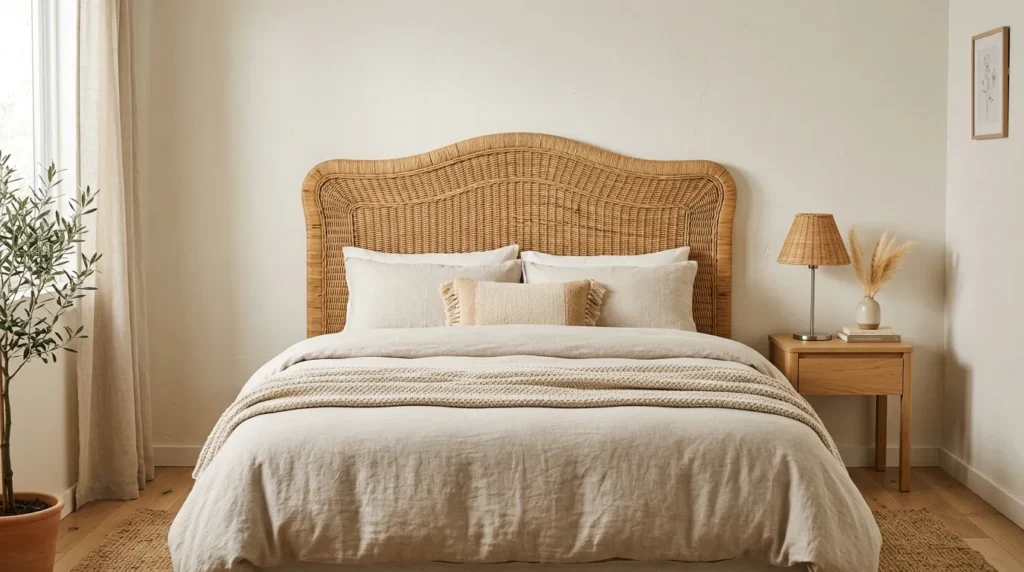
Rattan and wicker bring a distinct woven texture that adds visual interest without feeling heavy or bulky, which makes them especially useful in bedrooms where you want warmth without overcrowding the space. A rattan headboard, mirror frame, or pendant light introduces natural material texture on a smaller, more affordable scale than larger wood furniture pieces. A mistake many homeowners make is assuming rattan only suits a coastal or bohemian aesthetic, when in reality a simple, clean-lined rattan piece works well in a wide range of bedroom styles.
How To Style It
A rattan or cane headboard is one of the most popular starting points, since it introduces texture at the largest visual point in the room without requiring a full furniture replacement. Rattan mirror frames, pendant lights, or a woven storage basket are smaller, more affordable ways to bring in the same material if a headboard isn’t practical right now. Keep the rest of the room’s furniture in complementary warm wood tones so the rattan feels connected to the overall palette rather than an isolated accent. Secondhand shops and marketplaces are excellent sources for vintage rattan pieces, which often have more character than new mass-produced versions.
5. Stone and Ceramic Details
Quick Benefits
- Adds tactile variety beyond wood and textile materials
- Introduces subtle material contrast for visual depth
- Long-lasting and low-maintenance
- Works well in small decorative doses
- Pairs naturally with warm wood and linen tones
Why It Works
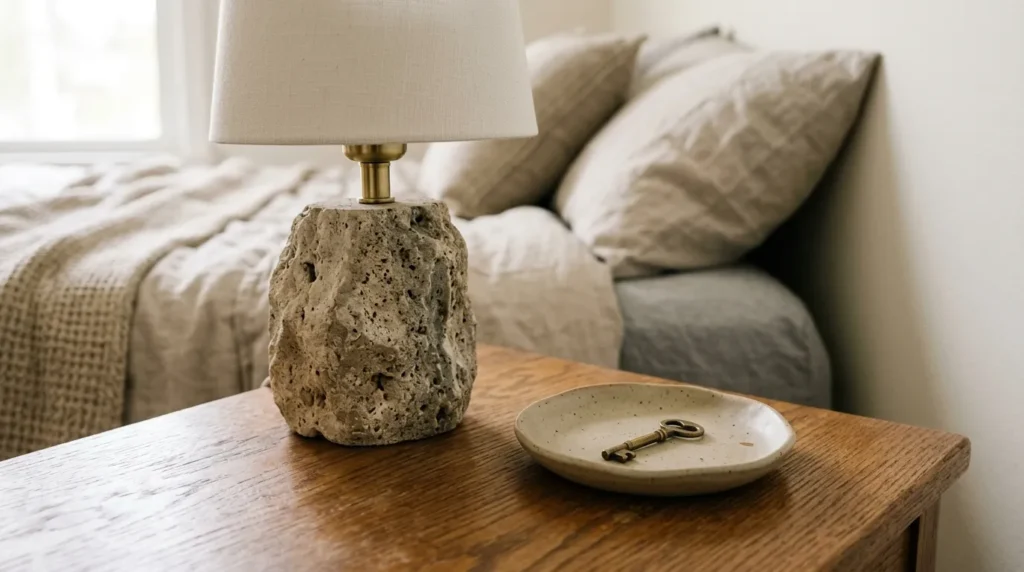
Stone and ceramic details round out a natural-materials bedroom by introducing a cooler, smoother tactile element alongside all the warmth from wood, linen, and rattan. A small stone lamp base, a ceramic vase, or a marble tray adds material variety that keeps the room from feeling one-note, even though every element still falls within the natural-materials category. In my experience, this kind of small material contrast is what separates a bedroom that feels intentionally layered from one that feels like it’s leaning too hard on a single texture.
How To Style It
Introduce stone or ceramic through smaller decorative pieces — a lamp base, a vase, a small dish for jewelry or trinkets on the nightstand — rather than large furniture investments. Choose finishes and tones that complement your existing wood and textile palette, such as a warm-toned stone or a matte ceramic in a neutral shade. A ceramic or stone bowl on a dresser top is a simple, functional way to add this material without much cost or commitment. Keep these details to a few well-placed pieces rather than scattering them throughout the room, since restraint keeps the look intentional.
6. Woven Window Treatments
Quick Benefits
- Filters natural light softly and evenly
- Adds texture to windows without heavy fabric drapery
- Works well alongside linen curtains for layered texture
- Available in a range of natural fiber options
- Suits both minimal and layered bedroom styles
Why It Works
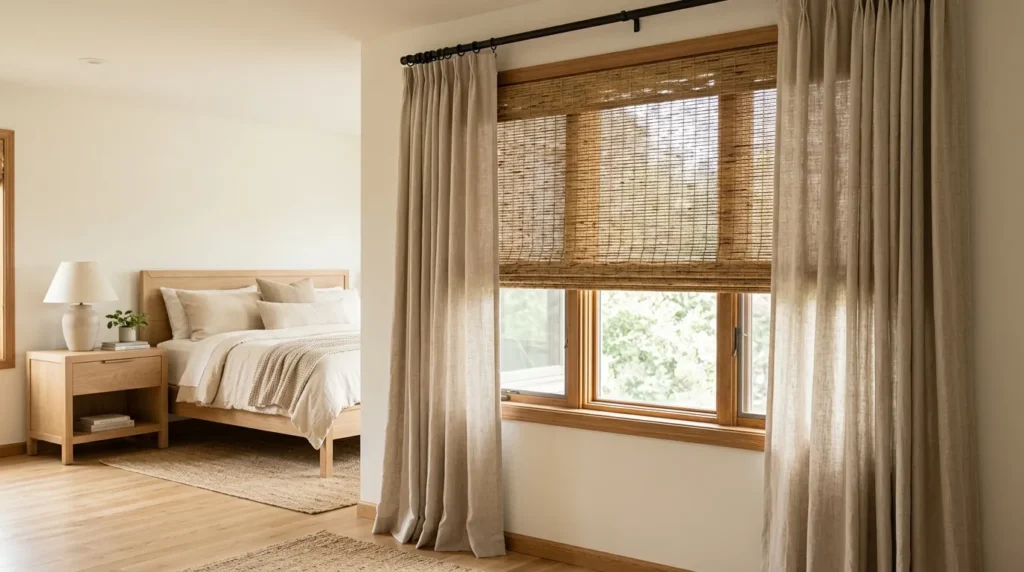
Woven wood shades or bamboo blinds bring the same natural material warmth to windows that rattan brings to furniture, filtering daylight into a soft, diffused glow rather than the harsher light of standard blinds. That’s why many designers recommend woven shades specifically in natural-material bedrooms, since they extend the room’s material story to a part of the room — the windows — that’s easy to overlook. If you’re anything like me, you’ve noticed how much softer natural light feels when it passes through a woven material rather than plastic or vinyl blinds.
How To Style It
Choose woven wood or bamboo shades in a light to mid-tone finish that complements your existing wood furniture, and consider pairing them with a linen curtain panel on either side for additional softness and light control. If full replacement isn’t practical, a woven shade added behind existing curtains can introduce the material without removing what you already have. Cordless or top-down bottom-up options offer more practical light control for a bedroom, where you often want privacy without fully blocking daylight. Keep the shade’s tone in the same warm family as your other wood and natural fiber elements for cohesion.
7. Untreated Wood Wall Accents
Quick Benefits
- Adds texture and warmth to bedroom walls
- Budget-friendly compared to a full accent wall renovation
- Works well above the bed as a focal point
- Introduces material depth without heavy color
- Easy to install without major construction
Why It Works
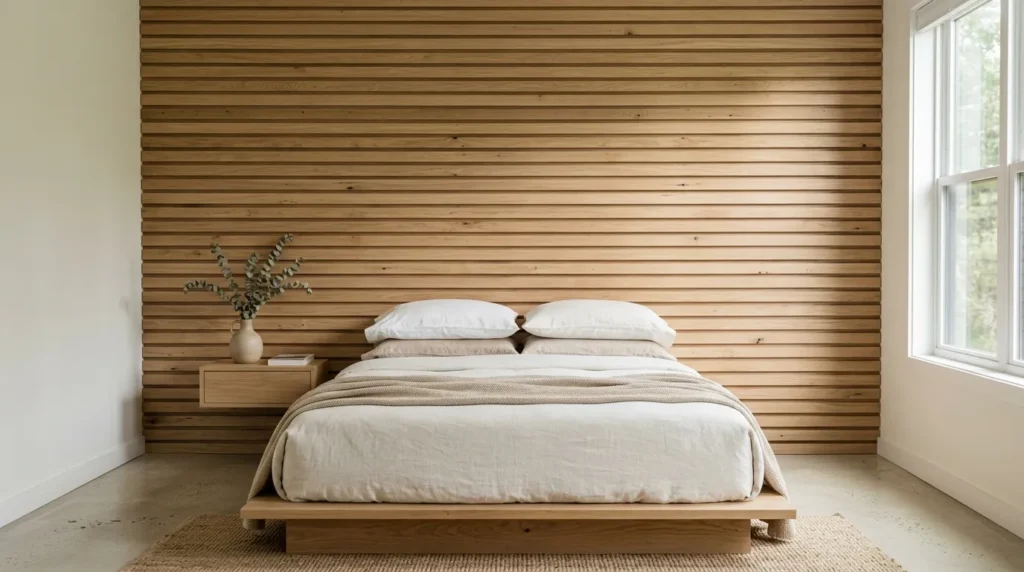
Walls are often the largest surface area in a bedroom, and a simple untreated or lightly finished wood accent — a slatted wall panel, a few floating wood shelves, a small collection of wood-framed art — introduces material texture at scale without requiring paint or wallpaper. I’ve noticed that a plain wall above the headboard is one of the most common missed opportunities in bedrooms generally, and it’s an especially natural place to introduce a wood element that echoes the room’s furniture materials.
How To Style It
A slatted wood accent wall behind the headboard is a popular, moderate-effort option that adds significant texture and can often be installed as a DIY project over a weekend. If a full accent wall feels like too much, a few floating wood shelves above the bed or dresser introduce the same material in a smaller, more flexible way. Choose a wood tone that either matches or intentionally contrasts with your existing furniture, depending on whether you want a seamless or layered look. Keep the rest of the room’s walls simple and neutral so the wood accent reads as a clear, intentional focal point.
8. Natural Fiber Lighting Fixtures
Quick Benefits
- Adds warmth and texture beyond basic lamp bases
- Serves as both function and decorative focal point
- Available in rattan, paper, and woven fiber options
- Pairs naturally with other natural materials in the room
- Range of price points from budget to statement pieces
Why It Works
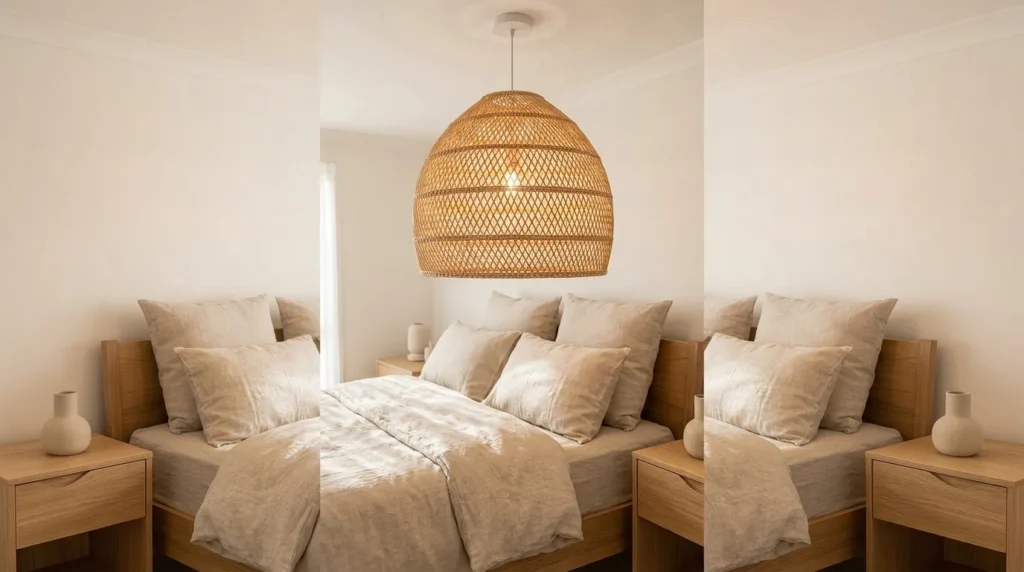
Lighting fixtures are an easy place to overlook natural materials, but a rattan pendant, a paper lantern shade, or a woven basket-style fixture adds texture and warmth in a way that a plain glass or metal fixture simply doesn’t. One simple trick I always suggest is treating the ceiling fixture as an opportunity for material storytelling rather than an afterthought, since it’s often one of the most visible elements in the room once you walk in. These fixtures also tend to cast a softer, more diffused light than exposed bulbs or plain glass shades.
How To Style It
A rattan or woven pendant light works well as a central ceiling fixture, adding texture overhead while still providing functional ambient light for the room. Paper lantern-style shades are a more budget-friendly option that still introduce a soft, natural material quality to the lighting. If replacing the main fixture isn’t practical, a rattan or woven lamp shade on an existing table or floor lamp achieves a similar effect on a smaller scale. Keep the fixture’s finish and tone consistent with your other natural materials in the room, whether that’s warm wood, linen, or rattan furniture.
9. Dried and Potted Botanicals
Quick Benefits
- Brings organic life and softness into the room
- Low-maintenance options available for dried varieties
- Adds natural color and texture without paint
- Inexpensive compared to most other decor categories
- Easy to rotate and update seasonally
Why It Works
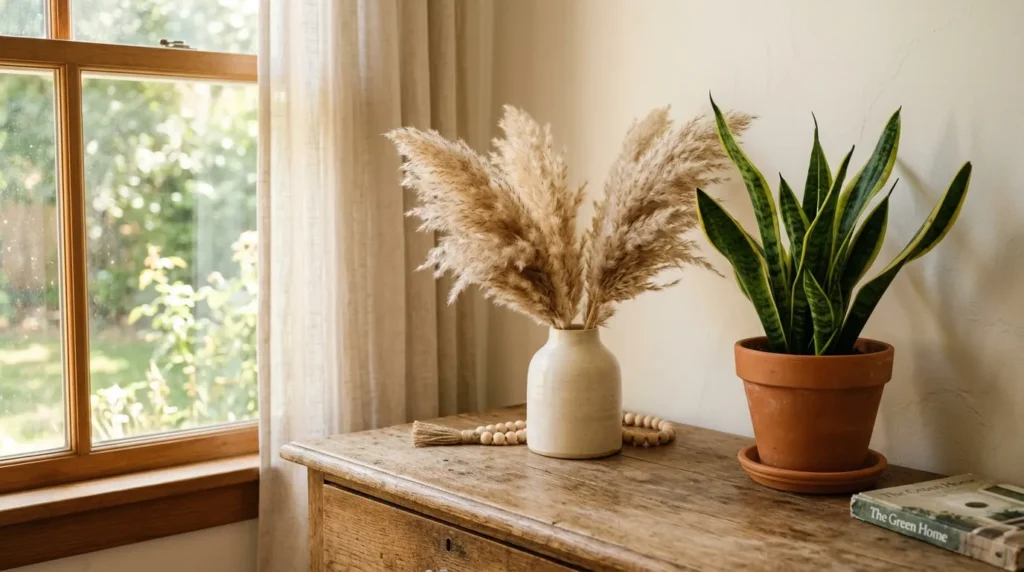
Plants and dried botanicals are perhaps the most literal way to bring natural materials into a bedroom, adding organic shape, texture, and even scent to an otherwise furniture-and-textile-focused space. A mistake many homeowners make is skipping greenery in the bedroom specifically, assuming it belongs more in living spaces, when a bedroom benefits just as much from the softness and life that plants and dried arrangements bring. Dried botanicals in particular are a low-maintenance option for bedrooms where a live plant’s care needs might not fit your routine.
How To Style It
A potted plant on a dresser or nightstand adds a small dose of greenery, with low-light varieties like snake plants or pothos working well in bedrooms without abundant natural light. Dried pampas grass, eucalyptus, or a simple bundle of dried florals in a ceramic vase offer a no-maintenance alternative that still brings organic texture to the room. Position plants or arrangements near natural light sources when possible, even if the specific variety doesn’t strictly require it, since this tends to look more intentional. Rotate dried arrangements occasionally to keep the room feeling fresh without much effort or cost.
10. Cotton and Wool Throw Layers
Quick Benefits
- Adds everyday warmth and texture to the bed and seating
- Breathable, natural alternative to synthetic blankets
- Easy to layer seasonally for different levels of warmth
- Inexpensive way to update the room’s texture story
- Complements linen bedding and wood furniture tones
Why It Works
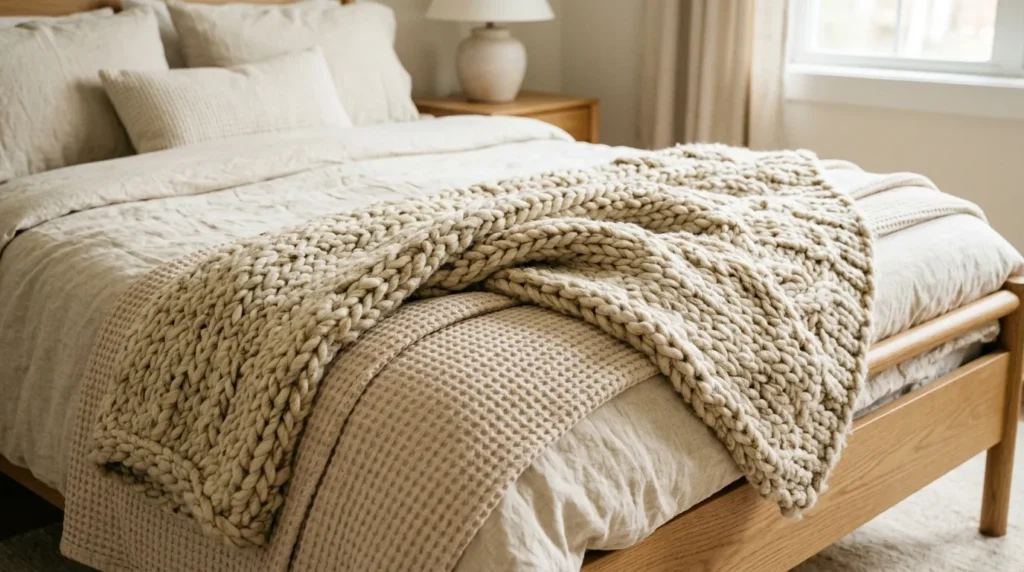
Throw blankets in natural fibers like cotton and wool round out a bedroom’s material story at the most tactile, everyday level — the layer you actually reach for on a cool evening. A chunky wool knit or a lightweight cotton waffle-weave throw adds texture to the foot of the bed or a reading chair while reinforcing the natural-materials approach used throughout the rest of the room. I’ve noticed that this kind of small textile layering is often what makes a natural-materials bedroom feel finished, since it’s the detail most people naturally interact with day to day.
How To Style It
Drape a wool or cotton throw at the foot of the bed, choosing a texture that contrasts gently with your linen bedding — a chunky knit against smooth linen, for example, creates a pleasing textural difference. Keep the throw within your established neutral or warm color palette so it reads as intentional rather than a random addition. A second, lighter throw on a reading chair or bench extends the same material story to another part of the room. Swap in a heavier wool throw for cooler months and a lighter cotton one for warmer months to keep the layering practical as well as decorative.
Frequently Asked Questions
What are the easiest natural materials to start with in a bedroom?
Linen bedding and a wool or jute area rug are usually the easiest and most affordable starting points, since they don’t require replacing furniture. These two changes alone significantly shift a room’s texture and warmth. From there, natural materials can be layered in gradually through furniture, lighting, and smaller decor pieces.
Is decorating with natural materials more expensive than other styles?
It doesn’t have to be — secondhand solid wood furniture, budget-friendly linen bedding, and simple woven accents can all be sourced affordably. The key is prioritizing which pieces matter most, like the bed frame and bedding, and building outward from there. Natural materials often last longer than synthetic alternatives, which can offset the cost over time.
Do natural materials work in small bedrooms?
Yes, natural materials work well in small bedrooms since lighter wood tones and woven textures tend to feel airy rather than heavy. Choosing lighter-toned wood furniture and keeping the overall palette neutral helps a small space feel open rather than cluttered. Rattan and wicker accents in particular are a good option since they’re visually lightweight even when physically present.
How do I mix different natural materials without it looking mismatched?
Keep a consistent, tight color palette across all your materials — warm neutrals tend to work well as a unifying base regardless of whether the material is wood, linen, or rattan. Vary the textures rather than the colors, which creates visual interest while keeping the room feeling cohesive. Limiting your material palette to three or four types (such as wood, linen, wool, and rattan) also helps prevent the room from feeling scattered.
What natural fiber rug is best for a bedroom?
Wool rugs tend to be the more comfortable option underfoot and work well in bedrooms where softness matters most. Jute rugs offer a more textured, rustic look but can feel rougher underfoot, making them better suited to layering under a softer rug or being placed where bare feet won’t spend as much time. Both are durable, natural options that suit a materials-focused bedroom.
Can I decorate with natural materials in a rental?
Yes, most of these ideas are renter-friendly since they rely on furniture, textiles, and lighting rather than permanent changes. Rugs, bedding, lamps, and smaller wood or rattan accents can all be brought in and taken with you when you move. Even wall treatments like woven wood shades often come in cordless, easy-install options that don’t require permanent mounting.
Conclusion
Decorating a bedroom with natural materials isn’t about an expensive, all-at-once overhaul — it’s about layering in wood, linen, wool, rattan, and stone gradually, with attention to how the textures and tones work together. From a solid wood bed frame and linen bedding to woven lighting and a natural fiber rug, each of these elements adds genuine warmth and depth that synthetic materials struggle to replicate.
If you’re starting your own natural-materials bedroom, begin with the easiest, most affordable changes — linen bedding or a wool throw — and build outward from there as your budget allows. These small, considered additions add up over time into a bedroom that feels calm, grounded, and genuinely comfortable to live in.
Start with one or two ideas and gradually build a space that reflects your style and supports everyday comfort.
Related Articles
- 10 Modern Bedroom Ideas That Feel Warm
- Cozy Bedroom Ideas on a Budget
- Neutral Home Styling Tips
- Small Living Room Ideas with Budget-Friendly Decor
- Renter-Friendly Storage Hacks