10 Garden Decor Ideas You’ll Want to Copy
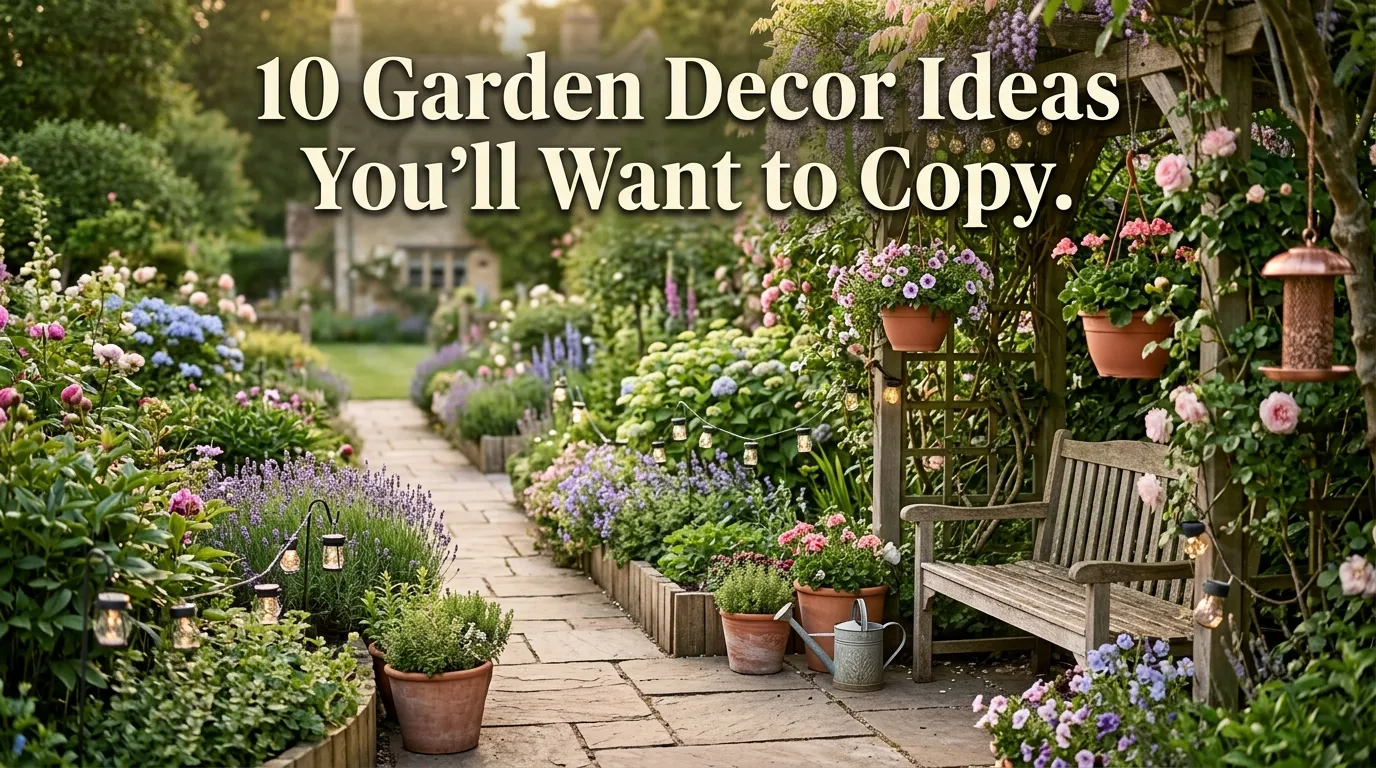
A garden can be beautifully planted and still feel a little unfinished without decor to tie it all together. In my experience, the difference between a garden that just has plants in it and a garden that feels like an intentional outdoor room usually comes down to a handful of well-placed decorative details — a bench, a bit of lighting, a piece of art that catches the eye between the greenery. Plants do a lot of the work, but decor is what makes a garden feel personal.
I’ve noticed that people often hesitate to add decor to a garden because they’re not sure where to start, or they worry about pieces looking out of place among the plants. A mistake many homeowners make is treating garden decor as something to add all at once at the end, when really the most successful gardens tend to layer in decorative elements gradually, the same way the plants themselves grow in over time. A single well-chosen piece, added thoughtfully, usually has more impact than a garden crowded with decor from day one.
This article covers ten garden decor ideas that are genuinely worth copying, from practical seating to small sculptural details, along with the reasoning behind why each one works and how to style it so it feels like it belongs in your specific space. Whether you have a sprawling backyard garden or a small collection of raised beds, these ideas are meant to be adaptable to whatever you’re working with.
One thing that works especially well in garden decor specifically is choosing materials that can hold up to the outdoors — weather-resistant metal, sealed wood, glazed ceramic — so the decor ages gracefully alongside the plants rather than deteriorating faster than the garden itself. That consideration runs through every idea below.
Table of Contents
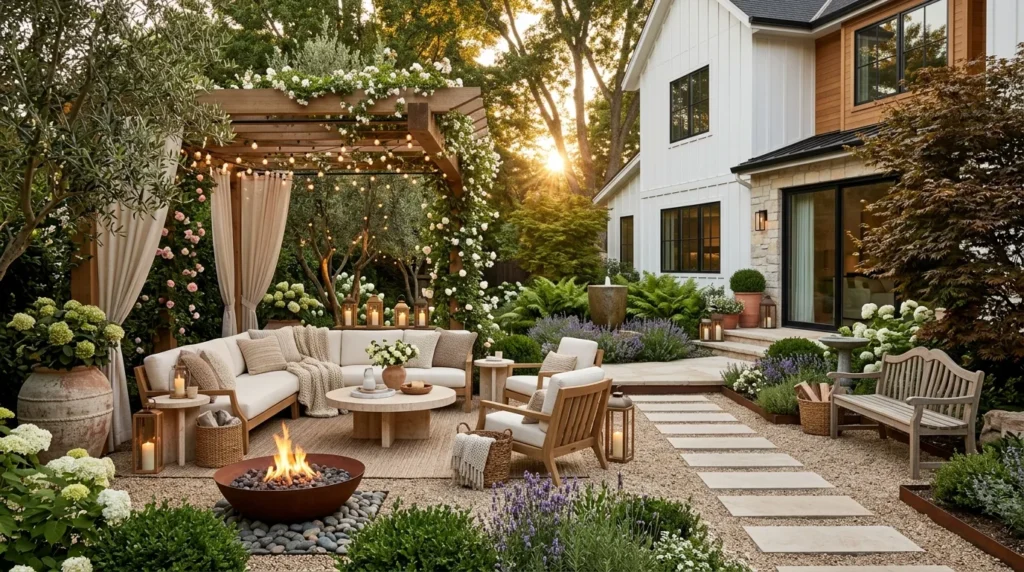
- Weathered Garden Bench Seating — A functional focal point for sitting and viewing.
- String Lighting Overhead Canopy — Soft ambiance for evening garden use.
- Vintage Watering Can Displays — Repurposed decor with rustic character.
- Stepping Stone Path Details — Functional walkways with decorative texture.
- Garden Sculpture Focal Points — A single statement piece among the greenery.
- Repurposed Container Planters — Creative, budget-friendly plant vessels.
- Trellis and Arbor Structures — Architectural framing for climbing plants.
- Wind Chimes and Kinetic Art — Sound and movement among the plants.
- Garden Signage and Markers — Personal touches that label and guide.
- Outdoor Rug and Textile Layers — Softening hard garden surfaces.
1. Weathered Garden Bench Seating
Quick Benefits
- Provides a functional spot to sit and enjoy the garden
- Adds a natural focal point among the plantings
- Available at a range of price points, including secondhand
- Works well in gardens of nearly any size
- Ages gracefully with weathering over time
Why It Works
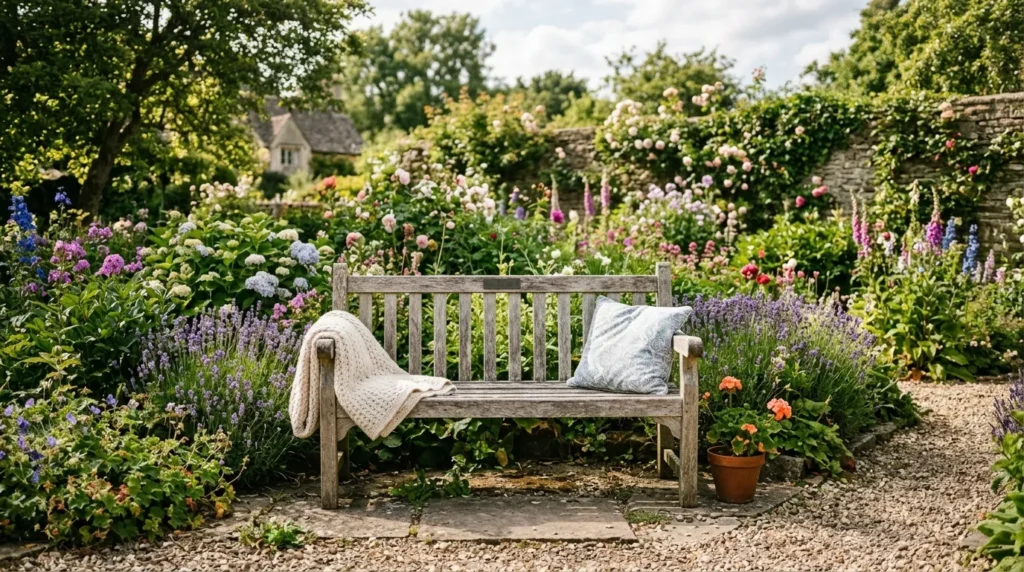
A garden bench does something that most other garden decor can’t: it invites you to actually stop and spend time in the space rather than just walking through it. In my experience, gardens with a dedicated seating spot get used far more often than gardens without one, since there’s a clear, comfortable reason to linger. A mistake many homeowners make is placing a bench purely for visual balance without considering the view from that seat, when the best garden benches are positioned specifically to look back at the most beautiful part of the planting.
How To Style It
Position the bench facing your garden’s best view, whether that’s a flowering bed, a water feature, or simply the most established, lush corner of the space. Choose a weather-resistant material like teak, cedar, or powder-coated metal, which will hold up to outdoor conditions and develop an attractive patina over time rather than deteriorating. A secondhand or vintage bench often has more character than a new one and can be refinished or left to weather naturally depending on your preferred look. Add a weatherproof cushion or a simple throw for extra comfort during the seasons when you’re most likely to use the space.
2. String Lighting Overhead Canopy
Quick Benefits
- Extends garden usability into the evening hours
- Adds a soft, warm ambiance without harsh lighting
- Budget-friendly compared to hardwired outdoor lighting
- Works well strung between trees, posts, or a pergola
- Easy to install without professional electrical work
Why It Works
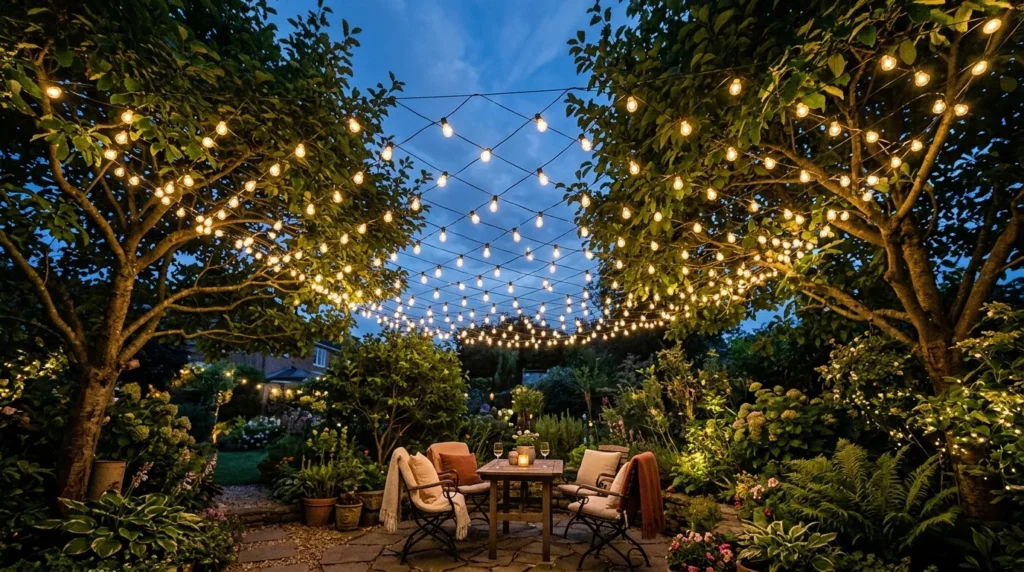
String lights bring a garden to life after sunset, turning a space that would otherwise go unused in the evening into a warm, inviting extension of the home. That’s why many designers recommend string lighting as one of the first additions to any outdoor entertaining space, since it has an outsized visual impact relative to its cost and effort. I’ve seen this idea transform simple backyard gardens into genuinely magical evening spaces, especially when the lights are strung overhead to create a soft, glowing canopy effect.
How To Style It
String lights between two or more anchor points — trees, posts, a pergola, or the exterior of the house — creating a canopy effect above a seating or dining area rather than stringing them along a single flat line. Choose warm white bulbs rather than cool white or colored options for a cozier, more universally flattering glow. Use weatherproof-rated string lights specifically designed for outdoor use, since standard indoor string lights won’t hold up to rain and humidity over time. Add a timer or smart plug so the lights turn on automatically each evening without requiring you to remember.
3. Vintage Watering Can Displays
Quick Benefits
- Adds rustic character using functional, repurposed items
- Inexpensive to source secondhand
- Works well as a small accent among garden beds
- Doubles as functional storage or a planter
- Easy to rotate or swap for seasonal variety
Why It Works
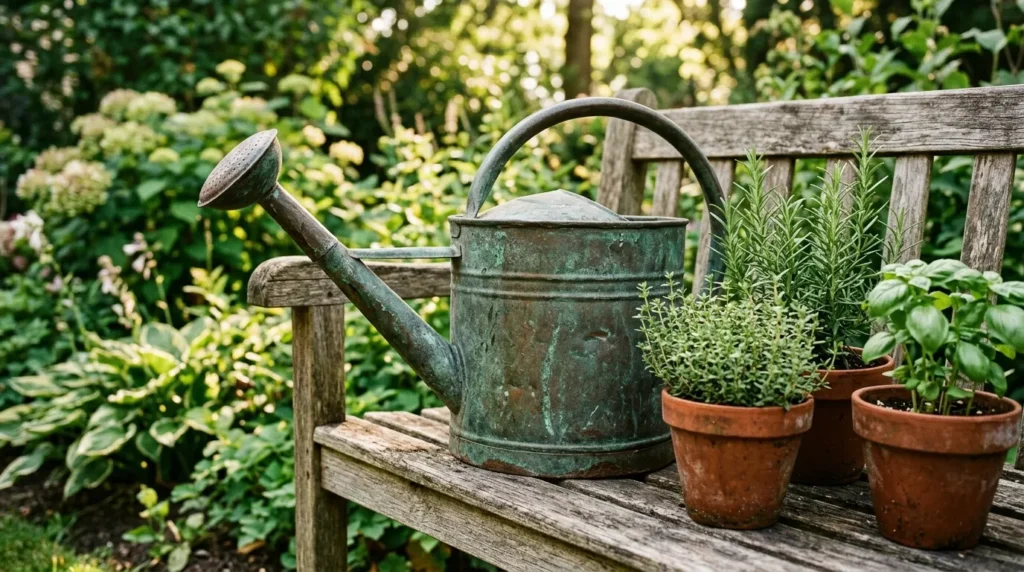
A vintage or weathered watering can, displayed rather than tucked away in a shed, brings a bit of rustic charm to a garden while celebrating an object that’s genuinely useful. A mistake many homeowners make is hiding all their garden tools away, when a well-chosen vintage piece actually adds to the garden’s story and character when left visible. One simple trick I always suggest is looking for watering cans with visible wear, rust, or patina, since this weathered look tends to suit a garden setting far better than something brand new and shiny.
How To Style It
Place a vintage watering can on a garden bench, beside a planting bed, or on a small stand as a decorative accent, ideally somewhere it will be seen but won’t be in the way of regular garden work. Consider repurposing a watering can as a planter itself, drilling drainage holes in the bottom and filling it with trailing flowers or herbs for a functional-decorative hybrid. Group two or three different vintage cans together for more visual impact than a single piece scattered among a large garden. Secondhand shops, flea markets, and estate sales are reliable, affordable sources for this kind of vintage garden decor.
4. Stepping Stone Path Details
Quick Benefits
- Adds functional walkways with decorative texture
- Guides movement through the garden intentionally
- Available in a range of materials and price points
- Works well through both lawn and planting beds
- Reduces wear on grass or soil from foot traffic
Why It Works
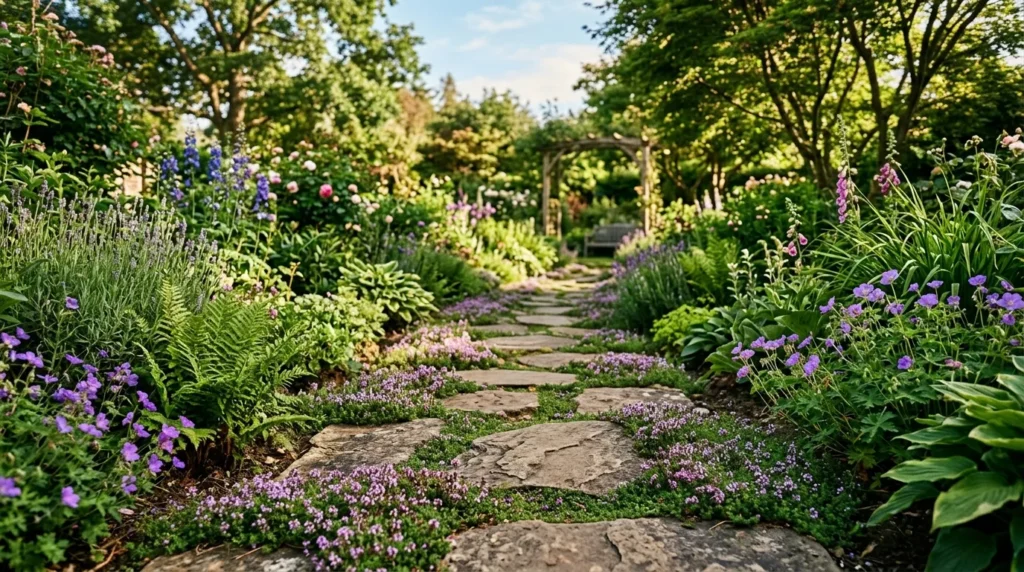
A stepping stone path does double duty in a garden, providing a practical walkway while also adding a decorative element that guides the eye and the visitor through the space. I’ve noticed that gardens without any defined path can feel a bit disorganized, even when the plantings themselves are lovely, simply because there’s no clear sense of how to move through the space. Stepping stones solve this by creating an intentional route while also protecting grass or soil from the wear that comes with repeated foot traffic along the same route.
How To Style It
Choose stepping stones in a material that complements your garden’s overall style — natural flagstone for a more organic look, or cut pavers for something cleaner and more structured. Space stones according to natural walking stride, generally two to three feet apart center to center, so the path feels comfortable rather than awkward to walk. Allow low groundcover, moss, or creeping thyme to grow between the stones for a softer, more established look over time. Curve the path gently rather than running it in a perfectly straight line where the garden layout allows, since a slight curve tends to feel more natural and inviting.
5. Garden Sculpture Focal Points
Quick Benefits
- Serves as a strong, memorable focal point
- Adds year-round interest even when plants are dormant
- Available in a wide range of styles and price points
- Works well in both formal and relaxed garden styles
- Long-lasting compared to seasonal plantings
Why It Works
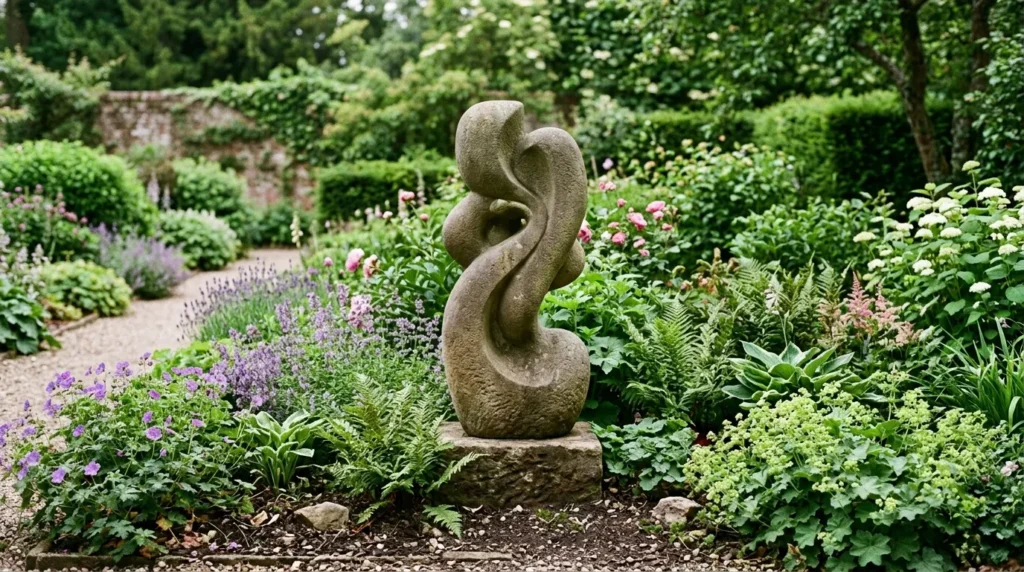
A single sculptural piece — whether a classic statue, an abstract metal form, or a simple ceramic object — gives a garden a focal point that remains constant even as the surrounding plants change with the seasons. In my experience, this kind of anchor piece is especially valuable during the off-season, when flowering plants have died back and the garden needs something else to hold visual interest. That’s why many designers recommend choosing at least one sculptural element for exactly this reason, positioning it where it will be visible from key viewing points, like a window or a patio, year-round.
How To Style It
Choose a single sculptural piece appropriate to your garden’s overall style and scale, keeping in mind that a large, ambitious sculpture in a small garden can overwhelm the space, while a piece too small might get lost among mature plantings. Position it where sightlines from the house or a seating area will naturally draw the eye toward it, rather than tucking it into an overlooked corner. Choose weather-resistant materials like cast stone, metal, or glazed ceramic that can withstand your climate’s specific conditions. Resist the urge to add multiple sculptural pieces throughout the garden, since one strong focal point typically has more impact than several competing for attention.
6. Repurposed Container Planters
Quick Benefits
- Adds unique character not found in standard planters
- Budget-friendly using items you may already own
- Environmentally conscious reuse of existing objects
- Works well for herbs, succulents, and trailing plants
- Easy to customize with drainage and drilling
Why It Works
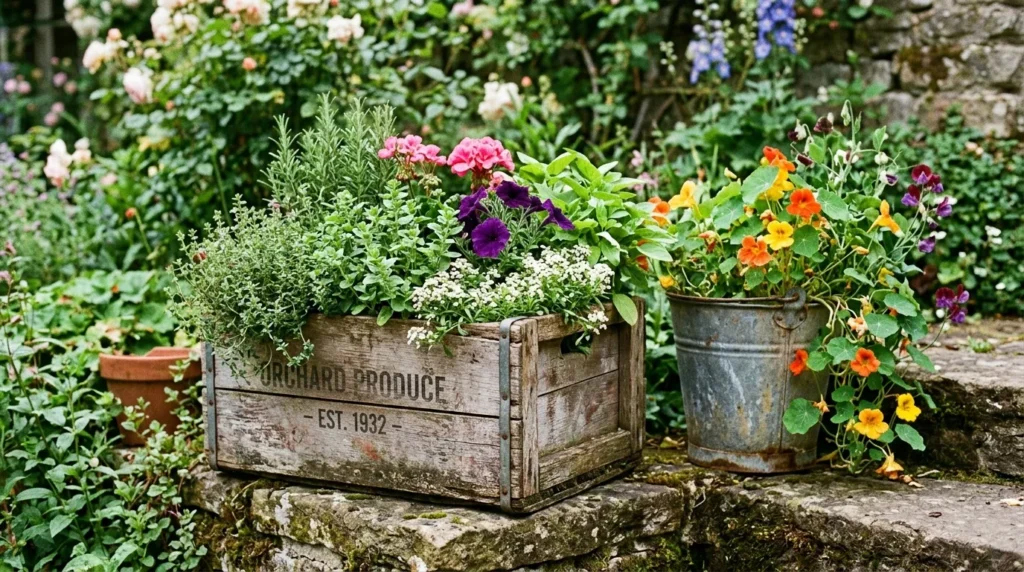
Repurposed containers — old crates, galvanized buckets, even a weathered wheelbarrow — bring a personal, one-of-a-kind quality to garden decor that standard nursery pots simply can’t match. A mistake many homeowners make is assuming every planter needs to be purpose-built for gardening, when in reality almost any container can work with proper drainage, and the unexpected ones often add more visual interest and personality. I’ve seen this idea transform otherwise generic garden corners, since a repurposed container tends to draw attention and spark conversation in a way a standard terracotta pot doesn’t.
How To Style It
Drill drainage holes in the bottom of any repurposed container before planting, since standing water is the most common reason repurposed planters fail. Choose plants suited to the container’s size and depth, with trailing varieties working particularly well in shallower containers like old crates or drawers. Group a few repurposed containers of different types together for a curated, collected look rather than scattering single pieces throughout the garden. Seal or treat wooden containers to extend their lifespan outdoors, since untreated wood will deteriorate faster when exposed to consistent moisture from watering.
7. Trellis and Arbor Structures
Quick Benefits
- Adds architectural height and structure to the garden
- Supports climbing plants for vertical greenery
- Creates a natural entry point or focal transition
- Works well in both small and large garden spaces
- Available in a range of materials and styles
Why It Works
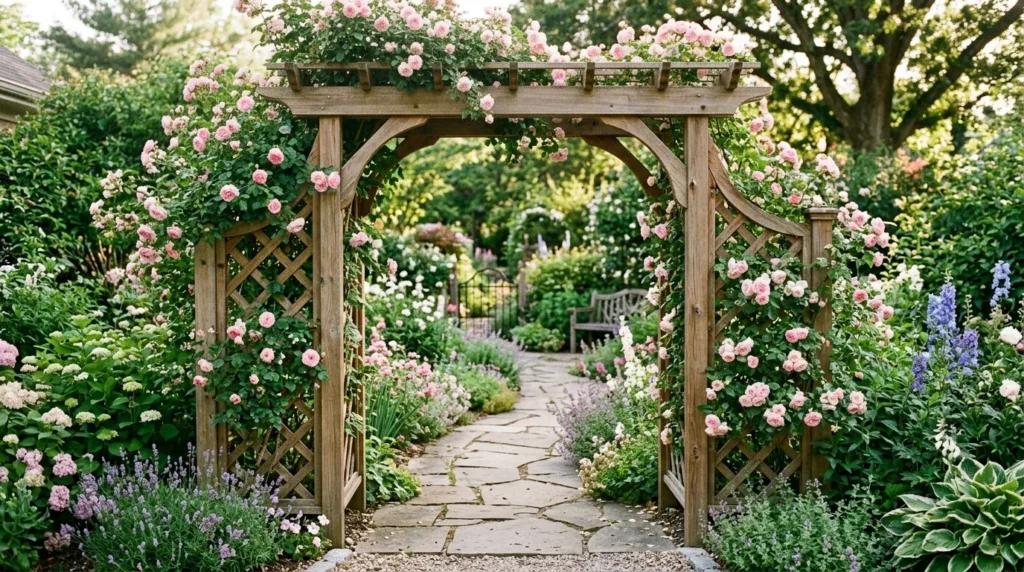
A trellis or arbor introduces vertical architectural interest to a garden, breaking up what might otherwise be an entirely flat, ground-level planting scheme. Beyond the visual structure, these pieces also give climbing plants like roses, clematis, or beans a support system to grow on, combining decor with practical function. That’s why many designers recommend at least one vertical structure in nearly any garden design, since it adds height and dimension that ground-level plantings alone can’t achieve, especially when viewed from a distance.
How To Style It
Position an arbor at a garden entry point or along a path to create a natural transition and frame the view into the space beyond it. Choose a trellis material that suits your garden’s overall style, with painted wood or metal offering a more polished look and natural, untreated wood suiting a more rustic garden. Plant a climbing variety appropriate to the structure’s size and your climate, training the plant gently along the support as it grows rather than letting it grow unguided. Maintain the structure’s finish over time, repainting or resealing as needed, since a well-kept trellis or arbor continues to look intentional even as the surrounding plants mature and change.
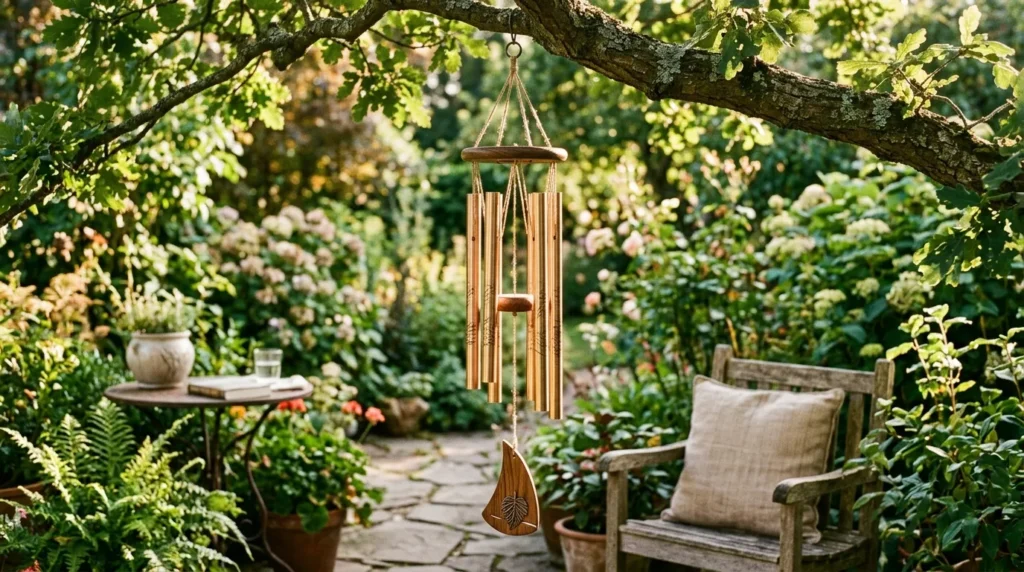
8. Wind Chimes and Kinetic Art
Quick Benefits
- Adds sound and gentle movement to the garden
- Available at a wide range of price points
- Easy to hang from trees, arbors, or hooks
- Introduces a sensory element beyond visual decor
- Simple to swap or relocate as desired
Why It Works
Most garden decor is purely visual, which is what makes wind chimes and kinetic sculptures stand out — they add a sensory dimension of sound and movement that engages the garden in a different way. If you’re anything like me, you’ve noticed how a gentle wind chime can make a garden feel more alive and dynamic, especially during quiet moments when you’re simply sitting and enjoying the space. One simple trick I always suggest is choosing a chime with a tone you find genuinely pleasant, since you’ll be hearing it regularly if it’s placed near a seating area or window.
How To Style It
Hang wind chimes from a tree branch, an arbor, or a dedicated hook near a seating area where you’ll actually hear and enjoy the sound regularly. Choose materials suited to your garden’s style, with metal chimes offering a brighter tone and bamboo or wood chimes providing a softer, more muted sound. Kinetic sculptures, which move with the wind without producing sound, are a good alternative for anyone who wants visual movement without the audio element. Position these pieces where they’ll catch consistent breeze, since a chime or kinetic piece in a fully sheltered corner may rarely move at all.
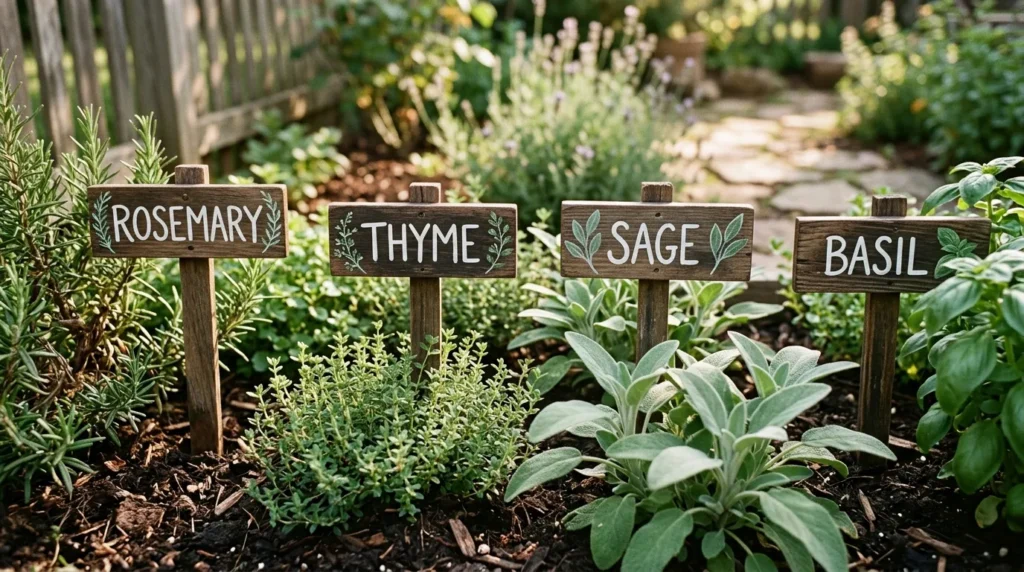
9. Garden Signage and Markers
Quick Benefits
- Adds personality and practical labeling to plant beds
- Helps identify plants for yourself and visitors
- Budget-friendly to make or purchase
- Works well in vegetable, herb, and flower gardens alike
- Easy to update as plantings change
Why It Works
Garden markers and signage serve a practical purpose — identifying what’s planted where, especially useful in vegetable or herb gardens where different plants can look similar early in the season — while also adding a decorative, personal touch. A mistake many homeowners make is skipping markers entirely and then forgetting what was planted where by mid-summer, especially in a garden with several varieties of the same type of plant. I’ve noticed that even a simple, handmade marker adds a layer of charm and intentionality to a garden bed that would otherwise look identical to any other planting.
How To Style It
Choose or make markers from weather-resistant materials like painted wood, stamped metal, or slate, ensuring the labeling will hold up through a full growing season of sun and rain exposure. Keep the lettering simple and legible, whether handwritten with a paint pen or printed, so the markers remain functional as well as decorative. Use a consistent marker style throughout a single bed for a cohesive look, even if different beds have slightly different marker designs. Update or replace markers as needed each season, since plantings and layouts often shift from year to year.
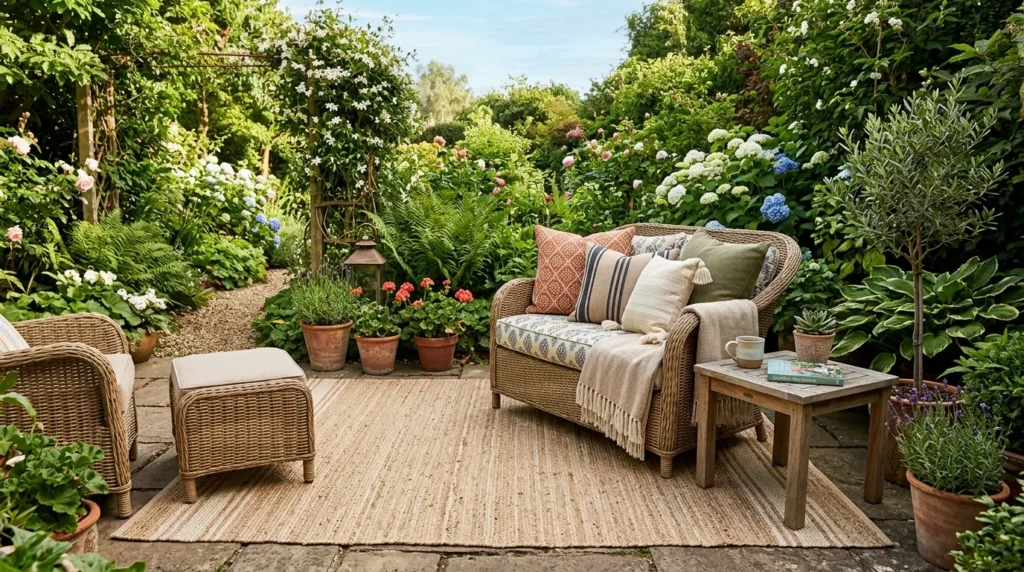
10. Outdoor Rug and Textile Layers
Quick Benefits
- Softens hard surfaces like patios and decking
- Adds color and pattern to an outdoor seating area
- Available in weather-resistant, easy-clean materials
- Defines a specific zone within a larger garden space
- Budget-friendly way to update the look seasonally
Why It Works
An outdoor rug does for a garden seating area what an indoor rug does for a living room: it grounds the furniture, adds warmth and texture, and helps define the space as its own distinct zone within the larger garden. In my experience, garden seating areas without a rug can feel a bit incomplete, even with nice furniture and good plantings surrounding them, since the hard patio or deck surface underneath doesn’t do much to tie the grouping together visually. Modern outdoor rugs are designed specifically to withstand weather and moisture, making this an increasingly practical decor choice rather than a purely aesthetic risk.
How To Style It
Choose a weather-resistant outdoor rug material, such as polypropylene, which resists fading, mold, and moisture far better than an indoor rug would in an exposed setting. Size the rug so it extends slightly beyond the edges of your seating furniture, similar to how you’d size a rug indoors, so the grouping feels intentional rather than floating in the space. Layer in coordinating outdoor cushions or a throw blanket for additional textile warmth, choosing fabrics rated specifically for outdoor use. Store or cover textiles during particularly harsh weather if possible, even weather-resistant ones, to extend their lifespan over multiple seasons.
Frequently Asked Questions
What’s the most budget-friendly garden decor idea?
Repurposed container planters and vintage watering can displays are both very affordable, especially if sourced secondhand or made from items you already own. String lighting is another relatively low-cost update with a significant visual impact for the price. Starting with one or two of these budget-friendly options is a good way to test what suits your garden before investing in larger pieces.
How do I choose a garden sculpture that fits my space?
Consider the scale of your garden first, since an oversized sculpture can overwhelm a small space while an undersized piece can get lost in a larger one. Choose a style that complements your existing garden aesthetic, whether that’s classic, modern, or rustic. Positioning the piece where it’s visible from a key viewpoint, like a window or patio, matters just as much as the sculpture itself.
What materials hold up best for outdoor garden decor?
Weather-resistant materials like teak, cedar, powder-coated metal, cast stone, and glazed ceramic tend to hold up well across seasons without significant deterioration. Untreated wood and non-weatherproof textiles typically need more maintenance or seasonal storage to last. Choosing the right material upfront saves replacement costs down the road.
How do I add lighting to a garden without hardwiring anything?
Weatherproof-rated string lights are one of the easiest lighting additions that don’t require professional electrical work, since they typically plug into an existing outdoor outlet. Solar-powered path lights and lanterns are another no-wiring option for additional ambiance along walkways. A timer or smart plug helps automate string lighting without extra daily effort.
Should garden decor match my home’s exterior style?
It helps for garden decor to loosely complement your home’s overall style, but it doesn’t need to match exactly, since a garden is often its own distinct space with its own character. Consistency in material finishes, like sticking to one or two metal tones throughout your garden decor, tends to matter more than strictly matching architectural style. The goal is a garden that feels cohesive within itself, not necessarily identical to the house.
How many decorative elements should a garden have?
There’s no fixed number, but most successful gardens benefit from a few well-chosen pieces rather than many competing decorative elements scattered throughout. A bench, one sculptural focal point, and some lighting is often enough for a smaller garden, with room to add more gradually. Restraint tends to make each individual piece more effective and noticeable.
Conclusion
Garden decor is what turns a well-planted space into a genuinely inviting outdoor room, and the best pieces tend to be the ones added thoughtfully over time rather than all at once. From a weathered bench and overhead string lighting to a single sculptural focal point and a soft outdoor rug, each of these ideas brings personality and function to a garden without requiring a complete overhaul.
If you’re ready to start decorating your own garden, choose one idea that solves a real need in your space right now — maybe that’s finally adding seating with a good view, or stringing up lights for evening use. These additions build on each other over time, and before long, your garden will feel just as considered and personal as the rest of your home.
Start with one or two ideas and gradually build a space that reflects your style and supports everyday comfort.
Related Articles
- 10 Backyard Landscape Design Ideas with Beautiful Greenery
- DIY Accent Wall Ideas
- Patio and Outdoor Living Ideas
- Neutral Home Styling Tips
- Small Living Room Ideas with Budget-Friendly Decor