10 Backyard Landscape Design Ideas with Beautiful Greenery
A backyard has a way of either becoming the best part of a home or getting neglected entirely, and in my experience, greenery is usually the deciding factor. A yard with thoughtful plantings feels alive and inviting even on a modest budget, while a yard with patchy grass and no layered plant life can feel unfinished no matter how nice the patio furniture is. Landscaping often gets treated as an afterthought compared to interior decorating, but it deserves just as much intention.
I’ve noticed that the backyards people love spending time in aren’t necessarily the largest or most expensive ones — they’re the ones where greenery was layered thoughtfully, with attention to height, texture, and seasonal interest. A mistake many homeowners make is buying plants one at a time without a broader plan, which often results in a scattered, uneven look rather than a cohesive landscape. Good backyard greenery usually comes from a bit of planning up front, even if the planting itself happens gradually over time.
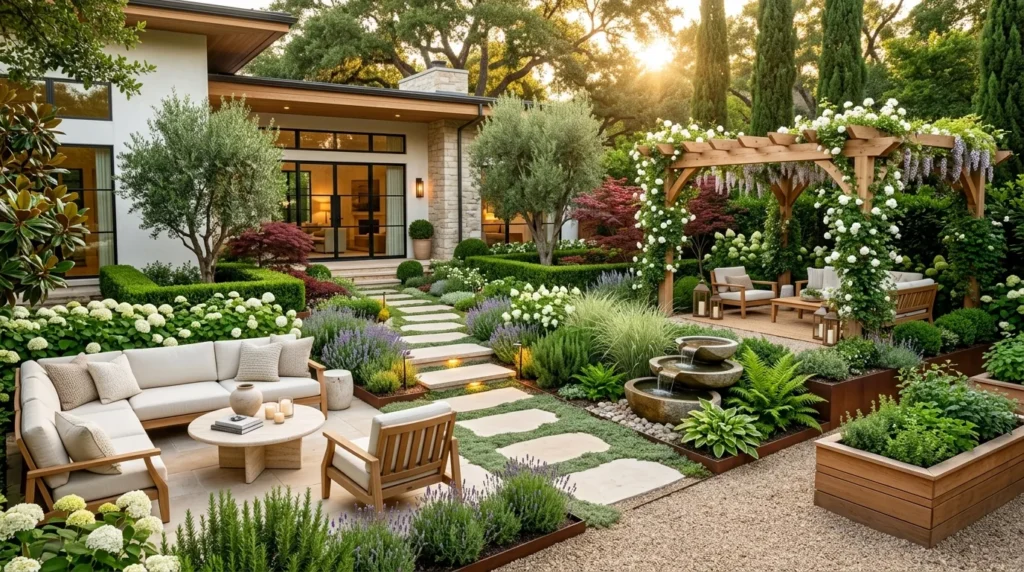
This article covers ten backyard landscape design ideas centered specifically on greenery, from layered garden beds to vertical planting solutions, so you can build a lush, considered outdoor space regardless of your yard’s size or your gardening experience. Each idea includes the reasoning behind why it works well, along with practical guidance on plant choices and layout so you can start implementing this weekend if you’d like.
One thing that works especially well in backyard landscaping is mixing plant heights and textures rather than relying on a single type of greenery throughout. That principle runs through everything below, and it’s a big part of why these yards tend to feel established and intentional rather than sparse or repetitive.
Table of Contents
- Layered Garden Bed Borders — Building depth with varying plant heights.
- Ornamental Grass Groupings — Movement and texture with low-maintenance plants.
- Climbing Vine Trellises — Vertical greenery for walls, fences, and structures.
- Shade Tree Focal Points — Anchoring the yard with mature, natural structure.
- Container Garden Groupings — Flexible greenery for patios and small spaces.
- Native Plant Wildflower Beds — Low-maintenance color and pollinator support.
- Boxwood and Hedge Structure — Clean, structured greenery for defined edges.
- Herb and Kitchen Garden Beds — Practical greenery with everyday use.
- Vertical Living Wall Planters — Space-efficient greenery for small yards.
- Woodland Style Shade Garden — Layered greenery suited to shaded areas.
1. Layered Garden Bed Borders
Quick Benefits
- Adds visual depth through varying plant heights
- Creates year-round interest with staggered bloom times
- Works well along fences, walkways, and patio edges
- Suits a wide range of yard sizes
- Budget-friendly to build gradually over seasons
Why It Works
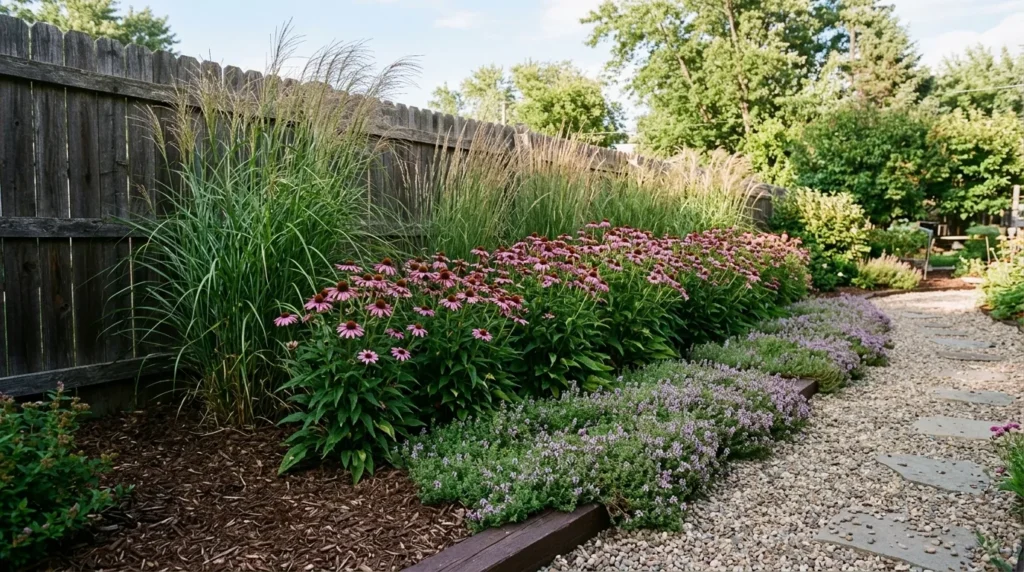
A layered garden bed — taller plants toward the back, mid-height in the middle, low groundcover or edging plants in front — mimics the way plants naturally grow in the wild, which is exactly why it tends to look so much more established than a single row of matching plants. In my experience, homeowners often plant everything at the same height along a border, which can look flat and one-dimensional even with beautiful individual plants. A mistake many homeowners make is choosing plants purely by bloom color without considering their mature height and how they’ll relate to their neighbors.
How To Style It
Plan your border with taller shrubs or ornamental grasses toward the back, mid-height perennials like coneflowers or salvia in the middle, and low groundcover or edging plants like creeping thyme along the front. Stagger bloom times across your plant choices so something is flowering through multiple seasons rather than all at once. Leave appropriate spacing between plants based on their mature size, even if the bed looks sparse initially, since overcrowding leads to competition and poor growth later. Mulch between plantings to suppress weeds and give the bed a clean, finished look while the plants fill in over time.
2. Ornamental Grass Groupings
Quick Benefits
- Adds movement and texture with minimal maintenance
- Provides visual interest through multiple seasons
- Requires less water than many flowering perennials
- Softens hard landscape edges like patios and walkways
- Works well in both sunny and partially shaded areas
Why It Works
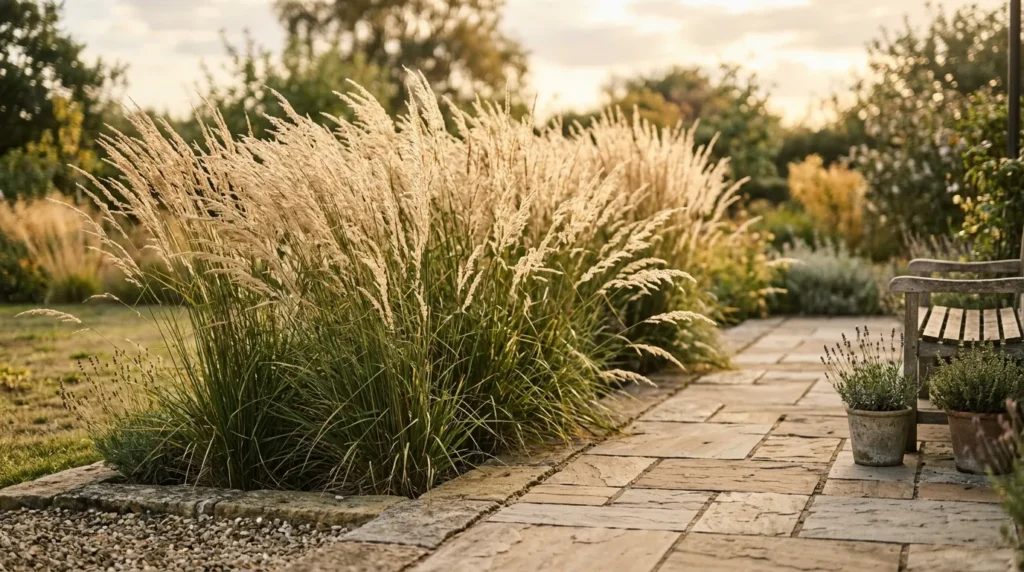
Ornamental grasses bring something that flowering plants alone often can’t: movement. A grouping of grasses swaying in the breeze adds a dynamic, living quality to a backyard that static shrubs and flowers don’t provide. That’s why many designers recommend incorporating ornamental grasses specifically along patio edges or as a backdrop to a flower bed, since they add textural contrast and visual softness without requiring the same maintenance as a lawn or a heavily flowering garden.
How To Style It
Group three or more grasses of the same variety together rather than planting single specimens scattered throughout the yard, since groupings read as more intentional and have a stronger visual impact. Choose varieties suited to your climate and sun exposure, with feather reed grass and fountain grass both popular, relatively low-maintenance options in many regions. Position taller grass varieties toward the back of a bed or along a fence line, using shorter varieties as a softer edge near a patio or walkway. Leave grasses standing through winter in most climates, since their dried seed heads and structure add visual interest even in the colder months.
3. Climbing Vine Trellises
Quick Benefits
- Adds vertical greenery without using ground space
- Softens fences, walls, and other hard structures
- Works well in smaller yards with limited planting area
- Available in both flowering and evergreen varieties
- Budget-friendly compared to larger landscaping features
Why It Works
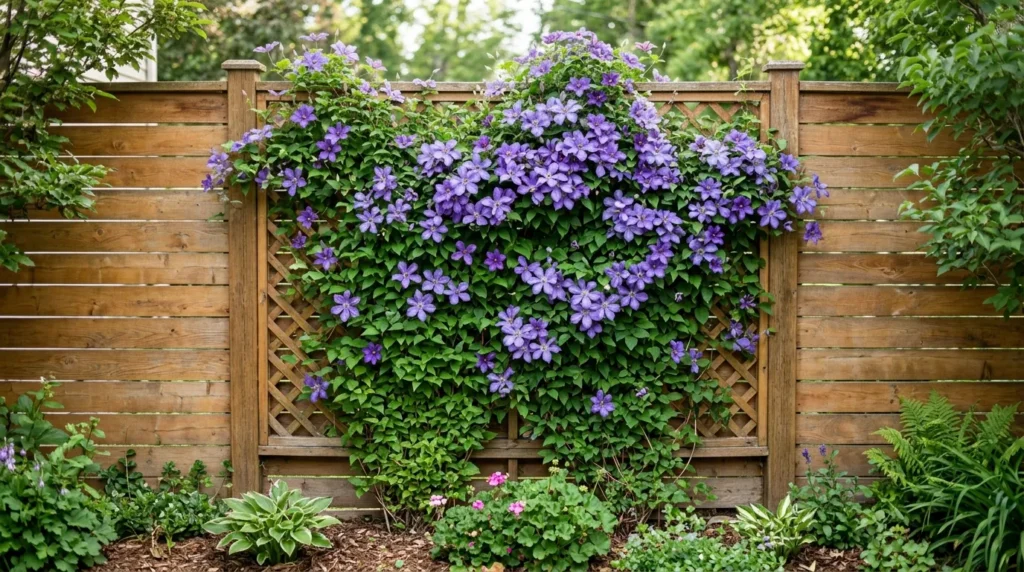
Climbing vines solve a problem that flat garden beds can’t: they add greenery to vertical surfaces like fences, pergolas, and walls, which is especially valuable in smaller yards where ground space is limited. I’ve seen this idea transform plain, utilitarian fences into genuinely beautiful backdrops, since a well-established vine can soften an entire wall of a yard without requiring any additional ground-level planting space. A mistake many homeowners make is choosing an aggressive vine variety without researching its growth habits, which can lead to it overtaking structures faster than expected.
How To Style It
Install a simple trellis or wire support system against a fence or wall before planting, giving the vine a clear structure to climb rather than letting it sprawl. Choose a variety suited to your climate and desired look — clematis and climbing roses offer seasonal color, while evergreen options like star jasmine provide year-round coverage in warmer climates. Prune according to the specific variety’s needs to keep growth controlled and encourage healthy, full coverage rather than sparse, leggy growth. Position vines where they’ll receive appropriate sun exposure for the chosen variety, since insufficient light often results in weak or uneven growth.
4. Shade Tree Focal Points
Quick Benefits
- Provides long-term structure and shade for the yard
- Increases property value over time as the tree matures
- Creates a natural focal point for landscaping around it
- Supports local wildlife and pollinators
- Reduces cooling costs when planted near the home
Why It Works
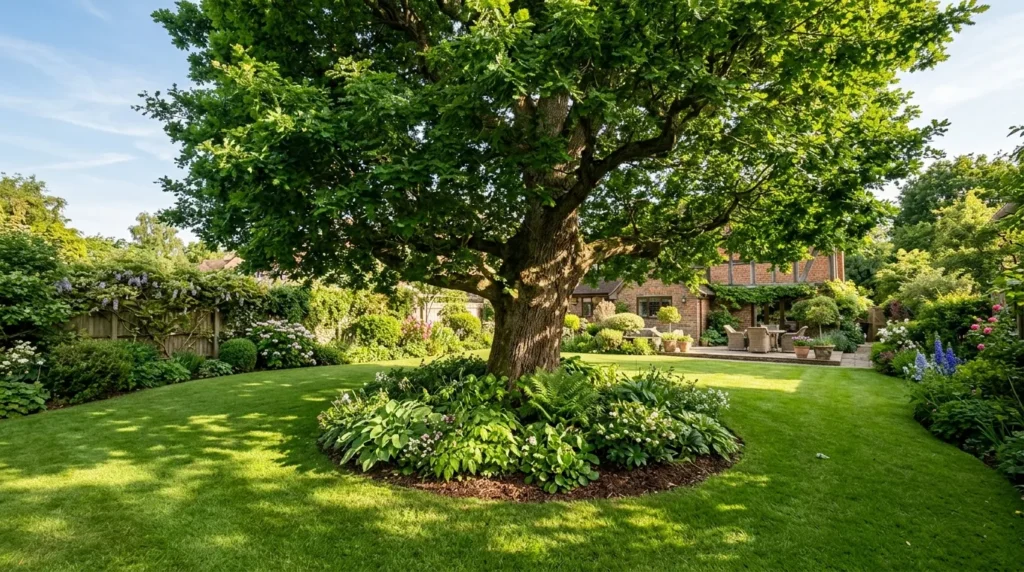
A well-placed shade tree does more for a backyard’s long-term greenery and structure than almost any other single planting decision, since it provides a mature focal point that garden beds and shrubs can be designed around. In my experience, yards built around a strong tree feel more established and intentional, even if the surrounding landscaping is relatively simple, because the tree itself provides such a strong visual anchor. One simple trick I always suggest is choosing a tree species based on its mature size and shape, not just how it looks at the nursery, since trees can significantly outgrow their initial appearance.
How To Style It
Research your tree’s mature height and canopy spread before planting to ensure it has adequate room to grow without crowding structures, fences, or utility lines. Position the tree where its future shade will be most useful, such as near a patio, deck, or a west-facing window that gets intense afternoon sun. Underplant the base with shade-tolerant groundcover or low perennials once the tree is established enough to cast meaningful shade. Choose a species well-suited to your specific climate and soil conditions, since a tree chosen without this consideration is more likely to struggle or require excessive maintenance.
5. Container Garden Groupings
Quick Benefits
- Adds flexible, movable greenery to patios and small yards
- Works well for renters who can’t plant in the ground
- Allows for easy seasonal rotation of plants
- Budget-friendly to build gradually over time
- Suits balconies, patios, and entryways alike
Why It Works
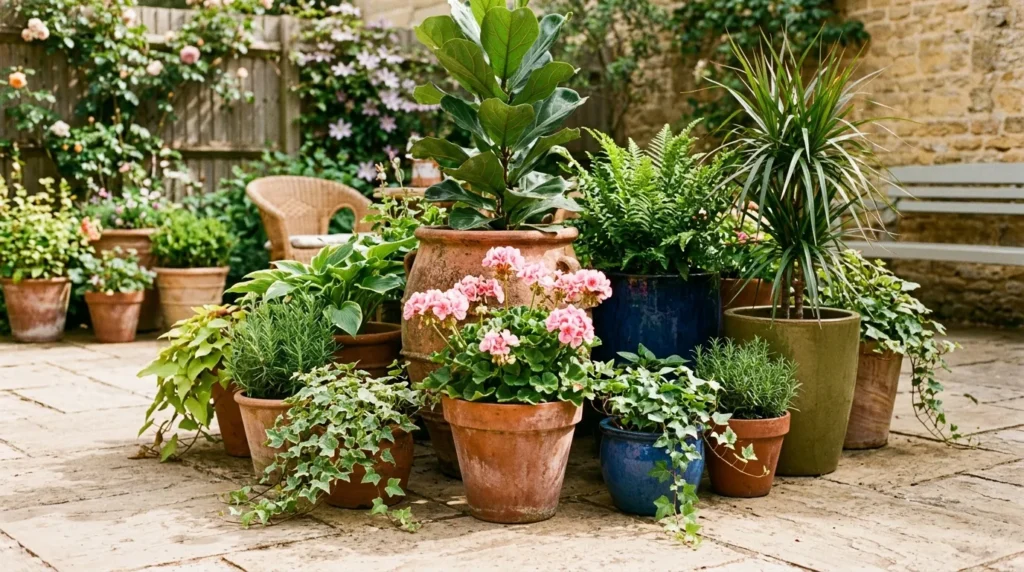
Container gardens offer a level of flexibility that in-ground planting simply can’t match, which makes them especially valuable for renters, small yards, or anyone who wants to experiment with greenery without committing to a permanent bed. A grouping of containers at varying heights and sizes creates the same layered, lush effect as a garden bed, just in a portable format. That’s why many designers recommend container groupings specifically for patios and entryways, where they add greenery right at eye level, close to where people actually spend time.
How To Style It
Group three to five containers of varying heights and sizes together rather than spacing single pots evenly apart, since clustering creates a fuller, more intentional look. Choose a mix of upright plants, trailing varieties, and one or two flowering options within each grouping for textural variety. Use pot risers or plant stands to vary height further, especially in a smaller grouping where you want more visual layering without more floor space. Rotate seasonal plants in and out of the containers while keeping any perennial or evergreen options as a consistent base throughout the year.
6. Native Plant Wildflower Beds
Quick Benefits
- Requires less water and maintenance than non-native plantings
- Supports local pollinators and wildlife
- Naturally suited to your region’s soil and climate
- Provides seasonal color with minimal intervention
- Often more affordable than ornamental non-native plants
Why It Works
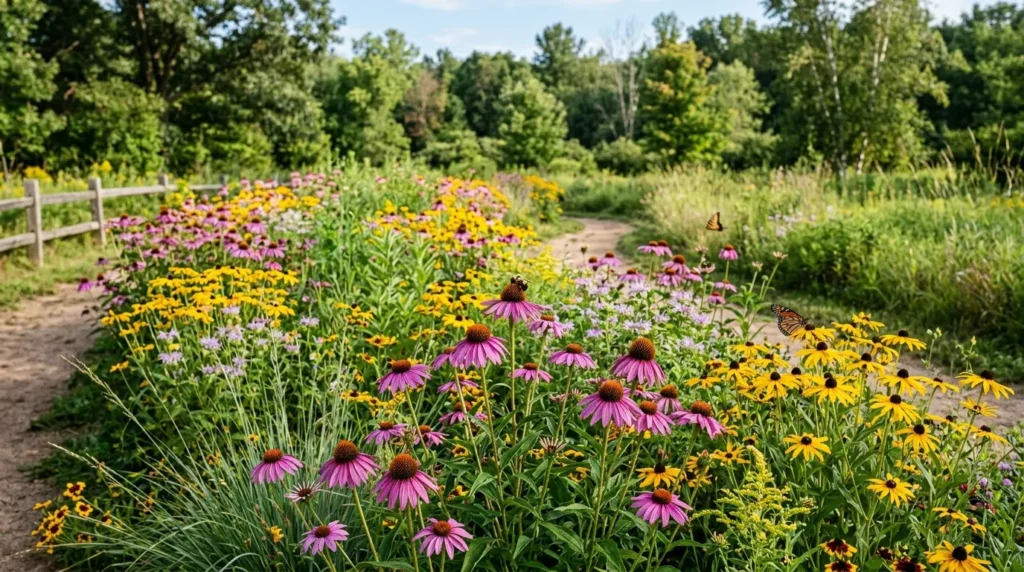
Native plant beds work with your region’s existing climate and soil conditions rather than against them, which typically means less watering, less fertilizing, and fewer pest issues compared to non-native ornamental plants. In my experience, native wildflower beds also tend to look more relaxed and naturalistic, fitting comfortably into a backyard setting without feeling overly manicured. A mistake many homeowners make is assuming native plants look messy or unkempt, when a well-planned native bed can be just as visually intentional as any other garden style, with the added benefit of supporting local bees, butterflies, and birds.
How To Style It
Research native plant species specific to your region, since what qualifies as “native” varies significantly by climate zone, and local nurseries or extension offices are excellent resources for regionally appropriate recommendations. Group plants in drifts of the same species rather than scattering single specimens, which creates a more polished, intentional look even with wilder-growing native varieties. Include a mix of bloom times across your selection so the bed provides color and pollinator support across multiple seasons. Allow some plants to go to seed at the end of the season if you want the bed to self-propagate and fill in further over time.
7. Boxwood and Hedge Structure
Quick Benefits
- Adds clean, defined structure to garden beds and borders
- Evergreen, providing year-round greenery
- Works well as a formal edge or a natural privacy screen
- Low-maintenance once established
- Suits both formal and relaxed landscape styles
Why It Works
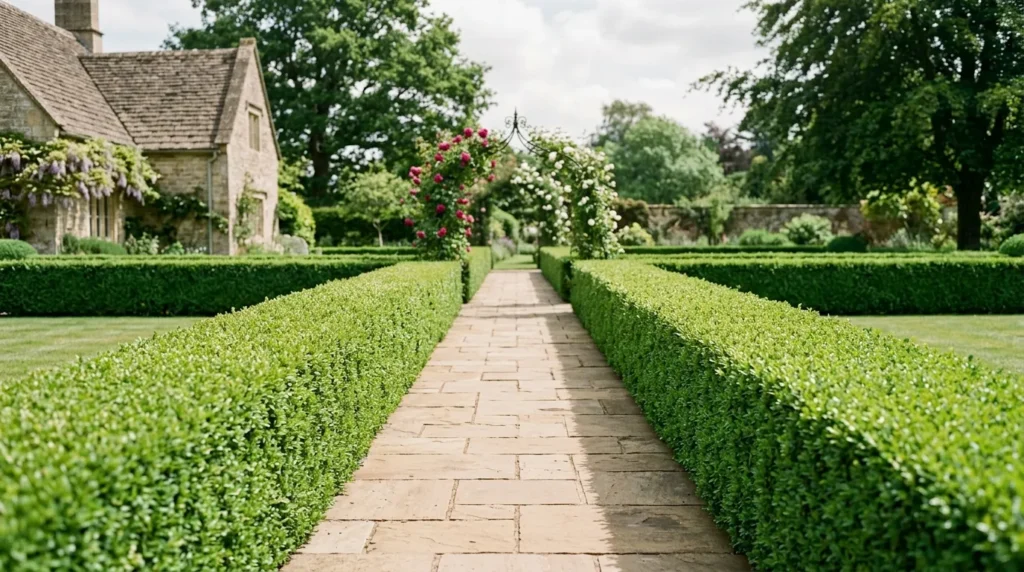
Structured hedging, whether clipped boxwood or a looser natural hedge, provides a clean, evergreen backbone that other, more seasonal plantings can play off of throughout the year. I’ve noticed that gardens with a bit of structured greenery — even a simple boxwood border along a walkway — tend to look more polished and intentional than gardens built entirely from unstructured perennial plantings. A mistake many homeowners make is skipping structural greenery altogether, which can leave a yard looking a bit bare and unfinished during the off-season when flowering plants have died back.
How To Style It
Plant boxwood or a similar evergreen shrub in a straight line along a walkway or garden bed edge for a clean, formal border, or allow a looser hedge variety to grow more naturally for privacy screening. Space plants according to their mature width to avoid overcrowding, even though a newly planted hedge will look sparse at first. Trim clipped hedges regularly during the growing season to maintain a crisp shape, while looser hedge varieties typically need only occasional shaping. Use hedging to frame garden beds, define a patio edge, or create separation between different areas of the yard.
8. Herb and Kitchen Garden Beds
Quick Benefits
- Combines greenery with everyday practical use
- Inexpensive to start from seeds or small starter plants
- Works well in raised beds, containers, or in-ground plots
- Adds fresh scent and texture near patios and entryways
- Encourages more frequent use of the outdoor space
Why It Works
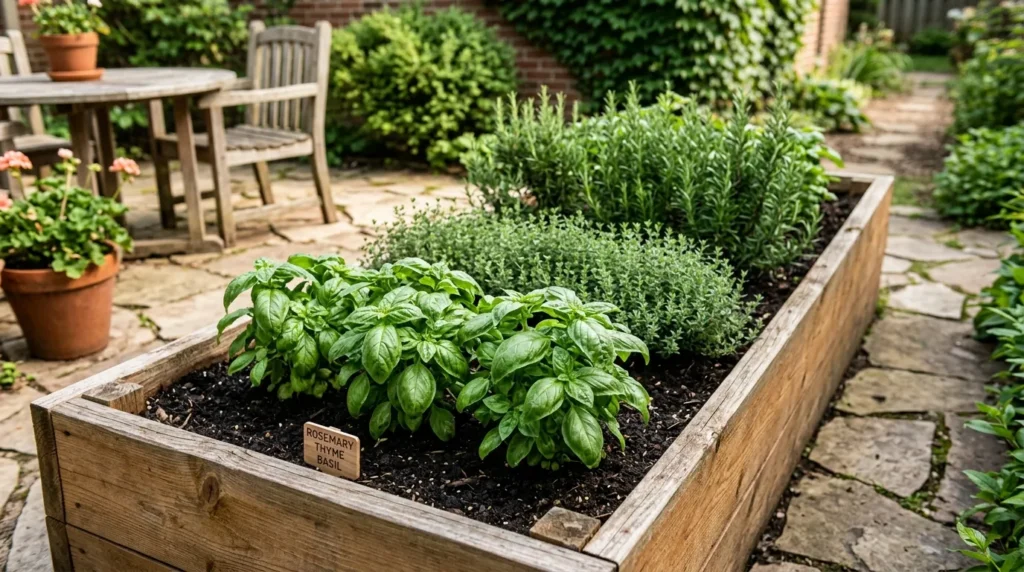
An herb or kitchen garden bed brings a practical dimension to backyard greenery, since the plants serve a daily function beyond visual appeal. A mistake many homeowners make is separating “pretty” landscaping from “useful” gardening, when herbs like rosemary, thyme, and lavender are both attractive additions to a landscape and genuinely useful in the kitchen. I’ve noticed that herb gardens also tend to draw people outside more often, since there’s a built-in reason to visit the space regularly rather than just looking at it from a window.
How To Style It
Plant herbs in a raised bed, a series of containers, or a dedicated in-ground plot located conveniently close to the kitchen door for easy access while cooking. Group herbs with similar water and sun needs together, since some varieties like rosemary and thyme prefer drier conditions while others like basil and mint need more consistent moisture. Include a mix of both culinary staples and a few ornamental herbs, like lavender or chamomile, for additional visual and sensory interest. Harvest regularly, since most herbs benefit from consistent trimming and it keeps the bed looking tidy rather than overgrown.
9. Vertical Living Wall Planters
Quick Benefits
- Maximizes greenery in yards with limited ground space
- Creates a striking, modern focal point
- Works well on fences, walls, or freestanding structures
- Available in modular systems for easy installation
- Suits both small urban yards and larger spaces alike
Why It Works
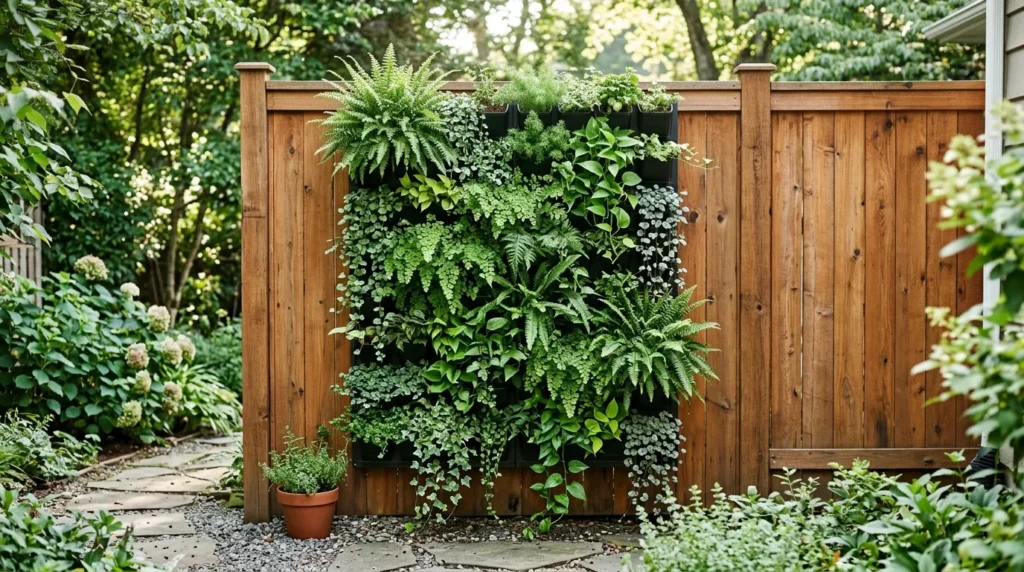
A vertical living wall takes container gardening to a larger scale, mounting multiple plants in a grid or panel system directly onto a wall or fence. This approach is particularly effective in small backyards where ground space for traditional garden beds is limited, since it essentially adds an entire additional planting surface without using any floor area. One simple trick I always suggest for anyone with a small or awkward yard shape is considering a living wall specifically for underused vertical surfaces, like a blank fence or the side of a garage.
How To Style It
Choose a modular living wall system with individual pockets or planters, which makes it easier to swap out individual plants without disturbing the entire installation. Select plants suited to the wall’s sun exposure, with shade-tolerant ferns and trailing vines working well for shadier walls and succulents or herbs suited to sunnier locations. Ensure the mounting structure is properly secured and rated for the combined weight of the planters, soil, and mature plants, since a fully planted living wall can be substantially heavier than it appears. Position the wall where it will be visible from a patio or frequently used area of the yard to get the most enjoyment from the installation.
10. Woodland Style Shade Garden
Quick Benefits
- Turns a shaded yard area into a lush, usable space
- Works well beneath mature trees where grass struggles
- Requires less water than sun-loving plantings
- Adds textural variety through shade-tolerant foliage
- Creates a naturalistic, layered look
Why It Works
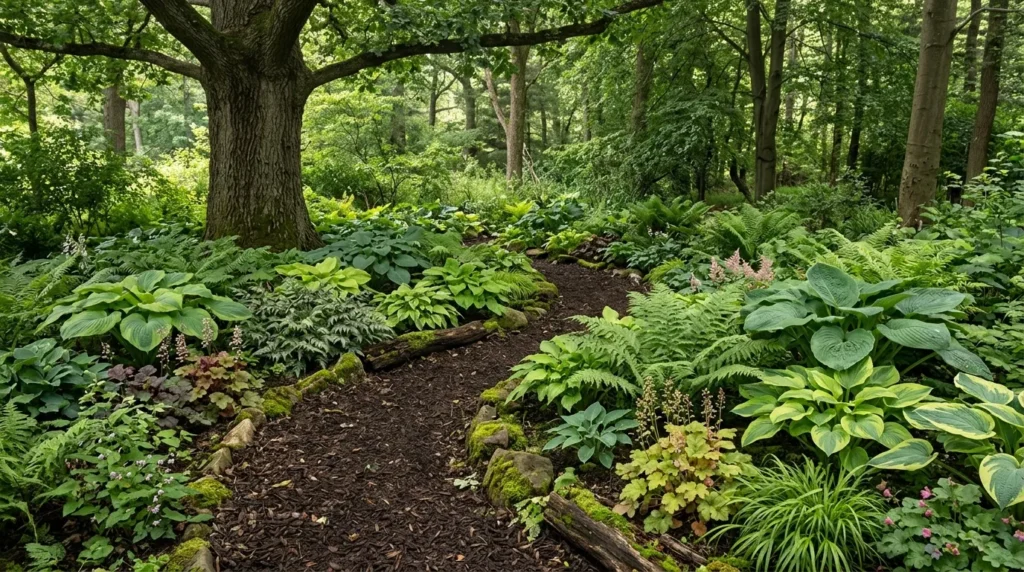
Shaded areas of the yard are often left bare or struggling with patchy grass, when in reality they’re perfectly suited to a woodland-style garden built around shade-tolerant foliage plants. Ferns, hostas, and other shade-loving perennials thrive in exactly the conditions that frustrate lawn grass, turning a problem area into one of the most textured and interesting parts of the yard. That’s why many designers recommend embracing a shaded area with a dedicated planting plan rather than continuing to fight for grass growth where it simply won’t thrive.
How To Style It
Choose shade-tolerant plants like hostas, ferns, astilbe, and heuchera, layering varying leaf shapes and textures to create visual interest without relying on bright bloom color. Incorporate a mulched path or stepping stones through the bed if the area is large enough, which makes the space feel like an intentional garden rather than an overlooked corner. Add a few taller shade-tolerant shrubs toward the back of the bed for structure, with lower groundcover plants filling in the front edges. Water consistently during establishment, since even shade-tolerant plants need adequate moisture in their first season before their root systems mature.
Frequently Asked Questions
What’s the easiest backyard greenery idea for beginners?
Container garden groupings and a simple layered garden bed border are both approachable starting points, since they don’t require extensive planning or specialized knowledge. Container gardens in particular are flexible and forgiving, allowing you to experiment and rearrange as you learn what works in your specific space. Starting small with one bed or one grouping of containers before expanding is a practical way to build confidence.
How do I add greenery to a small backyard?
Vertical solutions like climbing vine trellises and living wall planters are particularly effective in small yards, since they add greenery without using ground space. Container groupings are another flexible option that can be adjusted as your space or needs change. Choosing plants with a smaller mature size also helps keep a compact yard from feeling overcrowded as everything grows in.
What plants require the least maintenance for backyard landscaping?
Ornamental grasses, native plant selections, and established boxwood hedges are generally lower-maintenance once they’re settled into the landscape. These options typically need less frequent watering and fertilizing than many ornamental non-native plants. Choosing plants suited to your specific climate and soil conditions from the start significantly reduces ongoing maintenance regardless of which category you choose.
How long does it take for a garden bed to look established?
Most garden beds take two to three growing seasons to look fully established, as perennials mature and fill in the spacing left between initial plantings. Patience during the first year or two is important, since overcrowding plants to achieve an instant full look often leads to competition and poor growth later. Mulching helps the bed look tidy and intentional even while plants are still filling in.
Can I landscape with greenery in a shaded backyard?
Yes, shaded areas are well-suited to woodland-style gardens using shade-tolerant plants like hostas, ferns, and heuchera, which often struggle less in shade than grass does. These plantings can turn a previously bare or patchy shaded area into one of the more textured, interesting parts of the yard. Choosing plants specifically suited to shade, rather than trying to force sun-loving varieties to grow there, is the key to success.
Are native plants actually better for backyard landscaping?
Native plants are generally well-suited to your specific climate and soil, which typically means less water, less fertilizer, and fewer pest problems compared to non-native ornamental options. They also tend to support local pollinators and wildlife more effectively than many non-native alternatives. That said, a thoughtful mix of native and non-native plants can still create a beautiful, functional landscape depending on your specific goals.
Conclusion
A backyard doesn’t need an elaborate landscaping budget to feel lush, layered, and genuinely enjoyable to spend time in — thoughtful greenery does most of the heavy lifting. From layered garden beds and ornamental grasses to climbing vines and a well-placed shade tree, each of these ideas adds real texture and life to a yard, whether you’re starting from scratch or building on what’s already there.
If you’re ready to start, pick one area of your yard to focus on first — maybe that’s a container grouping for the patio, or finally addressing that shaded corner where grass has never really grown. Backyard landscaping tends to be a gradual process, and each addition builds toward a more established, beautiful outdoor space over time.
Start with one or two ideas and gradually build a space that reflects your style and supports everyday comfort.
Related Articles
- How to Decorate a Bedroom with Natural Materials
- DIY Accent Wall Ideas
- Small Living Room Ideas with Budget-Friendly Decor
- Neutral Home Styling Tips
- Patio and Outdoor Living Ideas