10 Bedroom Wall Decor Ideas with Wood Accents
Bedroom walls are one of the most underused spaces in the whole house. In my experience, people spend a lot of time and budget on the bed, the bedding, and the furniture, and then treat the walls as an afterthought — maybe one framed print, or nothing at all. That’s a missed opportunity, because wall decor is often what makes a bedroom feel finished rather than just functional, and wood accents in particular bring a warmth that paint and paper alone can’t quite achieve.
I’ve noticed that wood-accented wall decor tends to age especially well compared to trend-driven options like bold wallpaper or seasonal color choices. A mistake many homeowners make is assuming wood wall decor means a major renovation — full shiplap, built-in paneling, a custom accent wall installed by a contractor. In reality, there are plenty of lower-effort, budget-friendly ways to bring wood texture to your bedroom walls that don’t require construction at all.
This article covers ten bedroom wall decor ideas built specifically around wood accents, ranging from simple floating shelves to full slatted accent walls, so you can choose based on your budget, your rental situation, and how much effort you want to put in. Each idea includes the reasoning behind why it works, along with practical guidance on materials and styling so you can get a genuinely finished look without guesswork.
One thing that works especially well with wood wall decor is layering it with softer elements like textiles or greenery, rather than letting the wood stand entirely on its own. That balance is woven through the ideas below, and it’s a big part of why these walls tend to feel warm and considered rather than heavy or rustic in a dated way.
Table of Contents
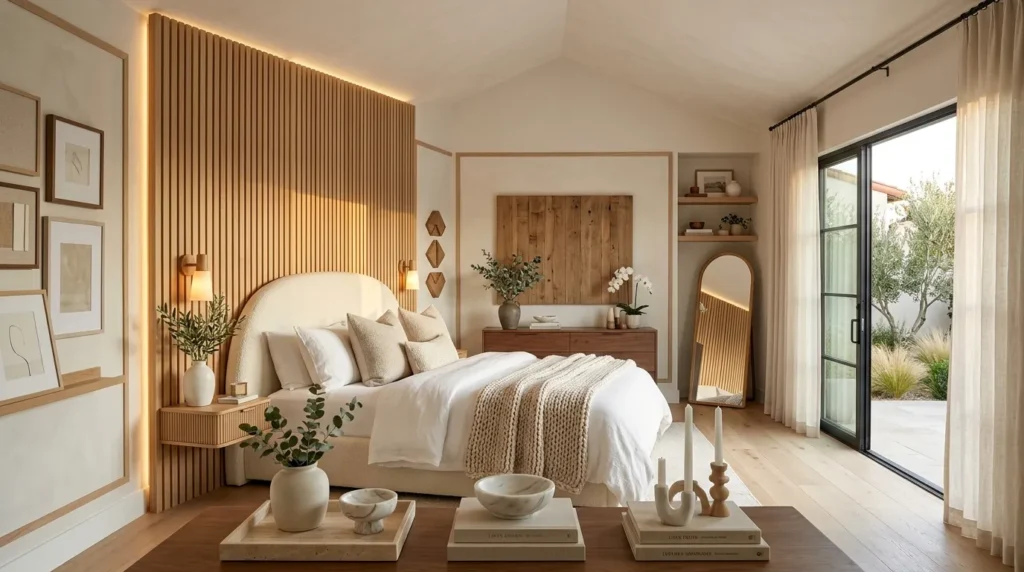
- Slatted Wood Accent Wall — A textured focal wall behind the headboard.
- Floating Wood Shelves — Functional display space that doubles as decor.
- Wood Framed Gallery Wall — A curated mix of art in coordinating wood tones.
- Reclaimed Wood Panels — Rustic texture with character and history.
- Wood Framed Mirror Display — Reflective decor that adds warmth and light.
- Carved Wood Wall Art — Sculptural texture as a single statement piece.
- Wood Ladder Display Shelf — A leaning storage and styling solution.
- Wood Bead Wall Hangings — Soft, organic texture in a modern shape.
- Wood Frame Woven Tapestry — Combining wood and fiber textures together.
- Salvaged Wood Headboard Wall — A large-scale statement above the bed.
1. Slatted Wood Accent Wall
Quick Benefits
- Creates a strong, textured focal point behind the bed
- Works as a DIY weekend project for most skill levels
- Adds warmth without requiring bold paint color
- Suits a wide range of bedroom styles
- More budget-friendly than full paneling or built-ins
Why It Works
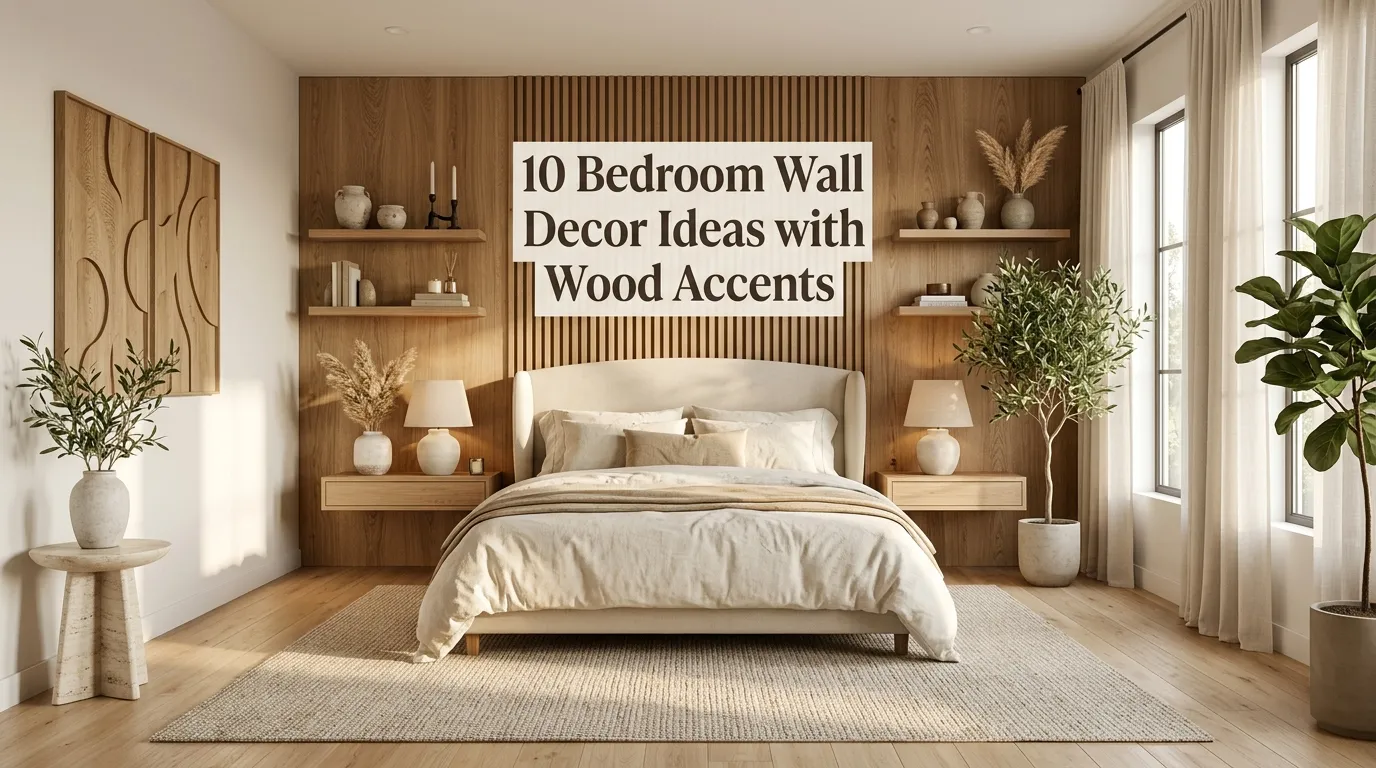
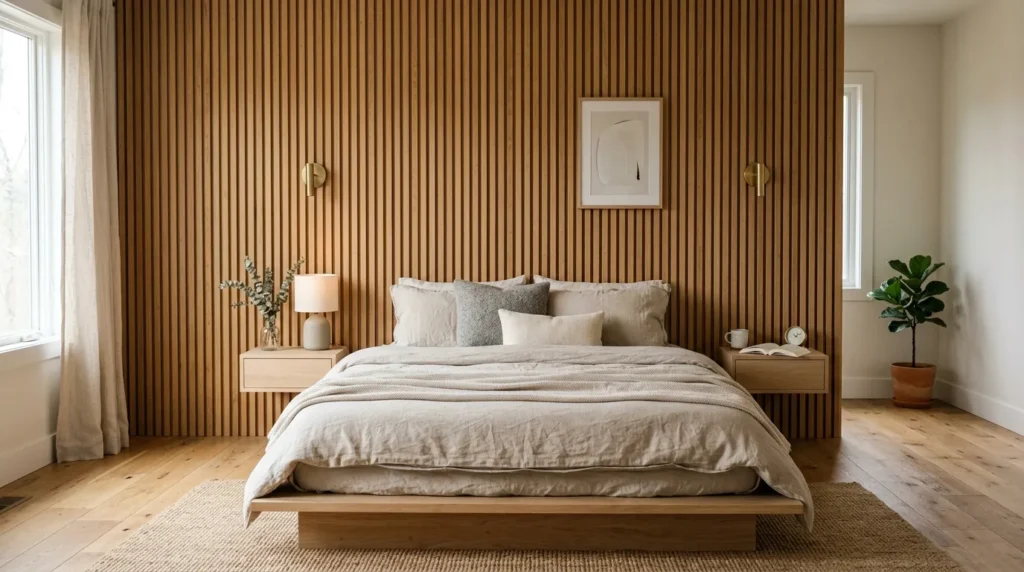
A slatted wood accent wall has become one of the most popular ways to add texture behind a bed, and it earns that popularity because it delivers a big visual impact for a relatively manageable amount of effort. In my experience, this kind of wall does double duty: it acts as an oversized piece of art in its own right, and it also frames the bed in a way that makes the whole room feel more intentional and designed. A mistake many homeowners make is going straight to a full accent wall without measuring their headboard width first, which can leave the slats looking disconnected from the bed below.
How To Style It
Measure the width of your headboard and plan the slatted section to extend a bit beyond it on each side, so the wall reads as a cohesive backdrop rather than a random rectangle. Choose a wood tone that either matches your existing furniture for a seamless look or offers gentle contrast for a more layered feel. Pre-made slat panels or individual furring strips both work, with furring strips offering more flexibility for spacing and pattern. Keep the rest of the room simple once the slatted wall is in place, since it naturally becomes the room’s main focal point.
2. Floating Wood Shelves
Quick Benefits
- Adds storage and display space without using floor area
- Budget-friendly compared to full bookshelves
- Easy to install with minimal wall damage
- Introduces wood texture without a large commitment
- Simple to update and restyle over time
Why It Works
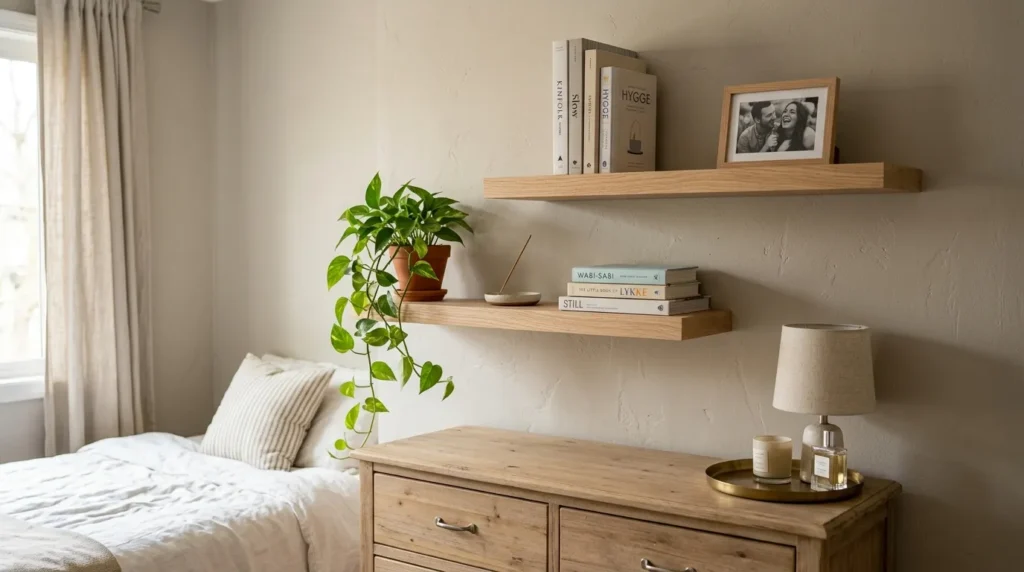
Floating wood shelves solve a very practical bedroom problem — where to display books, photos, and small decor — while also introducing wood texture to a plain wall. I’ve seen this idea transform bare, unstyled corners more than almost any other option on this list, since a couple of shelves can turn an empty stretch of wall into one of the more visually interesting parts of the room. One simple trick I always suggest is staggering shelf heights slightly rather than lining them up in a perfectly even row, which creates a more natural, less rigid display.
How To Style It
Install two or three floating wood shelves at staggered heights, using a mix of books, a small plant, and one or two decorative objects per shelf rather than filling every inch. Choose a wood tone and bracket finish that complements your existing furniture, whether that’s a light oak or a deeper walnut stain. Leave some negative space on each shelf, since an overcrowded display can look cluttered rather than curated. Position the shelves above a dresser, beside the bed, or in an empty corner where the wall would otherwise stay bare.
3. Wood Framed Gallery Wall
Quick Benefits
- Adds personality and visual interest at a modest cost
- Uses wood tones to unify a mix of art styles
- Fills wall space without competing for floor room
- Highly customizable to your existing photos or prints
- Easy to update or rearrange over time
Why It Works
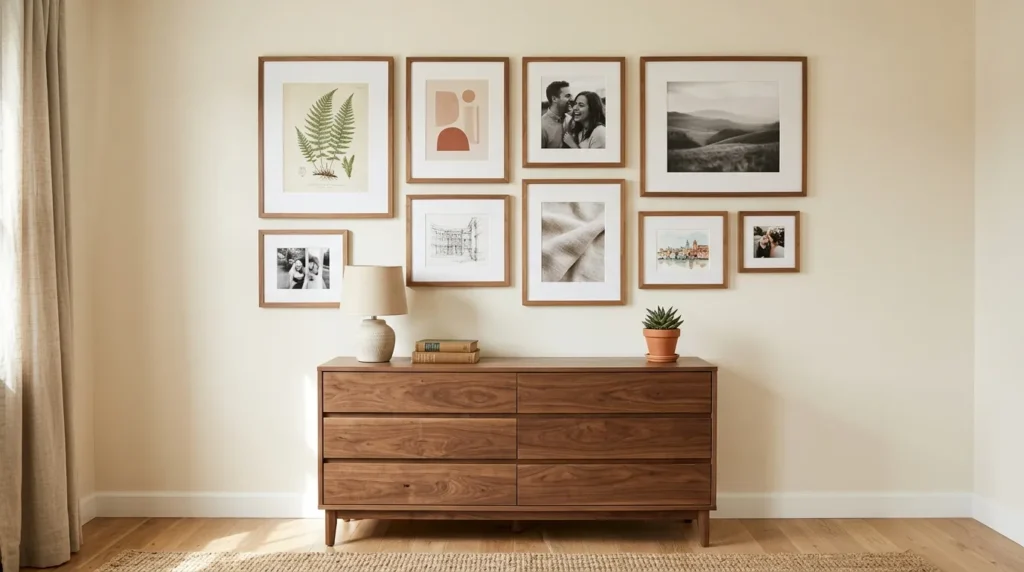
A gallery wall built specifically around wood-framed pieces brings cohesion to what might otherwise be a mismatched collection of art and photos. That’s why many designers recommend choosing frame material as the unifying element in a gallery wall, rather than trying to match every piece of art in color or subject matter. Wood frames in particular add warmth to the overall arrangement in a way that black or white frames don’t, which suits a bedroom’s more relaxed, personal atmosphere especially well.
How To Style It
Choose wood frames in a consistent tone family — even if the shades vary slightly, staying within the same warm or cool wood family keeps the wall feeling cohesive. Lay the arrangement out on the floor first to plan spacing and balance before hanging anything, which helps avoid unnecessary nail holes. Mix frame sizes for visual interest, but keep at least one or two matching pairs to anchor the arrangement and prevent it from feeling too scattered. Include a mix of photography, art prints, and perhaps a small mirror in a matching wood frame to add variety within the cohesive material theme.
4. Reclaimed Wood Panels
Quick Benefits
- Adds rustic character and visible history to the wall
- Environmentally friendly compared to new lumber
- Creates a strong textural focal point
- Works especially well in farmhouse or eclectic styles
- Often available secondhand at lower cost than new wood
Why It Works
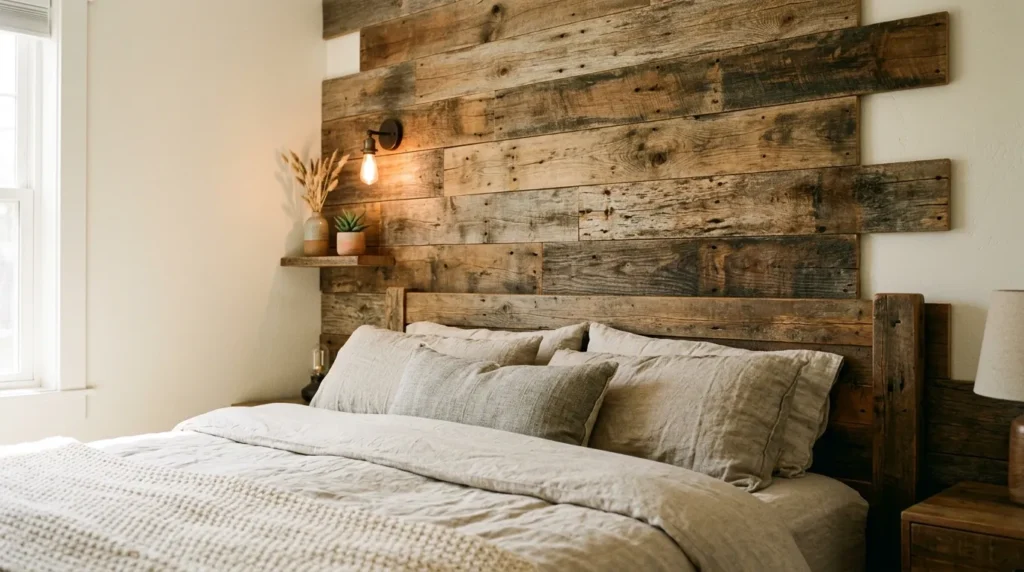
Reclaimed wood brings a texture and story that new lumber can’t replicate — visible grain, weathering, nail holes, and variation in tone that comes from the wood’s previous life. In my experience, this kind of imperfect, characterful texture tends to make a wall feel more personal and less like it came straight from a big-box store display. A mistake many homeowners make is trying to make reclaimed wood look too uniform or polished, when the slight irregularities are actually what give it appeal in the first place.
How To Style It
Source reclaimed wood from salvage yards, demolition sales, or secondhand marketplaces, checking for structural soundness and treating for pests if the wood came from an outdoor source. Install panels as a partial accent behind the headboard rather than covering an entire wall, which keeps the look intentional rather than overwhelming. Mix board widths and slight tonal variations rather than trying to match every piece exactly, since that variation is part of what makes reclaimed wood look authentic. Seal the wood with a clear finish if you want to preserve its current look while protecting it from further wear.
5. Wood Framed Mirror Display
Quick Benefits
- Adds both wood texture and reflected light to the room
- Instantly elevates a plain bedroom wall
- Works well above a dresser or beside the bed
- Reflects natural light to brighten the space
- Available at a wide range of price points
Why It Works
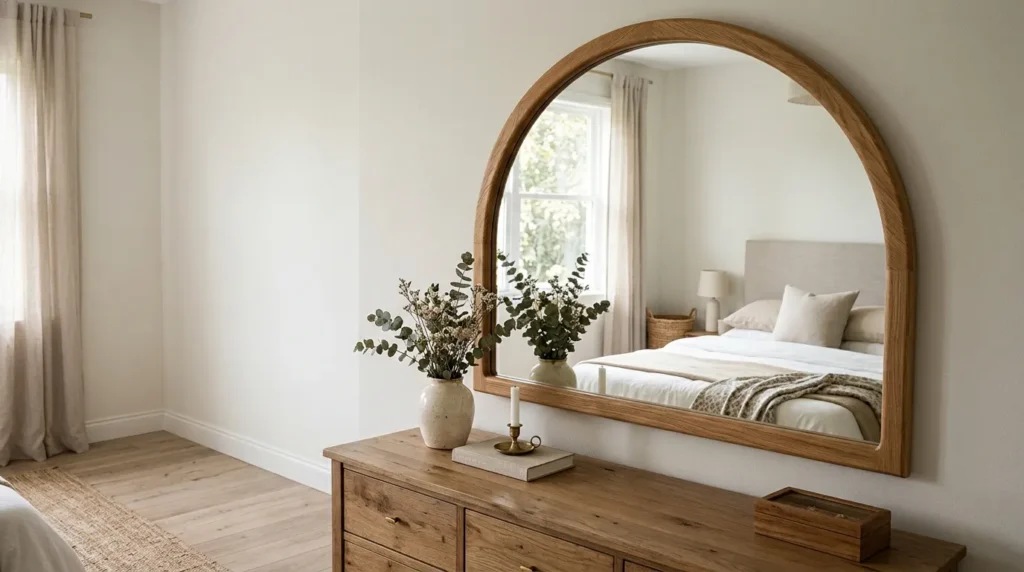
A wood-framed mirror brings together two of the most effective bedroom wall decor strategies at once — reflective surfaces that brighten a room, and warm wood texture that adds coziness. If you’re anything like me, you’ve noticed how a well-placed mirror can make even a small bedroom feel more open, and choosing a wood frame over a plain or metal one adds an extra layer of warmth to that effect. One simple trick I always suggest is positioning a wood-framed mirror across from a window whenever possible, so it reflects natural daylight back into the room throughout the day.
How To Style It
Choose one larger wood-framed mirror rather than several small ones, since a single substantial piece creates a stronger visual impact and a clearer sense of depth. Position it across from a window if your layout allows, or above a dresser as a functional and decorative combination. An arched or round wood frame softens a room with a lot of straight lines, while a rectangular frame reinforces a more classic, grounded look. Secondhand shops are a great source for wood-framed mirrors, often at a much lower cost than new retail options.
6. Carved Wood Wall Art
Quick Benefits
- Adds sculptural texture as a single statement piece
- Requires no additional framing or matting
- Works well as a focal point above furniture
- Available in a range of styles from simple to ornate
- Low-maintenance compared to framed prints under glass
Why It Works
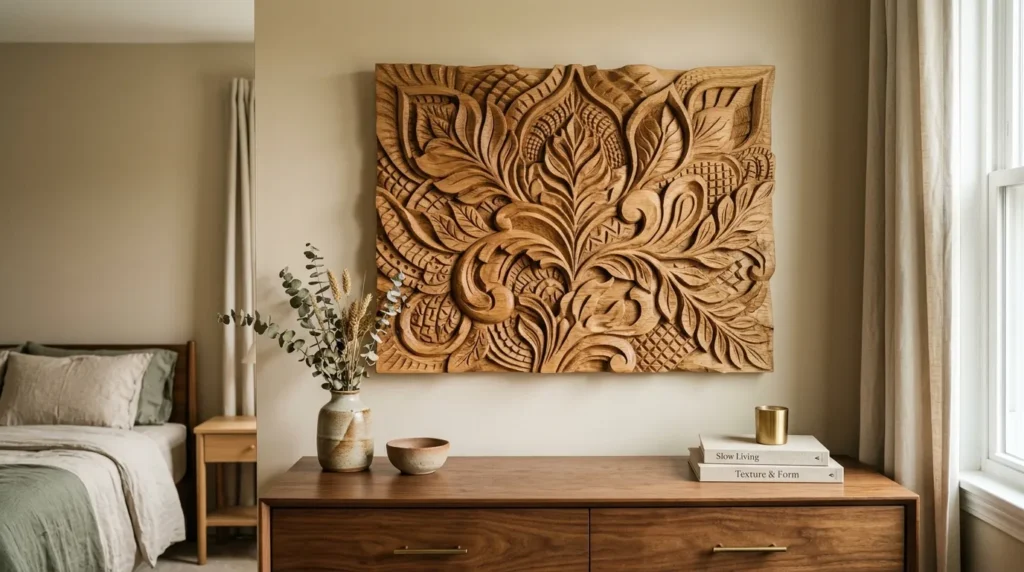
Carved or sculptural wood wall art offers a three-dimensional alternative to flat framed prints, adding shadow and texture that shifts subtly depending on the room’s lighting throughout the day. I’ve noticed that a single well-chosen carved piece often has more visual impact than several flat prints combined, since the depth and shadow give it a presence that a two-dimensional piece can’t match. That’s why many designers recommend a carved wood piece as a strong, low-effort focal point above a dresser or bed.
How To Style It
Choose one carved or sculptural wood piece sized appropriately for the wall — roughly two-thirds the width of the furniture below it tends to look balanced. Position it where natural or lamp light will catch its texture and cast subtle shadows, which enhances the three-dimensional effect throughout the day. Keep the surrounding wall simple and uncluttered so the piece reads as an intentional focal point rather than one element among many. Secondhand and vintage shops often carry unique carved wood pieces at accessible prices, especially compared to commissioned custom work.
7. Wood Ladder Display Shelf
Quick Benefits
- Adds vertical storage and display without wall mounting
- Renter-friendly since it leans rather than attaches to the wall
- Works well for blankets, books, and small decor together
- Budget-friendly compared to built-in shelving
- Easy to move and rearrange as needed
Why It Works
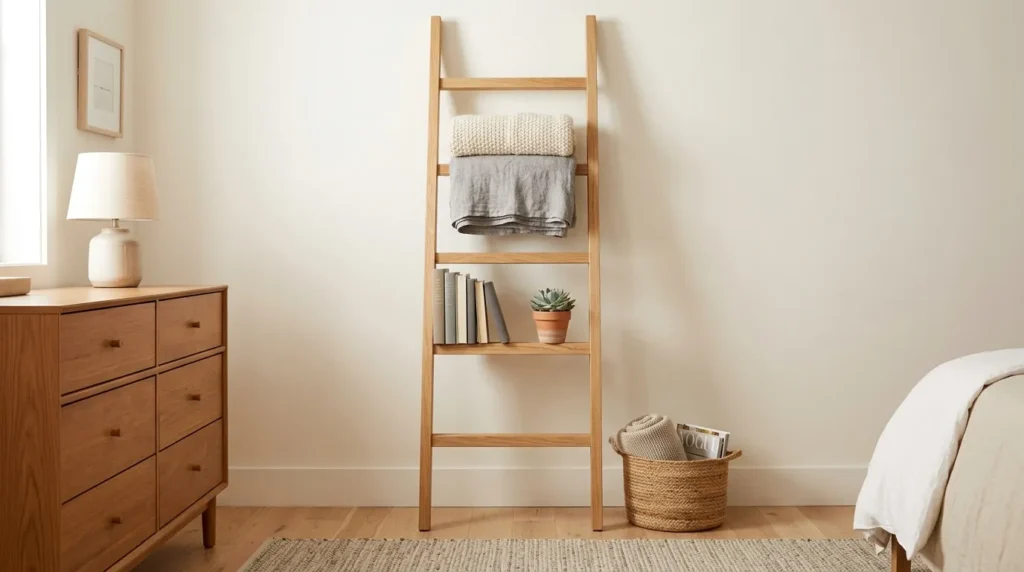
A leaning wood ladder shelf is a particularly good option for renters or anyone who wants wood wall decor without drilling into the wall at all. It brings the same warm wood texture as floating shelves or a slatted accent wall, but functions as furniture rather than a permanent wall fixture, which makes it flexible if you move or want to rearrange the room. A mistake many homeowners make is overlooking leaning shelves entirely because they don’t think of them as “wall decor,” when in practice they add just as much wood texture and visual interest to a wall as mounted options.
How To Style It
Lean a wood ladder shelf against an empty wall beside the bed or dresser, using the rungs to display folded blankets, books, and a few small decorative objects. Choose a wood tone that complements your existing furniture, and keep the styling light on the lower rungs so the piece doesn’t feel overloaded. This option works particularly well in small bedrooms, since it adds storage and wall interest without requiring any wall space commitment beyond where it leans. Pair it with a small basket on the floor beside it for additional, low-key storage.
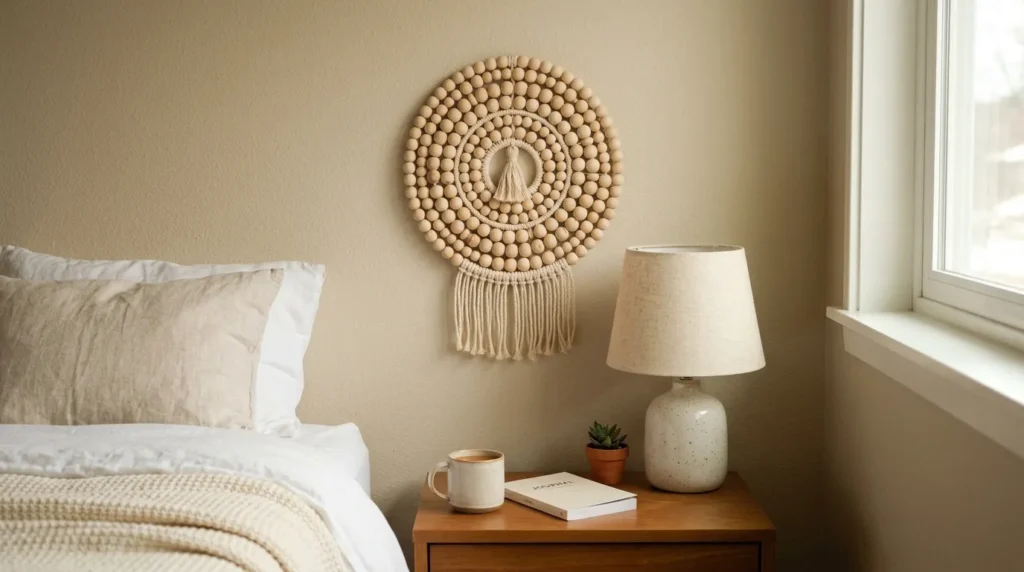
8. Wood Bead Wall Hangings
Quick Benefits
- Adds soft, organic wood texture in a lightweight form
- Suits both modern and more relaxed bedroom styles
- Easy to hang without heavy-duty wall anchors
- Budget-friendly compared to larger wood installations
- Available in a range of shapes and finishes
Why It Works
Wood bead wall hangings — strands of wooden beads arranged in decorative shapes or simple draped garlands — bring wood texture to a wall in a softer, more organic form than a flat panel or shelf. This idea works especially well for anyone who wants the warmth of wood without a heavy or rustic look, since the beaded form reads as more delicate and current. In my experience, this kind of piece pairs particularly well with modern bedrooms that already use wood elsewhere, adding a complementary texture without repeating the same visual weight.
How To Style It
Choose a wood bead wall hanging in a size and shape that suits the wall you’re decorating — a small circular or arched design for an accent above a nightstand, or a larger draped garland for above the headboard. Match the bead’s wood tone to your existing furniture where possible, or choose a lighter or darker option intentionally for contrast. These pieces are typically lightweight enough to hang with a small nail or adhesive hook, making them a good renter-friendly option. Pair with one or two other simple decor elements nearby rather than crowding the wall, since the beaded texture works best with some breathing room.
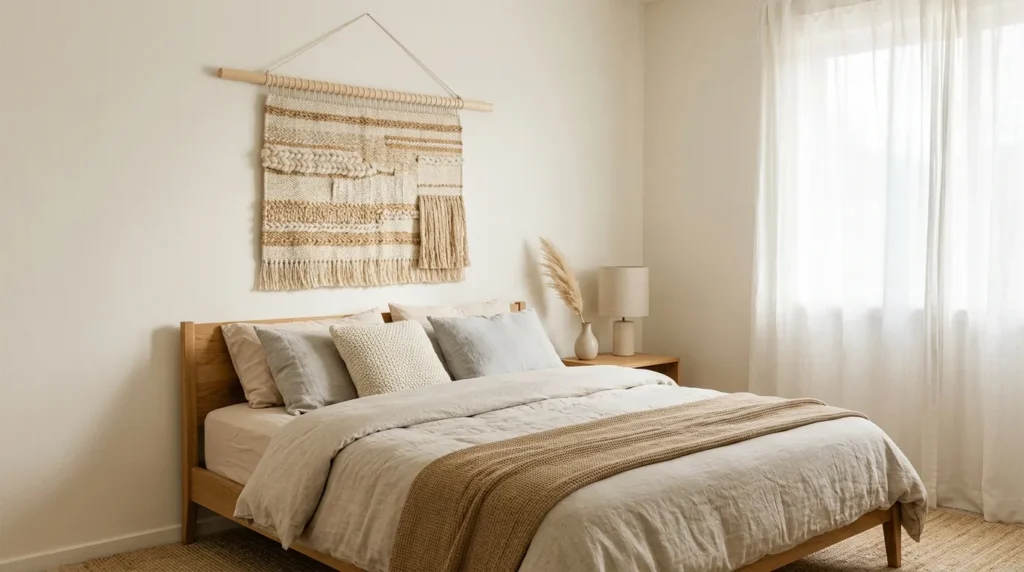
9. Wood Frame Woven Tapestry
Quick Benefits
- Combines wood texture with soft fiber material
- Adds visual depth without bold color
- Suits a wide range of bedroom styles
- Budget-friendly compared to large framed art
- Easy to source secondhand or from budget retailers
Why It Works
Pairing a wood frame with a woven fiber tapestry or wall hanging brings together two natural materials in a single piece, adding both structure and softness to a bedroom wall. That’s why many designers recommend this combination specifically for bedrooms, where a purely hard material like wood alone can feel slightly less inviting than when it’s balanced with a soft, textured fiber element. I’ve seen this idea transform plain walls into some of the most visually rich spots in the room, since the combination of materials creates natural depth without needing bold color.
How To Style It
Choose a woven tapestry or wall hanging in warm, neutral fiber tones — cream, tan, or rust — framed or bordered with a simple wood element, whether that’s a dowel at the top or a full wood frame. Size the piece appropriately for the wall, keeping in mind that a single substantial piece often looks more intentional than several smaller ones. Position it above the bed or on an accent wall where it can serve as a clear focal point. Keep the surrounding wall decor minimal so the combined wood-and-fiber texture stands out clearly.
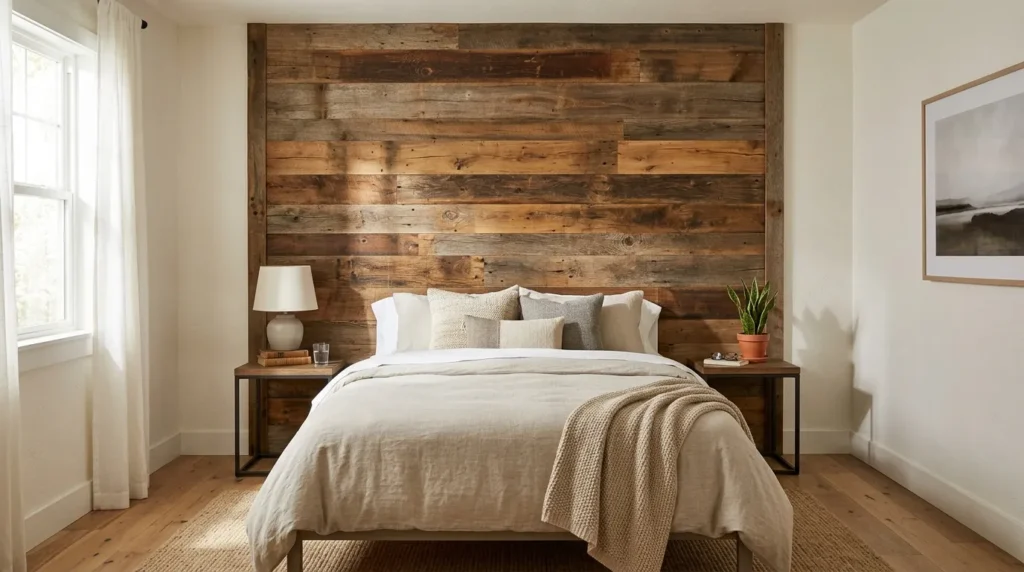
10. Salvaged Wood Headboard Wall
Quick Benefits
- Creates a large-scale, one-of-a-kind statement above the bed
- Combines headboard and wall decor into a single feature
- Adds significant character and texture to the room
- More affordable than custom-built headboards in many cases
- Environmentally conscious use of salvaged materials
Why It Works
A salvaged wood headboard wall goes a step further than a slatted accent wall by using reclaimed or mismatched wood pieces to build a headboard shape directly into the wall itself, blurring the line between furniture and wall decor. This approach creates a genuinely one-of-a-kind focal point, since no two salvaged wood collections look exactly alike. A mistake many homeowners make is buying a generic upholstered headboard when a salvaged wood version, built with a bit of DIY effort, often has significantly more character and costs considerably less.
How To Style It
Source salvaged wood boards in similar widths but varying tones for visual interest, then arrange and secure them to the wall in a shape that mimics a traditional headboard silhouette. Keep the arrangement simple — a rectangular or gently arched shape both work well and are easier to execute than more elaborate designs. Seal the wood with a clear protective finish to maintain its current look while guarding against the wear that comes from leaning against it nightly. Style the surrounding wall minimally, letting the salvaged wood headboard serve as the room’s clear, unmistakable focal point.
Frequently Asked Questions
What’s the easiest wood wall decor idea for renters?
Floating shelves, a wood ladder display, and wood bead wall hangings are all renter-friendly options since they require minimal wall damage or, in the ladder’s case, none at all. These options add wood texture without the commitment of a full accent wall or salvaged wood installation. A wood-framed mirror or gallery wall are also easy to remove without leaving significant damage.
How do I choose a wood tone that matches my existing furniture?
Bring a photo or a small sample of your existing wood furniture when shopping, and look for options within the same warm or cool undertone family, even if the exact shade varies slightly. Perfectly matching every wood tone in a room isn’t necessary — complementary tones within the same family read as intentional rather than mismatched. Mixing a couple of different wood tones can actually add depth as long as they share a similar undertone.
Is a slatted accent wall a difficult DIY project?
A slatted accent wall is a moderate DIY project, generally manageable for someone comfortable with basic tools and measuring, and can typically be completed over a weekend. Pre-made slat panels simplify the process compared to cutting and spacing individual furring strips by hand. Measuring your headboard width beforehand helps ensure the finished wall looks proportional to the bed below it.
Can I mix wood accents with other wall decor materials?
Yes, mixing wood with other materials like woven fiber, ceramic, or metal often creates more visual depth than wood alone. A wood-framed mirror, a wood-and-tapestry combination piece, or a gallery wall mixing wood frames with a few metal ones are all effective ways to combine materials. Keeping a consistent color palette across the mixed materials helps the wall feel cohesive rather than scattered.
How much does a salvaged wood headboard wall typically cost to make?
Costs vary widely depending on where you source the wood, but salvaged and reclaimed wood is generally more affordable than new lumber of comparable character, especially when sourced from salvage yards or secondhand marketplaces. The main investment tends to be time and labor rather than materials. This makes it one of the more budget-friendly ways to achieve a large-scale, custom-look wall feature.
What size should wood wall art be above a bed?
A general guideline is sizing wall art to about two-thirds the width of the headboard or bed frame below it, which creates a balanced, proportional look. Oversized pieces can overwhelm a smaller headboard, while undersized pieces can look disconnected from the furniture below. When in doubt, laying the piece out on the floor near the bed before hanging it helps visualize the proportions.
Conclusion
Bedroom walls have more decorating potential than they usually get credit for, and wood accents are one of the most effective ways to bring warmth, texture, and personality to that often-overlooked space. From a slatted accent wall and floating shelves to a salvaged wood headboard, each of these ideas adds genuine character without requiring a full renovation or a large budget.
If you’re ready to update your own bedroom walls, start with whichever idea feels most manageable right now — maybe that’s a couple of floating shelves, or a wood-framed mirror you already have on hand. These changes build on each other over time, and before long, your bedroom walls will feel just as considered as the rest of the room.
Start with one or two ideas and gradually build a space that reflects your style and supports everyday comfort.
Related Articles
- How to Decorate a Bedroom with Natural Materials
- 10 Modern Bedroom Ideas That Feel Warm
- Cozy Bedroom Ideas on a Budget
- DIY Accent Wall Ideas
- Neutral Home Styling Tips