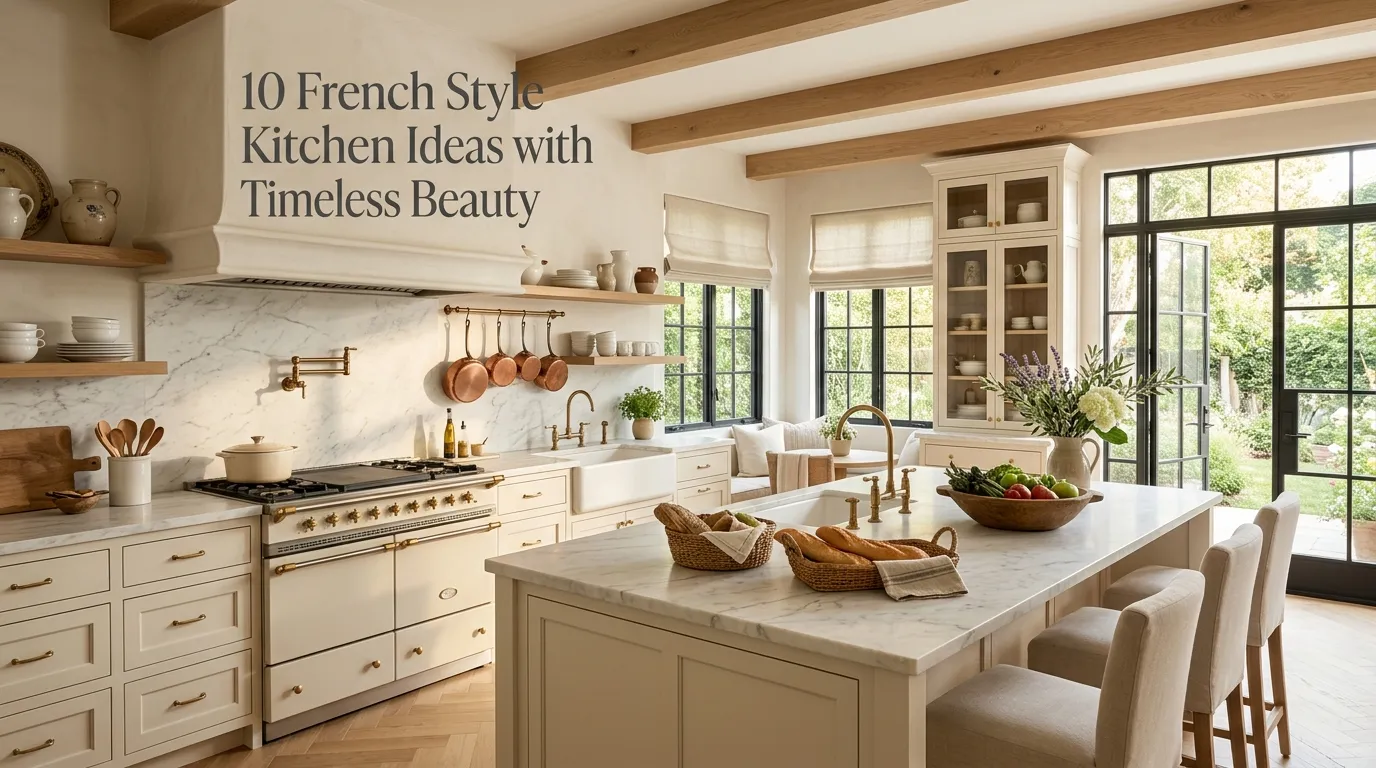
10 French Style Kitchen Ideas with Timeless Beauty
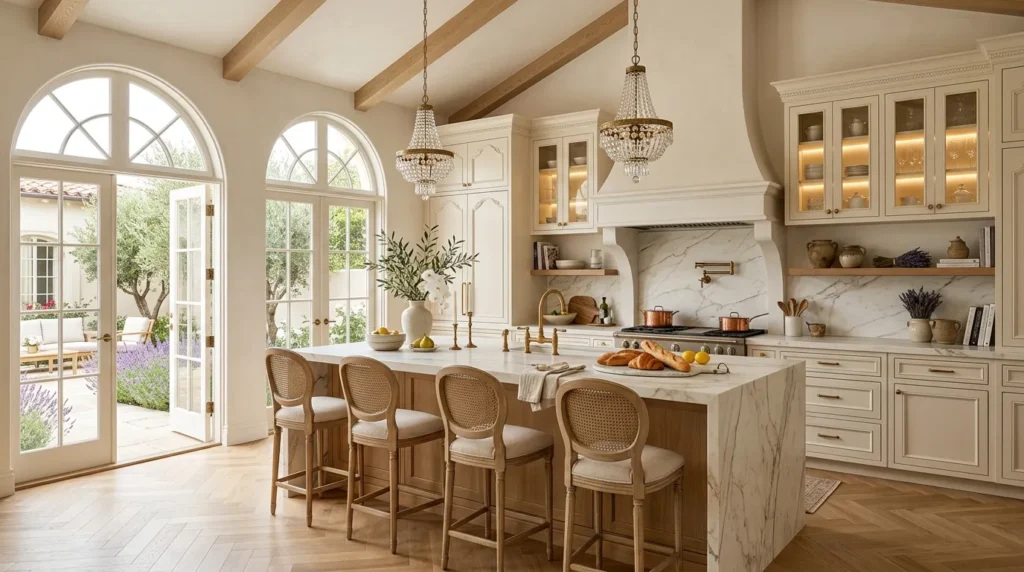
French style kitchens have a particular quality that’s hard to pin down in a single word — they feel collected, warm, and unmistakably lived-in, even when they’re brand new. In my experience, this is exactly why the look holds up so well over time compared to more trend-driven kitchen styles. A French-inspired kitchen isn’t chasing the latest finish or gadget; it’s built around materials and details that have looked good in kitchens for generations, which is a big part of what makes the style feel timeless rather than dated a few years down the road.
I’ve noticed that people sometimes assume a French style kitchen requires a full renovation with custom cabinetry and imported materials, when in reality the look comes together through a handful of key details layered thoughtfully. A mistake many homeowners make is trying to achieve the look with one or two obvious “French” elements, like a single toile print or an ornate mirror, without considering the material choices, lighting, and hardware that actually carry most of the style’s character.
This article walks through ten French style kitchen ideas that bring together the warmth, materiality, and quiet elegance the style is known for. You’ll find guidance on cabinetry, lighting, hardware, and styling details, along with the reasoning behind why each choice contributes to that timeless, collected feel. Whether you’re planning a full kitchen remodel or looking for smaller updates within an existing layout, these ideas are meant to be adaptable to your specific project and budget.
One thing that works especially well in French style kitchens is restraint paired with quality — fewer, better materials and finishes rather than an abundance of decorative elements. That principle runs through every idea below, and it’s a large part of why this style continues to feel elegant rather than fussy or overdone.
Table of Contents
- Warm Cream Cabinetry — A soft, classic base color that never feels cold.
- Brass and Bronze Hardware — Warm metal finishes that elevate every detail.
- Farmhouse Apron Sink — A functional focal point with historic character.
- Open Shelving with Ceramics — Displaying collected dishware as decor.
- Statement Range Hood — An architectural focal point above the stove.
- Natural Stone Countertops — Timeless surfaces with organic variation.
- Woven and Wicker Seating — Textural seating for kitchen islands and nooks.
- Vintage Inspired Lighting — Fixtures that suggest history and craftsmanship.
- Herringbone Tile Flooring — Classic pattern with lasting visual interest.
- Layered Linen Textiles — Soft textile touches for windows and seating.
1. Warm Cream Cabinetry
Quick Benefits
- Softer and warmer than stark white cabinetry
- Timeless base color that suits many finishes
- Pairs beautifully with warm metal hardware
- Hides everyday wear better than pure white
- Works across both traditional and updated layouts
Why It Works
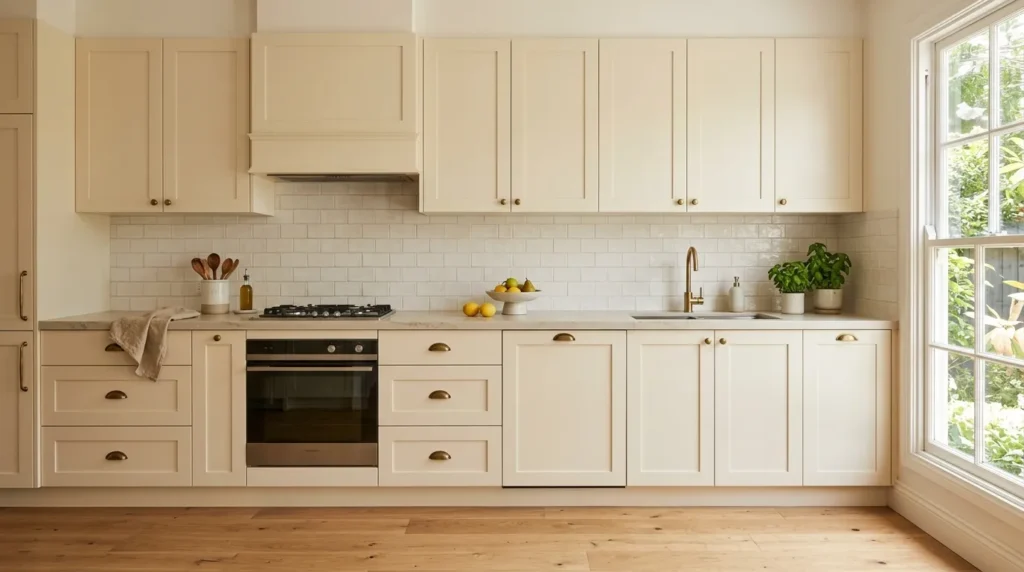
Warm cream or soft ivory cabinetry is one of the defining features of a French style kitchen, offering a gentler, more inviting alternative to the stark, cool whites common in many modern kitchen designs. In my experience, this warmer base tone is a big part of why French kitchens photograph and live so beautifully in natural light, since cream tones soften shadows and avoid the slightly clinical look that pure white can sometimes create. A mistake many homeowners make is choosing a bright white specifically because it feels like a safe, neutral choice, without considering how a warmer cream tone might actually suit the room’s natural light and overall mood better.
How To Style It
Choose a warm cream or soft ivory paint or cabinet finish rather than a stark white, testing samples in your actual kitchen lighting before committing, since undertones can shift significantly between natural and artificial light. Pair the cream cabinetry with warm-toned countertops and backsplash materials to reinforce the soft, cohesive palette throughout the space. Shaker-style or slightly raised panel cabinet doors suit the French aesthetic particularly well, offering enough detail to feel classic without becoming overly ornate. Keep wall colors in a similarly warm, soft tone so the cabinetry doesn’t stand in stark contrast to its surroundings.
2. Brass and Bronze Hardware
Quick Benefits
- Adds warmth and a sense of craftsmanship to cabinetry
- Coordinates beautifully with cream and warm neutral palettes
- Available in a range of finishes from polished to aged
- Elevates even simple cabinet designs
- Small-scale update with significant visual impact
Why It Works
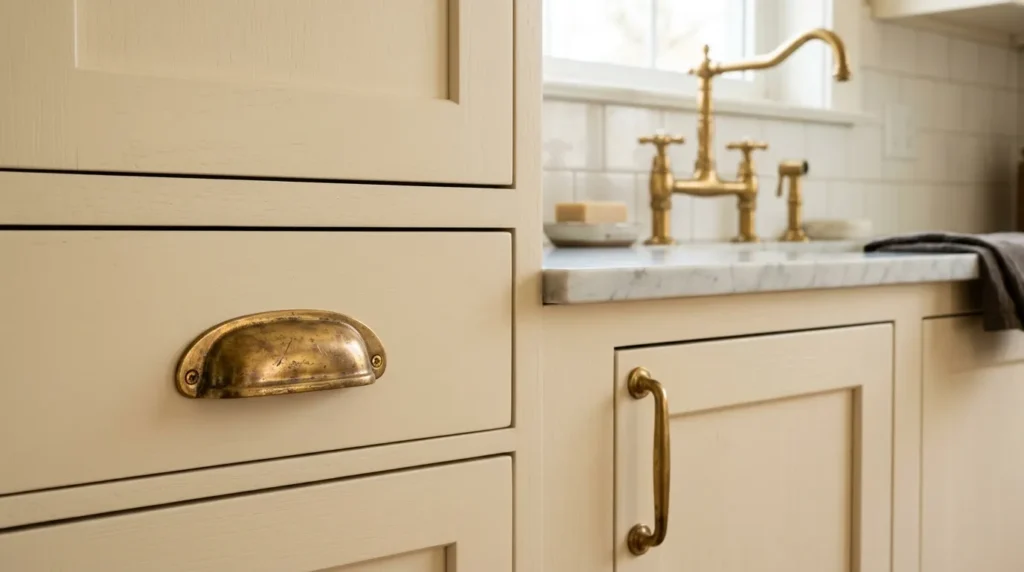
Hardware is a small detail with an outsized effect on a kitchen’s overall character, and brass or bronze finishes bring a warmth and sense of craftsmanship that cooler finishes like chrome or brushed nickel simply don’t convey in the same way. That’s why many designers recommend brass or bronze specifically for a French style kitchen, since these warm metals echo the historic ironwork and fixtures found in traditional French kitchens, even in a completely new build. I’ve seen this idea transform simple, builder-grade cabinetry into something that reads as considerably more elegant, purely through a hardware swap.
How To Style It
Choose brass, unlacquered brass, or oil-rubbed bronze knobs and pulls, keeping the finish consistent across all cabinetry, drawers, and faucet fixtures for a cohesive look. Unlacquered brass in particular develops a natural patina over time, which many people find suits the collected, timeless character of a French kitchen especially well. If replacing all hardware isn’t in the budget immediately, start with the most visible pieces, like door pulls on upper cabinets or a statement faucet, and expand from there. Coordinate lighting fixture finishes with your chosen hardware metal for a fully cohesive material story throughout the room.
3. Farmhouse Apron Sink
Quick Benefits
- Iconic feature strongly associated with French kitchen style
- Provides generous basin space for everyday kitchen tasks
- Adds a strong architectural focal point
- Available in a range of materials and price points
- Pairs beautifully with warm cabinetry and hardware
Why It Works
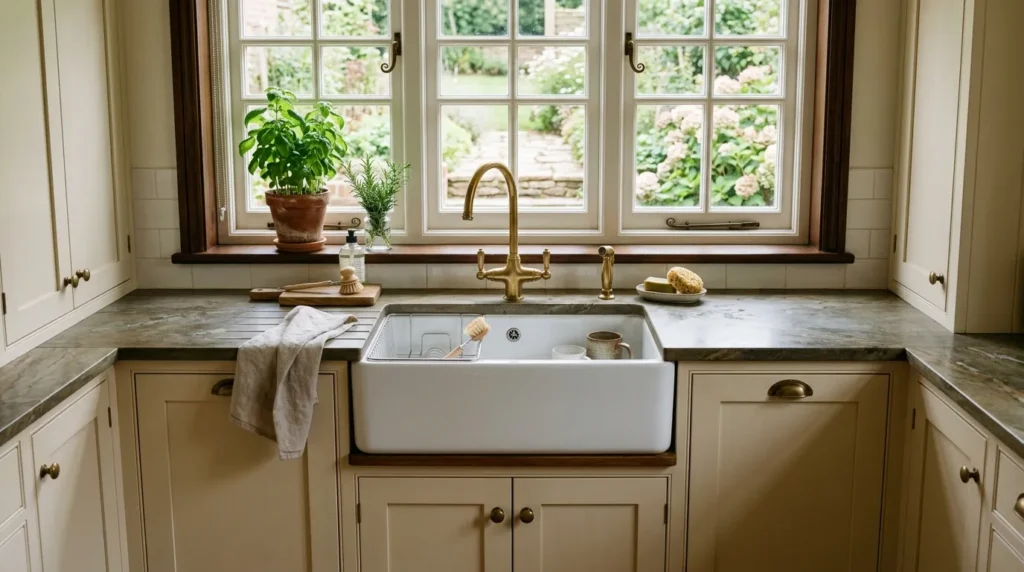
The farmhouse apron sink, with its exposed front panel extending past the cabinet face, is one of the most recognizable features of French country and French style kitchens, and its popularity isn’t purely aesthetic. In my experience, the deep, wide basin genuinely improves everyday kitchen function, making tasks like washing large pots or bathing a small child considerably easier than a standard undermount sink. A mistake many homeowners make is choosing an apron sink purely for looks without considering the basin depth and material’s durability for their specific cooking and cleanup habits.
How To Style It
Choose a fireclay or cast iron apron sink for durability and a classic look, both of which hold up well to daily use and have a long history in French-inspired kitchens specifically. Position the sink beneath a window when possible, which is a traditional layout choice that adds natural light to the workspace and a pleasant view during kitchen tasks. Pair the sink with a bridge-style or gooseneck faucet in your chosen warm metal finish to complete the classic look. Support the sink’s substantial weight with properly reinforced cabinetry, since apron sinks are considerably heavier than standard undermount options.
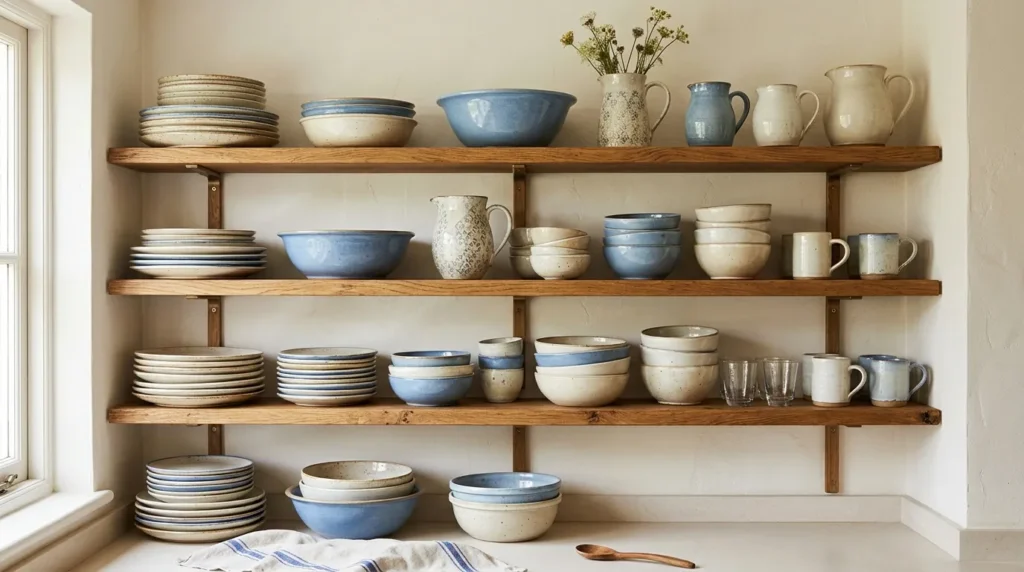
4. Open Shelving with Ceramics
Quick Benefits
- Displays collected dishware as functional decor
- Adds warmth and personality to kitchen walls
- Budget-friendly compared to full cabinetry
- Encourages a curated, collected look over time
- Keeps frequently used items within easy reach
Why It Works
Open shelving lined with ceramic dishware, pitchers, and serving pieces is a hallmark of French kitchen styling, turning everyday functional items into a decorative display. I’ve noticed that this approach is a big part of what gives French kitchens their collected, lived-in feel, since the display isn’t perfectly matched or purchased all at once — it looks like it’s been gathered over years, which is often exactly the case. That’s why many designers recommend open shelving specifically over closed upper cabinets in at least one section of a French style kitchen, since it invites this kind of personal, evolving display.
How To Style It
Install one or two open wood shelves in place of upper cabinets, styling them with a mix of stacked plates, pitchers, and a few serving pieces in warm, varied glazes rather than a perfectly matched set. Choose ceramics in creams, soft blues, and warm earth tones, which suit the French aesthetic particularly well and allow pieces collected over time to feel cohesive despite not matching exactly. Leave some negative space on each shelf rather than filling every inch, since a slightly relaxed, breathing arrangement reads as more authentic than a tightly packed display. Rotate pieces occasionally based on what you’re using seasonally, keeping the display functional as well as decorative.
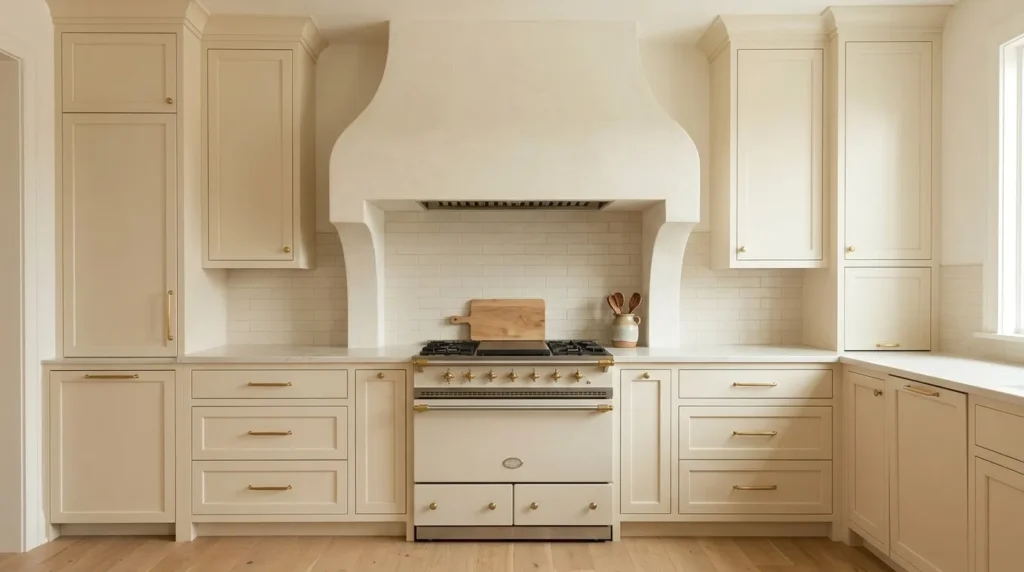
5. Statement Range Hood
Quick Benefits
- Serves as a strong architectural focal point above the stove
- Available in plaster, wood, and metal finishes
- Elevates the entire kitchen’s sense of craftsmanship
- Functions practically while adding significant style
- Works with both custom and semi-custom kitchen designs
Why It Works
A statement range hood, whether a curved plaster design, a paneled wood surround, or an ornate metal piece, gives a French style kitchen a strong architectural centerpiece above the stove, an area that in many other kitchen styles is treated as purely functional. One simple trick I always suggest to anyone renovating with this style in mind is treating the range hood as a design opportunity rather than an afterthought, since it draws the eye immediately upon entering the room and sets the tone for the kitchen’s overall character.
How To Style It
Choose a hood shape and material that complements your cabinetry — a curved plaster hood pairs beautifully with cream cabinetry for a soft, elegant look, while a paneled wood hood matching your cabinet finish creates a more integrated, built-in appearance. Size the hood appropriately for your range, typically extending slightly wider than the cooking surface below it for both visual balance and functional ventilation coverage. Add decorative trim or molding details to the hood surround for additional architectural interest, echoing similar details elsewhere in the kitchen. Ensure the hood’s ventilation capacity is appropriately sized for your range’s output, since the decorative surround shouldn’t come at the expense of actual kitchen ventilation performance.
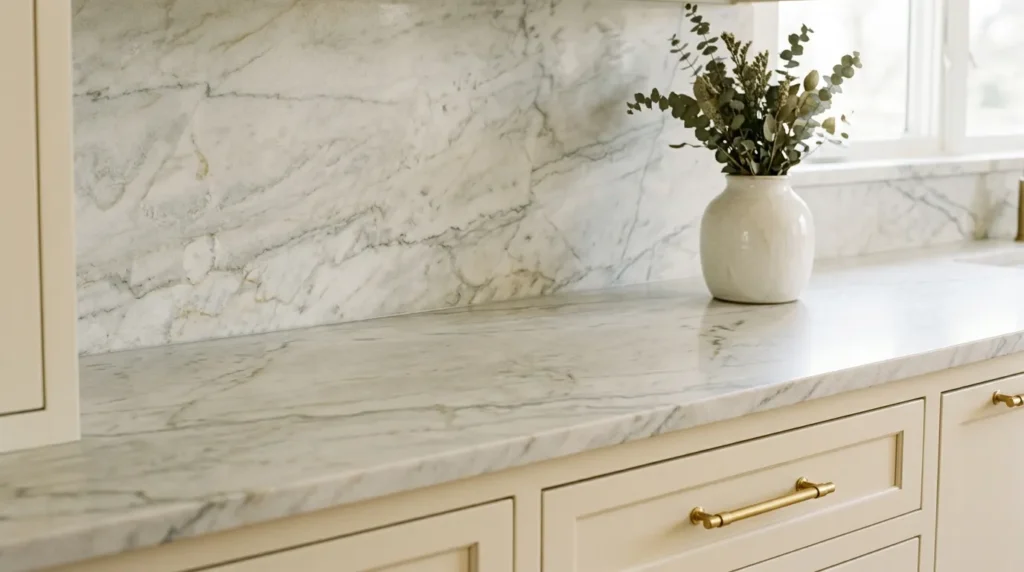
6. Natural Stone Countertops
Quick Benefits
- Offers timeless material with natural variation
- Pairs beautifully with warm cabinetry and hardware
- Durable and long-lasting when properly sealed
- Available in a range of price points depending on stone type
- Adds subtle visual texture without bold pattern
Why It Works
Natural stone countertops, particularly marble or limestone, bring an organic variation and subtle veining that engineered materials struggle to replicate convincingly, and this natural quality suits the collected, timeless feel of a French style kitchen especially well. In my experience, the slight imperfections and variation in natural stone are part of what makes it feel elegant rather than mass-produced, even though this same variation means every slab looks slightly different from the next. A mistake many homeowners make is worrying excessively about marble’s tendency to etch or stain, when many homeowners find the material develops an attractive patina that suits the style’s aged, collected character over time.
How To Style It
Choose a natural stone like marble, limestone, or a soft-veined quartzite for countertops, selecting a slab in person when possible since veining and coloring vary significantly between individual pieces. Seal the stone appropriately based on the specific material and maintain it according to the manufacturer’s care recommendations to manage staining and etching over time. Pair the stone with a matching or complementary backsplash, whether that’s the same stone extended up the wall or a simple subway tile in a coordinating tone. If natural stone isn’t practical for your budget or lifestyle, a quality quartz with a natural stone-inspired veining pattern can approximate the look with lower maintenance requirements.
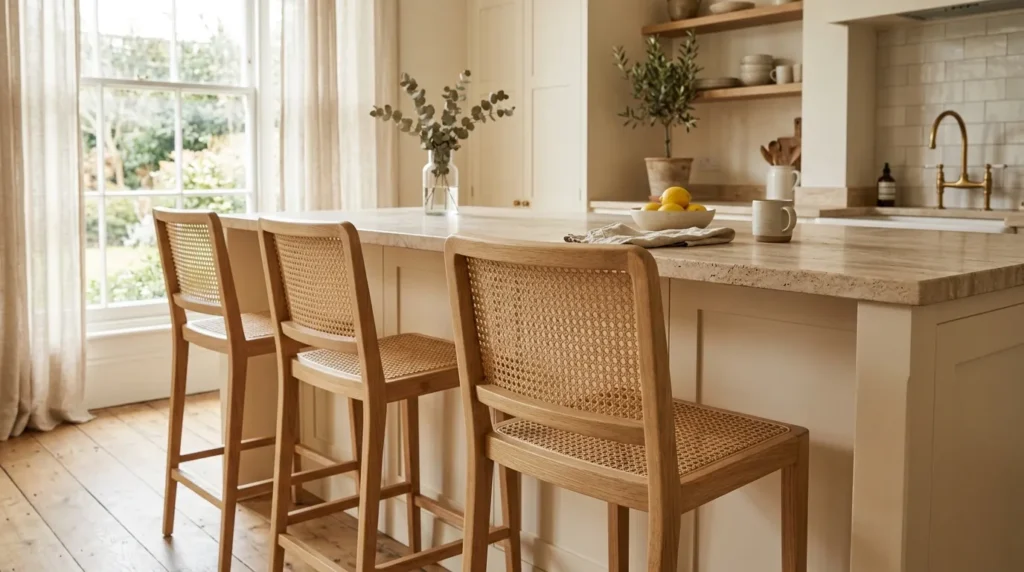
7. Woven and Wicker Seating
Quick Benefits
- Adds textural warmth to islands and dining nooks
- Suits both casual and more formal French kitchen styles
- Available at a range of price points
- Lightweight and easy to move as needed
- Complements natural stone and warm wood tones
Why It Works
Woven cane or wicker seating brings a natural texture to a French style kitchen that pairs particularly well with the material palette established through stone countertops, wood cabinetry, and ceramic displays. I’ve seen this idea used effectively at both kitchen islands and dining nooks, since the woven texture softens what might otherwise be an entirely hard-surfaced seating area. That’s why many designers recommend at least a few woven seating pieces in a French kitchen, since they introduce a lighter, more relaxed material note among the room’s more substantial elements like stone and solid wood.
How To Style It
Choose counter-height woven or cane-back stools for a kitchen island, or dining chairs with woven seats for an adjacent breakfast nook, keeping the wood tone consistent with your cabinetry or flooring. A mix of solid wood chair frames with woven cane backs offers a good balance of durability and textural interest for daily use. Add a simple cushion in a linen or cotton fabric for additional comfort on woven seating, particularly for dining chairs used regularly. Keep the woven pieces in a natural, unstained finish or a light wash that complements rather than competes with your cabinetry tone.
8. Vintage Inspired Lighting
Quick Benefits
- Adds a sense of history and craftsmanship
- Serves as functional art within the kitchen
- Available in reproduction and genuine vintage options
- Pairs beautifully with warm metal hardware finishes
- Elevates the room without requiring structural changes
Why It Works
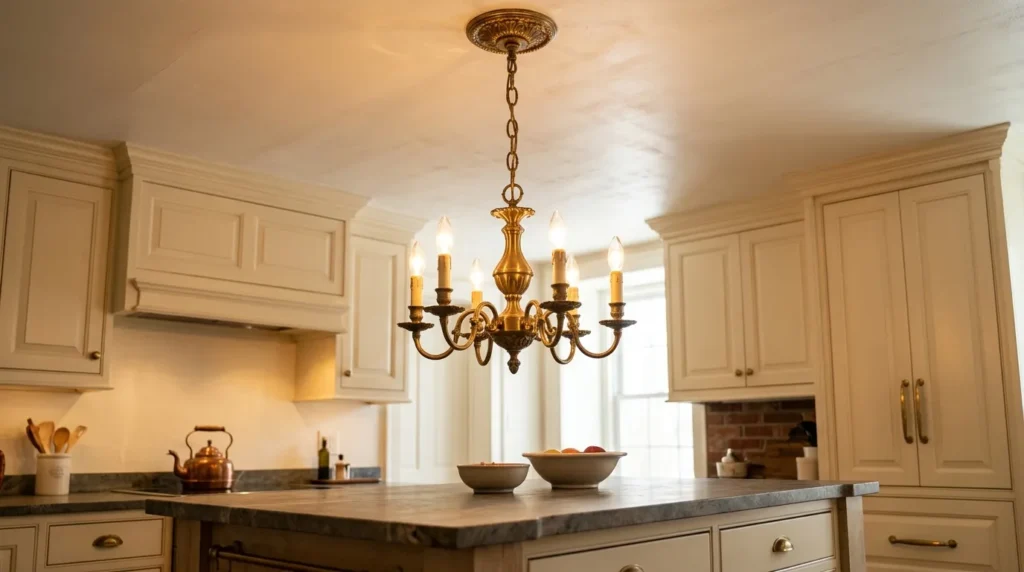
Lighting fixtures inspired by antique French designs — a lantern-style pendant, a small chandelier over an island, sconces with an aged brass finish — bring a sense of history and craftsmanship to a kitchen in a way that standard modern fixtures typically don’t. If you’re anything like me, you’ve noticed how a single well-chosen vintage or vintage-inspired fixture can set the tone for an entire room, becoming a genuine focal point rather than a purely functional element. This detail is often what pushes a kitchen from generally pleasant to distinctly French in character.
How To Style It
Choose a lantern-style or small chandelier pendant for above an island or dining table, selecting a finish that matches your cabinet hardware for overall cohesion. Vintage lighting sourced from antique shops or estate sales often has more character and a lower cost than new reproduction pieces, though genuine vintage fixtures may require rewiring by a licensed electrician for safety. Add wall sconces flanking a range hood or window for additional layered lighting, choosing a finish and style that complements your main ceiling fixture. Warm-toned bulbs throughout the kitchen reinforce the cozy, historic feel that vintage-inspired fixtures are meant to evoke.
9. Herringbone Tile Flooring
Quick Benefits
- Classic pattern with enduring visual appeal
- Available in a range of materials and price points
- Adds texture and movement to kitchen flooring
- Suits both traditional and updated French kitchen styles
- Long-lasting design that won’t feel dated
Why It Works
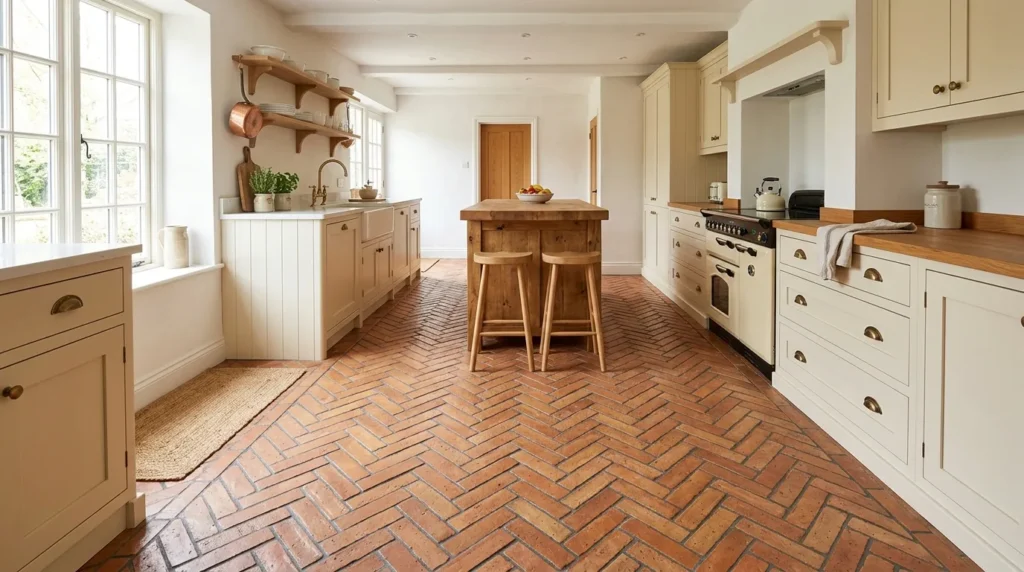
Herringbone-patterned flooring, whether in brick, terracotta tile, or wood, is a classic feature of French kitchens that adds visual movement and texture underfoot without relying on bold color or a trend-driven material choice. A mistake many homeowners make is choosing a flat, uniform tile pattern purely because it’s simpler to install, missing an opportunity to add genuine visual interest through pattern alone rather than color or texture elsewhere in the room. I’ve noticed that herringbone flooring in particular tends to photograph beautifully precisely because the pattern itself creates depth and rhythm across an otherwise flat surface.
How To Style It
Choose a material that suits your budget and maintenance preferences — terracotta tile brings warmth and an authentically French look, while wood or wood-look tile offers a slightly softer, more understated version of the herringbone pattern. Work with an experienced installer for herringbone specifically, since the pattern requires more precise cutting and layout planning than a standard straight or offset tile installation. Choose a grout color that complements rather than starkly contrasts with your flooring material, since a subtle grout line keeps the pattern’s movement as the visual focus. Seal terracotta or natural stone flooring appropriately to protect against staining and moisture over time.
10. Layered Linen Textiles
Quick Benefits
- Adds softness to an otherwise hard-surfaced room
- Suits café curtains, table linens, and seating cushions alike
- Breathable and practical for a working kitchen
- Available at accessible price points
- Easy to update seasonally or as tastes evolve
Why It Works
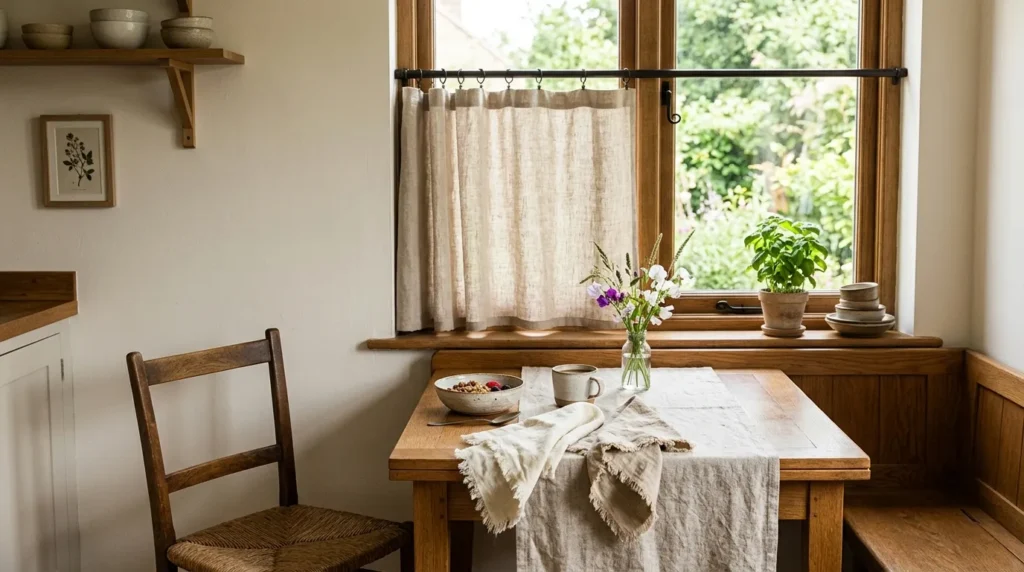
Linen textiles bring softness and warmth to a kitchen that’s otherwise dominated by hard surfaces like stone, tile, and wood, whether through a simple café curtain at the window, table linens at a breakfast nook, or seat cushions on dining chairs. That’s why many designers recommend linen specifically over synthetic fabric blends in a French style kitchen, since the material’s natural texture and slight imperfection echo the same collected, timeless quality found in the room’s other material choices. In my experience, this kind of textile layering is often the final detail that makes a French kitchen feel complete rather than simply well-built.
How To Style It
Add a simple linen café curtain covering the lower half of a kitchen window, which provides privacy while still allowing natural light through the upper portion of the glass. Choose linen or a linen-blend table runner and napkins for a breakfast nook or dining table, in warm neutral tones that complement your cabinetry and hardware. Cushion woven or wood dining chairs with linen-covered seat pads for both comfort and additional textural softness. Keep the linen palette limited to two or three warm neutral tones throughout the kitchen so the textiles feel cohesive with the room’s overall material story.
Frequently Asked Questions
What defines a French style kitchen?
A French style kitchen typically features warm cream or soft-toned cabinetry, natural materials like stone and wood, brass or bronze hardware, and a farmhouse apron sink, all combined with a collected, layered feel rather than a perfectly matched showroom look. The style emphasizes craftsmanship and timeless materials over trend-driven finishes. Lighting, open shelving with ceramics, and linen textiles typically round out the overall aesthetic.
Is a French style kitchen expensive to achieve?
Costs vary widely depending on how much of the look you pursue at once, but many elements, like hardware swaps, open shelving, and linen textiles, are relatively affordable updates. Larger investments, like a farmhouse sink, natural stone countertops, or a custom range hood, cost more but can be phased in gradually. Starting with smaller, high-impact changes like hardware and lighting is a practical way to build toward the full look over time.
Can I achieve a French style kitchen without a full renovation?
Yes, many French style elements can be added to an existing kitchen without a full renovation, including hardware updates, open shelving, vintage-inspired lighting, and linen textiles. Painting existing cabinetry in a warm cream tone is another significant update that doesn’t require replacing the cabinets themselves. A full renovation allows for features like a farmhouse sink or herringbone flooring, but a French-inspired look is achievable in stages.
What countertop material works best for a French style kitchen?
Natural stone, particularly marble or limestone, is the classic choice for French style kitchens due to its organic variation and timeless appearance. Quartz with a natural stone-inspired pattern is a lower-maintenance alternative that can approximate the look for less ongoing care. The choice ultimately depends on your budget, cooking habits, and how much natural variation and patina you’re comfortable with over time.
What hardware finish suits a French style kitchen best?
Brass, unlacquered brass, and oil-rubbed bronze are the most common hardware finishes for this style, since their warmth complements cream cabinetry and natural stone particularly well. Unlacquered brass develops a natural patina over time, which many people find suits the style’s collected, aged character. Keeping the hardware finish consistent throughout the kitchen, including on faucets and lighting, creates the most cohesive overall look.
Do I need an apron sink to achieve a French kitchen look?
An apron sink is a strongly associated feature of the style, but it isn’t strictly required to achieve an overall French-inspired look. Cabinetry color, hardware, lighting, and textiles can carry much of the aesthetic even with a standard undermount sink. That said, an apron sink is one of the higher-impact features for anyone planning a fuller kitchen renovation with this style in mind.
Conclusion
A French style kitchen earns its timeless reputation through material choices and details that have looked good in kitchens for generations, not through chasing a passing trend. From warm cream cabinetry and brass hardware to a farmhouse sink and layered linen textiles, each of these ideas contributes to a collected, elegant feel that holds up well over time, whether you’re planning a full renovation or making smaller updates to an existing kitchen.
If you’re working toward this look in your own kitchen, start with the changes that are most accessible right now — a hardware swap, a new light fixture, or open shelving styled with ceramics you already own. These details build on each other, and gradually, your kitchen will develop the same warm, considered character that makes French style kitchens feel timeless.
Start with one or two ideas and gradually build a space that reflects your style and supports everyday comfort.
Related Articles
- How to Decorate a Bedroom with Natural Materials
- 10 Modern Living Room Ideas with Cozy Furniture
- Neutral Home Styling Tips
- Farmhouse Kitchen Decor Ideas
- Small Living Room Ideas with Budget-Friendly Decor