10 Small Living Room Ideas with Budget-Friendly Decor
If you’ve ever stood in the doorway of your living room wondering how on earth you’re supposed to fit a sofa, a coffee table, storage, and somewhere for guests to sit without it feeling like a furniture showroom crammed into a shoebox, you’re not alone. Small living rooms are one of the most common layout challenges I hear about, and honestly, they’re also one of the most fun to solve. In my experience, a tight footprint doesn’t have to mean a cramped, cluttered, or uninspired space — it just means every decision has to earn its place.
I’ve worked with plenty of small living rooms over the years, and the ones that feel the most open and inviting are rarely the ones with the biggest budgets. They’re the ones where someone took the time to think through scale, flow, and function before buying a single thing. A mistake many homeowners make is trying to fit “normal size” furniture into a small footprint, then wondering why the room feels tight no matter how they rearrange it.
This article walks through ten small living room ideas that focus on budget-friendly decor — no gut renovations, no custom built-ins, no five-figure furniture hauls. Just smart, proven strategies that make a compact room feel calmer, brighter, and more livable. Whether you’re working with a studio apartment, a narrow rental living room, or a starter-home space that’s smaller than you’d like, these ideas are meant to be practical enough to start this weekend.
I’ve noticed that the best small living room ideas usually combine two things: a furniture or layout choice that maximizes usable space, and a styling choice that tricks the eye into perceiving more room than actually exists. That combination is exactly what you’ll find below, section by section, along with the reasoning behind each one so you can adapt it to your own space with confidence.
Table of Contents
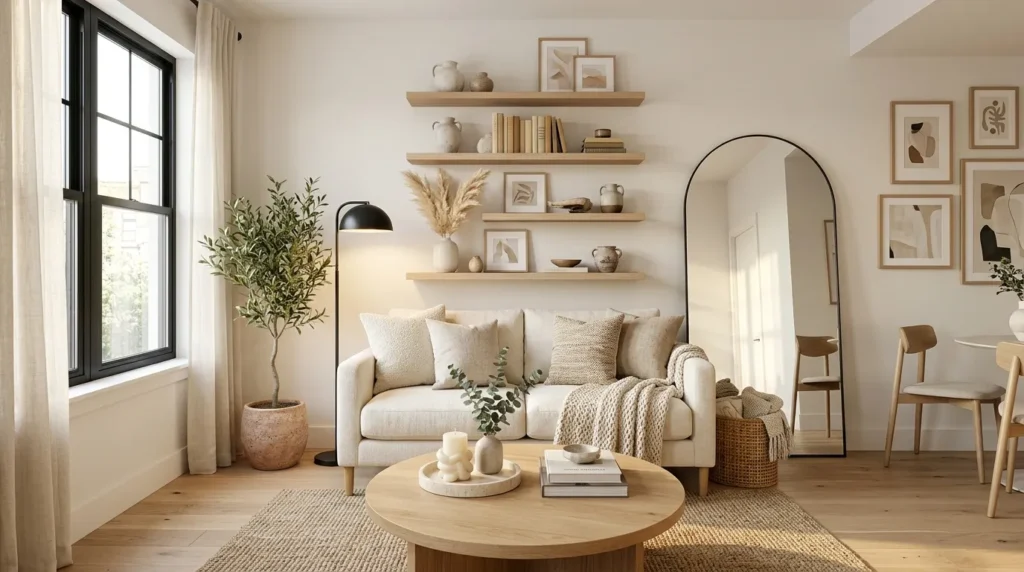
- Multi-Functional Furniture Picks — Furniture that does double duty so you need fewer pieces overall.
- Vertical Storage Solutions — Using wall height instead of floor space to keep clutter contained.
- Light Neutral Color Palette — Choosing wall and furniture tones that visually expand a room.
- Mirrors for Depth — Placing reflective surfaces to add light and the illusion of square footage.
- Thrifted Statement Pieces — Sourcing one-of-a-kind furniture and decor without a big price tag.
- Cozy Textile Layering — Adding warmth through textures instead of bulky furniture.
- Floating Shelf Displays — Freeing up floor space while still styling your walls.
- Slim Profile Seating — Selecting furniture silhouettes built for tight footprints.
- Curtain Height Tricks — Using window treatments to stretch ceilings visually.
- Budget Gallery Walls — Building personality into the room without buying new furniture.
1. Multi-Functional Furniture Picks
Quick Benefits
- Reduces the total number of furniture pieces needed
- Frees up floor space for walking paths
- Adds hidden storage without extra furniture
- Works in rentals since most options are freestanding
- Stretches your budget further per piece
Why It Works
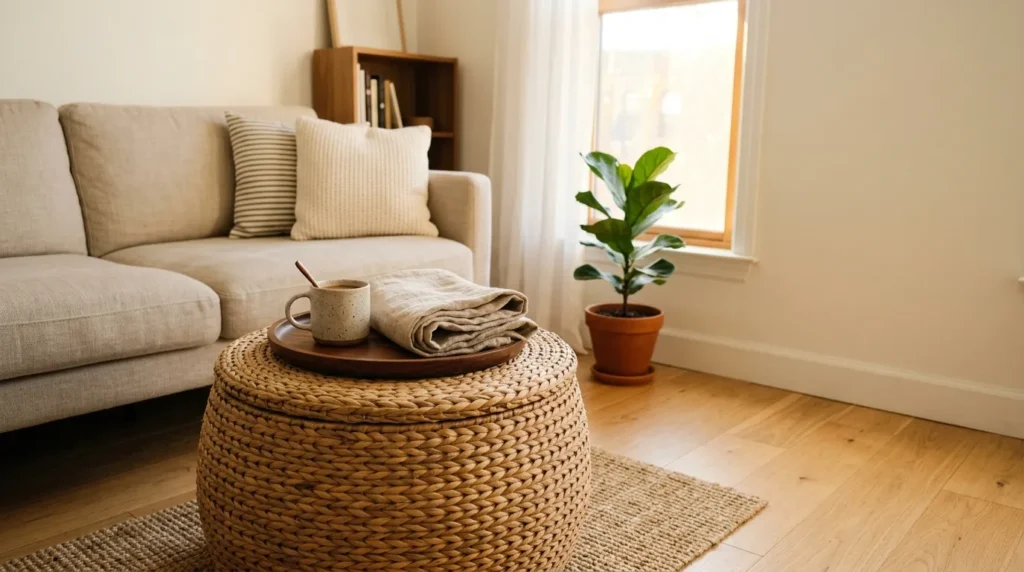
In a small living room, every piece of furniture is competing for the same limited square footage, so the fewer pieces you need, the more breathing room the space gets. That’s why many designers recommend starting with furniture that pulls double duty — an ottoman that opens for storage, a coffee table with a lower shelf, or a console that also serves as a TV stand and a catch-all for mail and remotes. One simple trick I always suggest is measuring what you actually need a piece to do before shopping, rather than buying based on looks alone. A storage ottoman, for example, replaces both a coffee table and a blanket basket, which is two fewer things fighting for floor space.
How To Style It
Look for a storage ottoman or bench with a flat, sturdy top that can double as a coffee table and extra seating when guests come over. A slim console table behind a sofa (if you have wall space) can hold books, a lamp, and a basket for remotes, replacing a side table and a shelf in one footprint. Nesting tables are another budget-friendly option since they tuck away when not in use but pull out for extra surface space during movie nights or game nights. Keep the finish consistent with your existing furniture — a warm wood tone or matte black base tends to blend into most small living rooms without adding visual weight.
2. Vertical Storage Solutions
Quick Benefits
- Uses wall height instead of scarce floor space
- Keeps clutter visible and organized rather than hidden in piles
- Works well in rentals with removable brackets
- Creates a taller sightline that makes ceilings feel higher
- Budget-friendly compared to built-in cabinetry
Why It Works
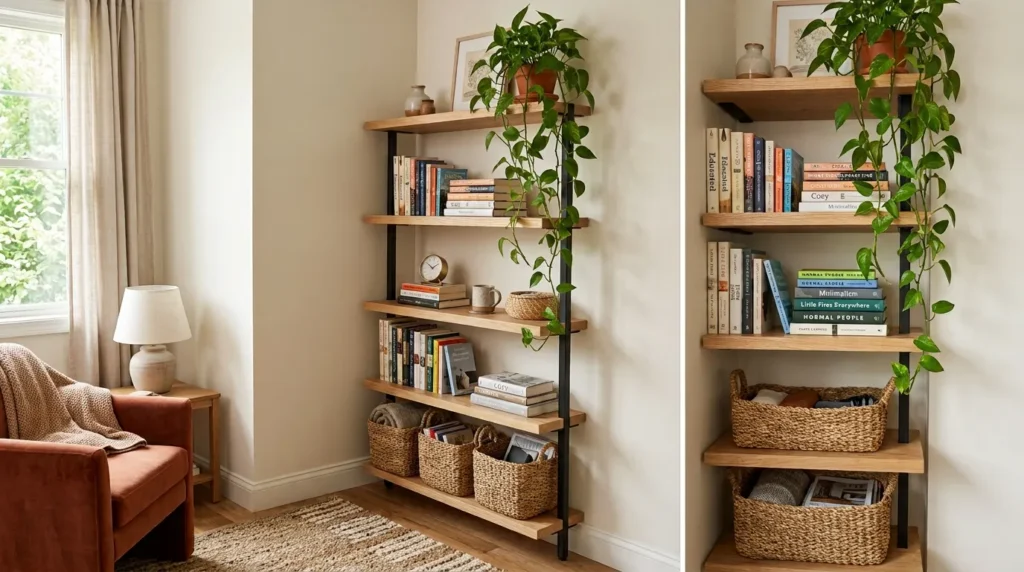
I’ve seen this idea transform spaces more than almost any other on this list. When floor space is limited, the walls become your best asset, and tall, narrow storage pulls the eye upward instead of across a cluttered floor. A mistake many homeowners make is buying wide, low furniture that eats up floor space when a taller, narrower piece would hold the same amount while taking up a fraction of the footprint. Vertical storage also tends to make a room feel more intentional, since everything has a designated spot instead of being stacked in corners.
How To Style It
A tall, narrow bookshelf tucked into a corner or beside a window can hold books, baskets, and decor while barely touching the floor plan. Wall-mounted cabinets above a console or media stand add storage without needing extra floor footprint at all. If you rent, look for storage units with adjustable feet or lightweight construction so they’re easy to move without damaging floors. Group smaller items into labeled baskets on the lower shelves and reserve the top shelves for decorative pieces, plants, or framed photos, which keeps the vertical storage from feeling like plain function without style.
3. Light Neutral Color Palette
Quick Benefits
- Reflects more natural and artificial light around the room
- Creates a cohesive, calm backdrop for furniture and decor
- Makes ceilings and walls feel like they recede
- Pairs easily with almost any furniture style
- Inexpensive to update with paint alone
Why It Works
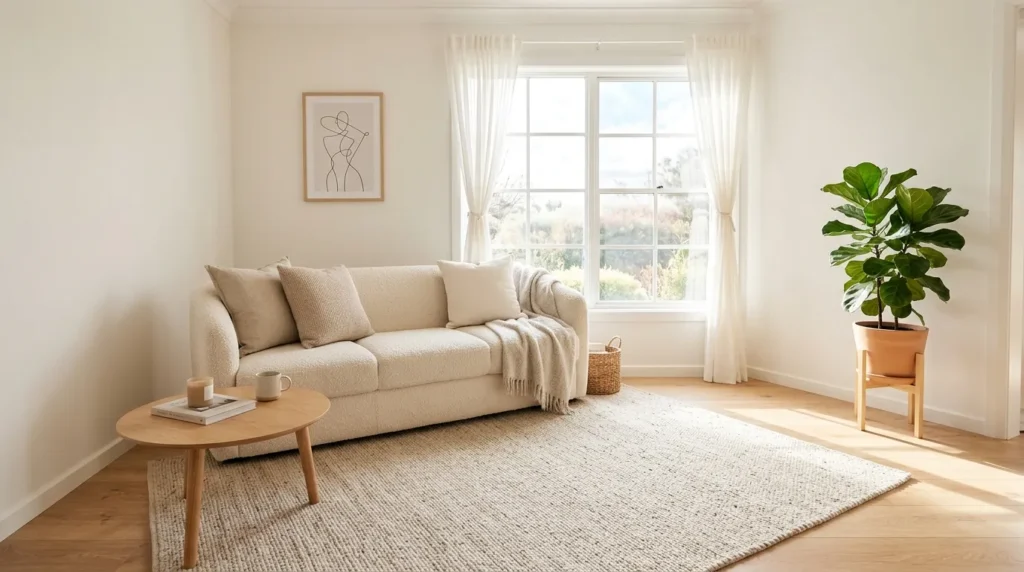
Color has a bigger impact on perceived room size than most people expect. Light, neutral tones — soft whites, warm greige, pale sand — bounce light around a room instead of absorbing it, which keeps a small living room from feeling boxed in. In my experience, homeowners are often tempted to add a bold accent wall in a small space because it feels like a way to add personality, but a dark or saturated wall in a tight room can visually shrink it instead of adding character. That doesn’t mean color is off-limits; it means color works best in small doses layered on top of a light foundation.
How To Style It
Start with a light neutral on the walls — warm white, soft greige, or a pale oatmeal tone all work well and photograph beautifully for Pinterest boards. Keep large furniture pieces like the sofa in a similarly light or neutral tone so nothing reads as a heavy block in the room. Save bolder colors for pillows, throws, art, or a single accent chair, where they add personality without overwhelming the space. If you’re renting and can’t paint, a large light-colored area rug can achieve a similar effect by grounding the room in a soft, expansive tone.
4. Mirrors for Depth
Quick Benefits
- Reflects light to brighten dim corners
- Creates the illusion of additional square footage
- Inexpensive compared to most furniture or renovation upgrades
- Works as both function and wall decor
- Easy to source secondhand or from budget retailers
Why It Works
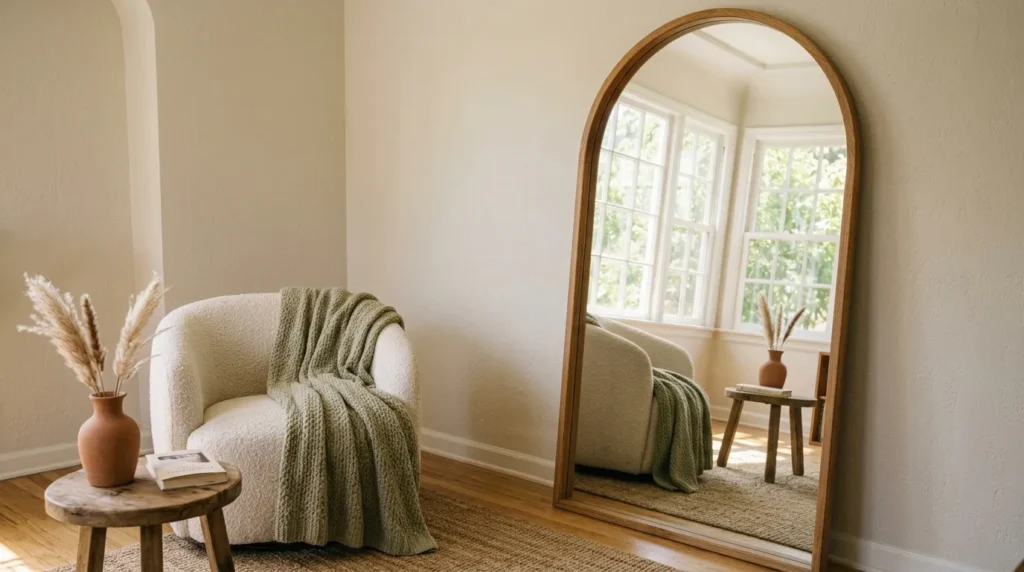
A well-placed mirror is one of the oldest tricks in small-space design, and it’s popular for a reason: it genuinely works. Mirrors reflect both natural and artificial light, which brightens a room, and they also reflect the space itself, creating a sense of depth that a blank wall simply can’t. If you’re anything like me, you’ve probably walked into a small room with a large mirror and felt like it had more square footage than it actually did — that’s the effect at work. A mirror placed across from a window is especially effective since it doubles the amount of visible daylight in the room.
How To Style It
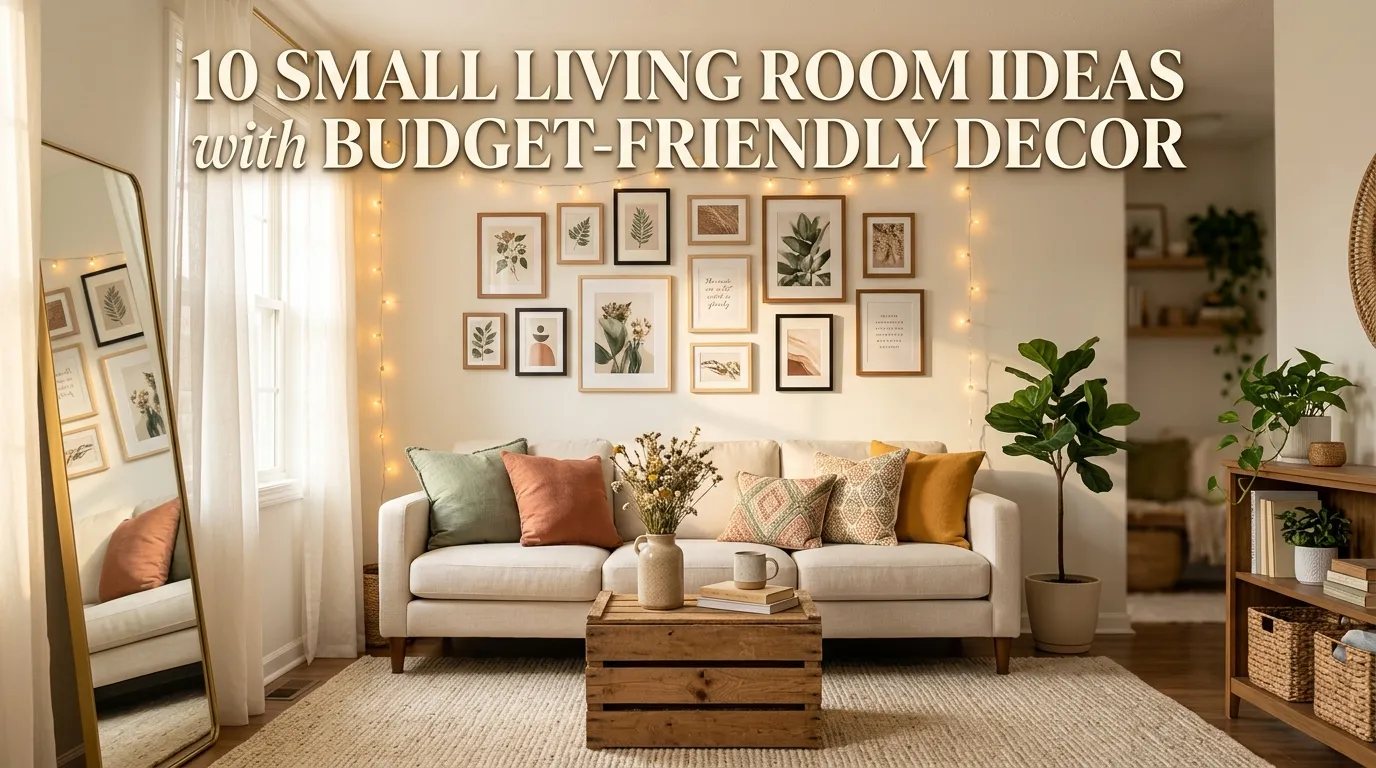
Choose one large statement mirror rather than several small ones, since a single larger piece creates a stronger illusion of depth than scattered small mirrors. Position it across from your main window or light source so it reflects daylight back into the room throughout the day. Leaning a floor mirror against the wall behind a sofa or in an empty corner is a flexible, renter-friendly option that doesn’t require drilling. Thrifted or secondhand mirrors with simple frames are an easy way to keep this idea budget-friendly while still adding a decorative touch.
5. Thrifted Statement Pieces
Quick Benefits
- Adds unique character that mass-produced furniture can’t replicate
- Significantly lower cost than new furniture
- Reduces decor waste by giving existing pieces new life
- Offers higher-quality construction than many budget new pieces
- Creates a collected, lived-in look over time
Why It Works
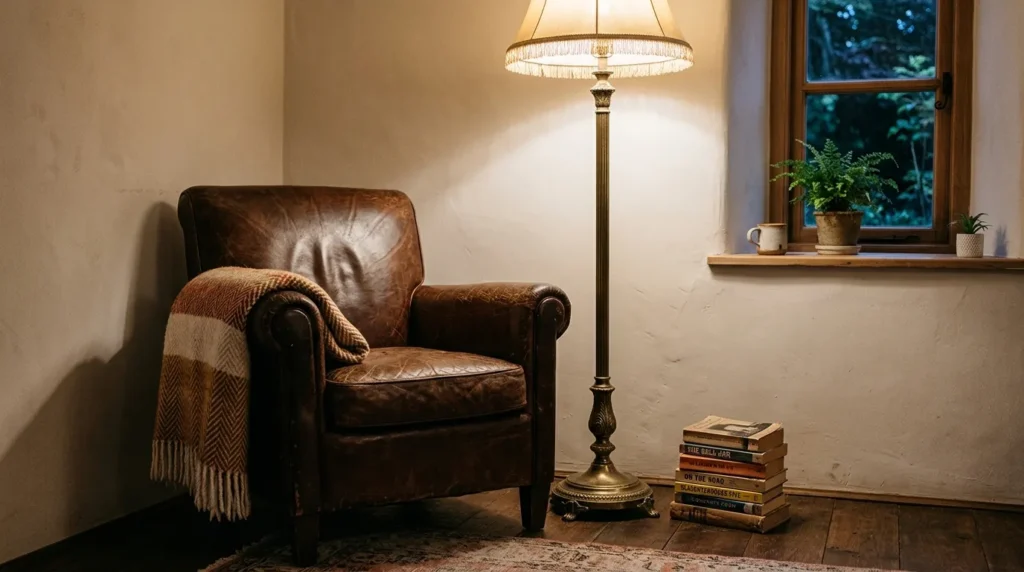
One thing that works especially well in small living rooms is having one or two pieces with real personality rather than an entire room of matching, mass-produced furniture. A single thrifted item — a vintage side table, an old brass lamp, a well-loved armchair — gives a room a sense of history and warmth that new furniture often lacks. I’ve noticed that rooms built entirely around big-box store furniture can start to feel generic, while a room with even one secondhand find tends to feel more collected and personal. Thrifting is also simply more budget-friendly, since gently used furniture typically costs a fraction of retail price.
How To Style It
Focus your thrifting efforts on one or two pieces rather than trying to furnish the whole room secondhand at once — a coffee table, an accent chair, or a lamp are all great starting points. Look for solid wood furniture over particleboard, since it tends to hold up better and often has more interesting detailing. A quick coat of paint or new hardware can update an outdated thrifted piece to match your color palette without much cost. Estate sales, local buy-nothing groups, and secondhand furniture apps are all worth checking regularly, since good pieces tend to move quickly.
6. Cozy Textile Layering
Quick Benefits
- Adds warmth and comfort without taking up floor space
- Inexpensive way to update a room’s feel seasonally
- Introduces pattern and texture without commitment
- Softens hard edges from furniture and flooring
- Easy to switch out as your style evolves
Why It Works
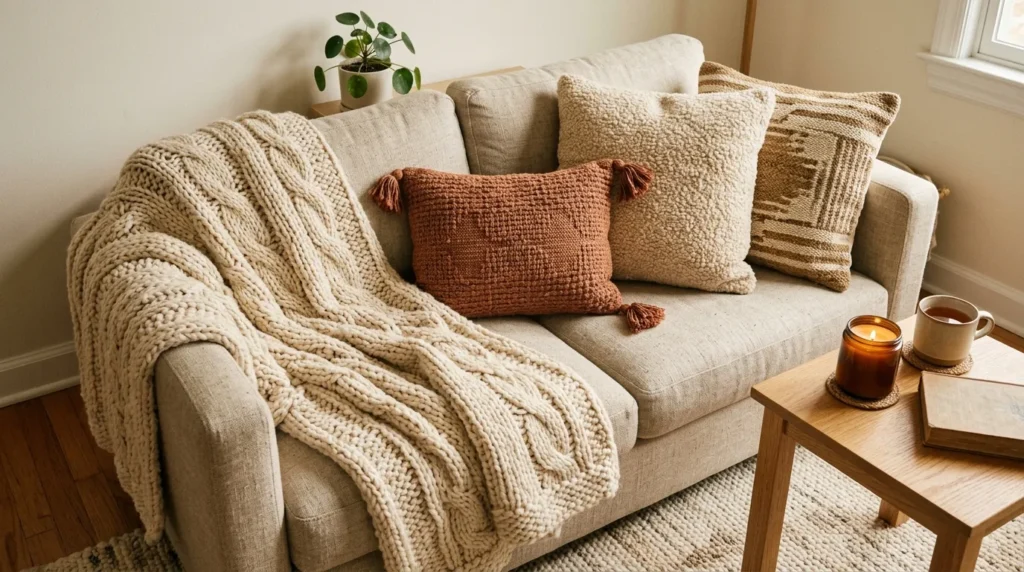
Textiles are one of the most underrated tools in small-space decorating because they add richness and comfort without adding bulk. A layered throw, a few well-chosen pillows, or a textured rug can make a room feel finished and cozy in a way that furniture alone often can’t. That’s why many designers recommend investing in textiles before investing in additional furniture pieces, especially in a small room where every extra piece of furniture takes up precious space. Textiles also let you experiment with pattern and color in a low-commitment way, since a pillow cover is far easier to change than a sofa.
How To Style It
Layer two or three textures on the sofa — a woven throw, a knit pillow, a linen cushion — rather than matching everything exactly, which creates visual interest without clutter. A soft area rug in a light tone helps ground the seating area and adds warmth underfoot, especially in rentals with hard flooring. Rotate pillow covers seasonally instead of buying new pillows each time, which is far more budget-friendly and just as effective for refreshing the room. Keep the color palette within two or three tones so the layering feels intentional rather than mismatched.
7. Floating Shelf Displays
Quick Benefits
- Adds storage and display space without using floor area
- Budget-friendly compared to freestanding shelving units
- Easy to install in most rentals with minimal wall damage
- Creates opportunities for personal styling and decor
- Draws the eye upward to make ceilings feel taller
Why It Works
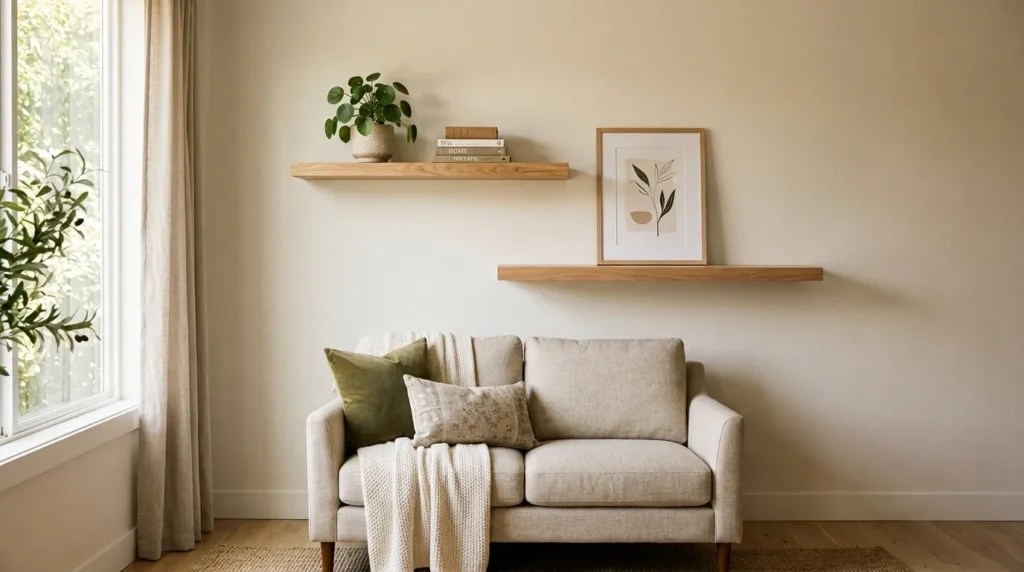
Floating shelves solve a very specific small-room problem: where do you put books, plants, and decor when there’s no room for a bookshelf? A mistake many homeowners make is skipping wall storage altogether because it feels like an afterthought, when in reality floating shelves can hold just as much as a bookshelf while taking up zero floor space. I’ve seen this idea transform awkward, empty walls into some of the most photographed corners of a room, especially when styled with a mix of books, plants, and small decor objects.
How To Style It
Install two or three floating shelves at staggered heights above a sofa, console, or in an empty corner, using a mix of books, small plants, and one or two decorative objects per shelf. Avoid overcrowding each shelf — leaving some negative space actually makes the display look more curated and less cluttered. Choose a shelf finish that matches your existing wood tones or keep it simple with a white or black finish that blends into the wall. Command-strip-rated shelving brackets are available for renters who want the look without permanent wall damage.
8. Slim Profile Seating
Quick Benefits
- Frees up walking space in tight layouts
- Often more budget-friendly than oversized sectional seating
- Easier to move and rearrange as needs change
- Works well in apartments with narrow doorways
- Pairs with multiple design styles from modern to traditional
Why It Works
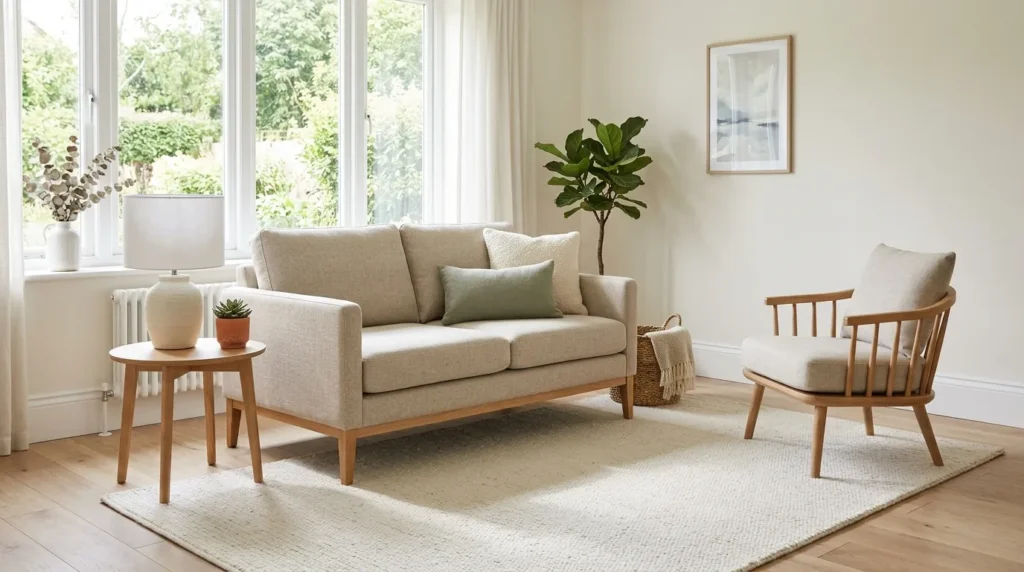
Seating is usually the largest and most expensive purchase in a living room, which makes it one of the most important decisions for a small space. In my experience, homeowners often default to a deep, oversized sofa because it looks comfortable in a showroom, without considering how much floor space it will consume at home. Slim profile seating — sofas and chairs with narrower arms, lower backs, and tighter frames — can seat just as many people while leaving noticeably more open floor space for walking and other furniture.
How To Style It
Look for sofas with track arms (straight, narrow arms) instead of rolled or oversized arms, which can save several inches of width without sacrificing seating depth. A loveseat paired with one or two slim accent chairs often works better in a small room than a single large sectional, since the pieces can be arranged to fit the room’s actual shape. Exposed wooden legs on sofas and chairs also help, since they let light pass underneath the furniture, making the whole piece feel lighter visually. When shopping secondhand or at budget retailers, bring a tape measure and your room’s dimensions so you’re not guessing at scale in the showroom.
9. Curtain Height Tricks
Quick Benefits
- Makes ceilings appear taller without construction
- Inexpensive update using curtain rods and hardware
- Adds a finished, polished look to the room
- Works with existing windows in any rental
- Pairs well with light-filtering fabrics for softer light
Why It Works
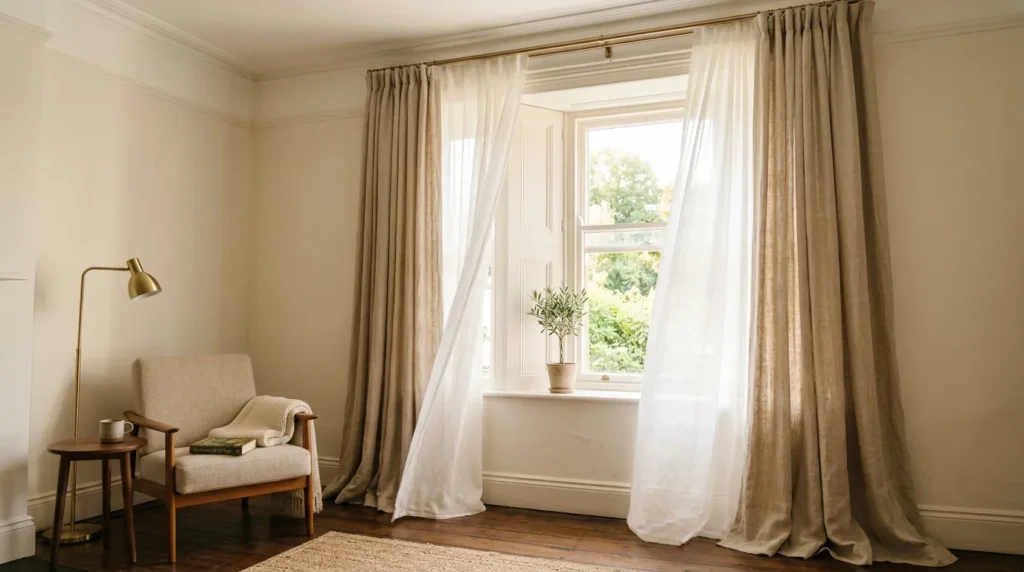
This is one simple trick I always suggest to anyone dealing with a small living room, because it costs very little but changes the entire feel of the room. Mounting curtain rods closer to the ceiling — rather than directly above the window frame — draws the eye upward and creates the illusion of a taller room. A mistake many homeowners make is hanging curtains at the exact width and height of the window, which actually emphasizes how small the window (and by extension, the room) is. Floor-length curtains add to this effect by drawing a continuous vertical line from ceiling to floor.
How To Style It
Mount curtain rods four to six inches above the window frame, and extend them a few inches beyond each side of the window so the curtains can be pulled fully open without blocking light. Choose curtains that graze the floor or puddle slightly rather than stopping short, since floor-length panels emphasize the room’s height. Lighter fabrics like linen or cotton blends let more natural light filter through, which keeps the room feeling bright rather than shadowed. Stick to a color that either matches your wall tone for a seamless look or complements your existing color palette for subtle contrast.
10. Budget Gallery Walls
Quick Benefits
- Adds personality and visual interest at a low cost
- Uses existing photos, prints, or art you already own
- Fills empty wall space without competing for floor room
- Highly customizable to any style or color palette
- Easy to update over time as your taste evolves
Why It Works
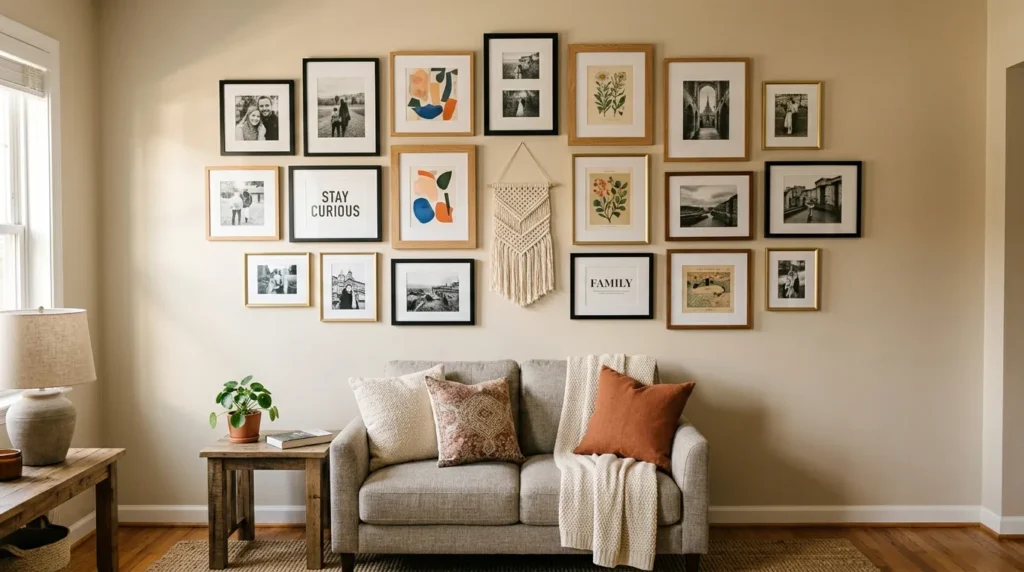
A gallery wall is one of the most effective ways to add character to a small living room without spending money on furniture. Because it lives entirely on the wall, it never competes with floor space, which makes it especially well-suited to compact rooms. I’ve noticed that gallery walls also tend to make a room feel more “finished” and personal than a single piece of framed art, since they tell a more layered visual story. A mistake many homeowners make is waiting until they can afford a full set of matching frames, when a budget-friendly mixed gallery wall often looks more interesting anyway.
How To Style It
Mix frame sizes and styles rather than buying a matching set — thrifted frames, budget retailer finds, and a few new pieces can all work together if you keep the color palette consistent. Lay the arrangement out on the floor first to plan spacing before hanging anything, which saves unnecessary nail holes. Include a mix of photography, art prints, and one or two textural elements like a small mirror or woven hanging to keep the wall from feeling flat. Keep frame colors limited to two or three tones (such as black, wood, and brass) so the overall wall reads as intentional rather than random.
Frequently Asked Questions
How do I make a small living room feel bigger without renovating?
Focus on light, reflective, and vertical elements rather than construction. A light neutral color palette, a large mirror across from a window, and vertical storage all create the illusion of more space. Slim profile furniture and floor-length curtains hung close to the ceiling add to the effect. None of these require a renovation budget, just thoughtful placement and a few key purchases.
What furniture should I avoid in a small living room?
Avoid oversized sectionals, deep coffee tables, and furniture with bulky arms or skirted bases that block light from passing underneath. Bulky, low, wide pieces tend to eat up floor space and visually weigh down a small room. Instead, look for slimmer profiles, exposed legs, and multi-functional pieces that reduce the total number of items you need.
Is it possible to decorate a small living room on a tight budget?
Yes, and often the most charming small living rooms are built this way. Thrifted furniture, textile layering, floating shelves, and a budget gallery wall can transform a room for a fraction of the cost of new furniture. Prioritize one or two higher-impact purchases, like a mirror or a slim sofa, and fill in the rest with secondhand and DIY elements.
What color works best for a small living room?
Light neutral tones like warm white, soft greige, and pale sand tend to work best because they reflect light and create a sense of openness. These shades also serve as an easy backdrop for pops of color through pillows, art, and accessories. Dark or highly saturated wall colors can work in small doses but are riskier for an entire small room.
How can I add storage to a small living room without losing space?
Vertical storage is the most effective solution, since it uses wall height instead of floor footprint. Floating shelves, tall narrow bookshelves, and wall-mounted cabinets all add storage capacity without shrinking your usable floor space. Multi-functional furniture, like a storage ottoman, is another way to add hidden storage without a dedicated storage piece.
Do mirrors actually make a small room look bigger?
Yes, mirrors genuinely help, both by reflecting light around the room and by creating a visual sense of depth. A large mirror placed across from a window is especially effective since it reflects daylight back into the space throughout the day. One well-placed statement mirror tends to have more impact than several small ones scattered around the room.
What’s the most budget-friendly way to update a small living room?
Textile layering and a gallery wall are usually the least expensive updates, since they can often be done with items you already own or inexpensive secondhand finds. A fresh coat of light neutral paint is another low-cost, high-impact option. These updates let you refresh the room’s feel without the cost of new furniture.
Conclusion
A small living room can absolutely feel open, comfortable, and full of personality — it just requires a slightly different approach than decorating a larger space. From multi-functional furniture and vertical storage to light color palettes and a well-placed mirror, each of these ideas works by either freeing up physical space or creating the visual illusion of more room. None of them require a big budget or a full renovation; they simply require a bit of intention behind each choice.
If you’re staring at your own small living room feeling overwhelmed by where to start, my honest suggestion is to pick just one or two ideas from this list rather than trying to tackle everything at once. Maybe that’s swapping in a large secondhand mirror this month, or finally hanging those floating shelves you’ve been thinking about. Small, budget-friendly changes add up quickly, and before long, you’ll have a space that feels considered, comfortable, and entirely your own.
Start with one or two ideas and gradually build a space that reflects your style and supports everyday comfort.
Related Articles
- Cozy Bedroom Ideas on a Budget
- Small Apartment Layout Solutions
- Neutral Home Styling Tips
- DIY Accent Wall Ideas
- Renter-Friendly Storage Hacks