
How to Clean Greasy Dust Off Ceiling Fan Blades Without Making a Floor Mess
When you are ready to tackle the grime on your overhead fixtures, mastering the process of cleaning greasy dust off ceiling fan blades without making a floor mess is the most effective way to save your sanity. Many homeowners dread this chore because they fear a cascade of debris falling onto their furniture or carpets. By using the right tools—specifically a pillowcase or a specialized vacuum attachment—you can trap the buildup at the source.
This approach keeps your living space pristine while ensuring your fans run efficiently throughout the year. You will find that a few simple techniques transform this tedious task into a quick, stress-free maintenance routine.
The Pillowcase Method for Dust Containment

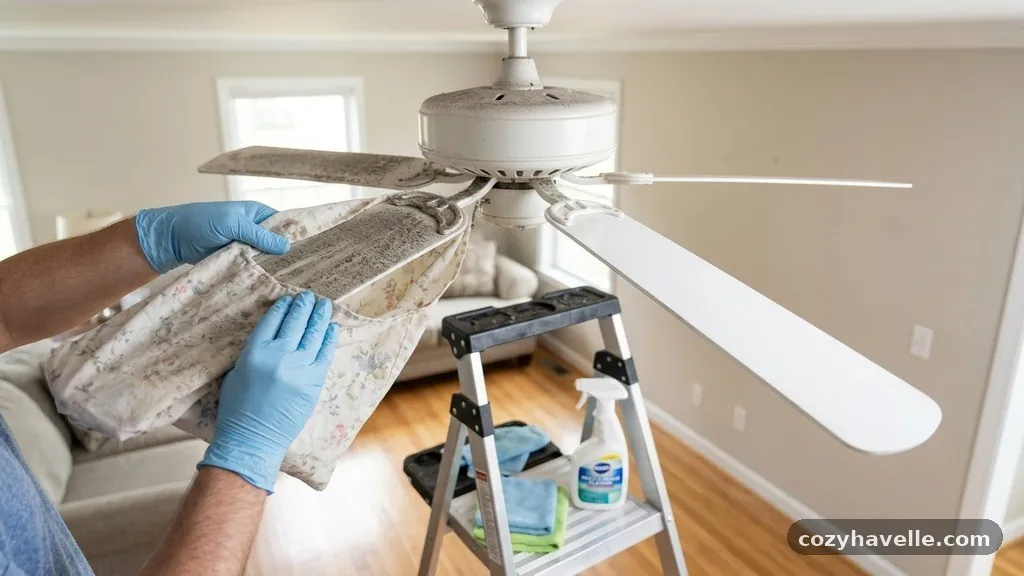
The most reliable way to avoid a mess is by using a large microfiber pillowcase to trap debris. This technique is superior to dusting with a cloth because it physically encloses the blade, forcing the dust and grease to stay inside the fabric rather than drifting downward.
Simply slide the pillowcase over the blade until it reaches the motor housing. Press your hands against the top and bottom of the blade through the fabric, then pull the pillowcase back toward you in one smooth motion.
This method works because the friction of the microfiber lifts the heavy, sticky dust buildup while the pocket of the pillowcase acts as a containment vessel. Because you are pulling the debris toward yourself, gravity is no longer working against you.
If you have particularly stubborn grease, you can lightly dampen the inside of the pillowcase with a mild cleaning solution before starting. This ensures that even the most stubborn residue is captured within the fabric rather than being flicked onto your floor.
Managing Airborne Grease Particles
Ceiling fan blades in or near kitchens often accumulate a thick, tacky layer of grime due to airborne grease particles. This type of residue acts like a magnet for household dust, creating a dark, fuzzy coating that is difficult to wipe away with dry tools.
If you try to brush this off, the debris will simply break apart and shower your room. Instead, you must focus on breaking the bond between the grease and the blade surface.
Using a degreaser or a mixture of warm water and dish soap is essential for these stubborn areas. Apply the solution to a lint-free cloth rather than spraying the blades directly, as excess liquid can seep into the ceiling fan motor and cause damage.
By dampening your cleaning tool, you ensure that the grease is dissolved and lifted onto the cloth immediately. This prevents the particles from becoming airborne or falling as loose debris, which is the primary cause of mess during cleaning.
Choosing the Right Cleaning Solution

Not all grime is created equal, and the cleaning solution you choose can make or break your results. For dry, light dust, a simple dry microfiber duster is often enough to maintain your blades.
However, when you are dealing with a mixture of dust and kitchen oils, you need something that cuts through the film. A diluted vinegar solution is a popular, natural choice that works well for most finishes without leaving a streaky residue.
For heavier buildup, a few drops of dish soap in warm water provide the necessary surfactants to lift oil-based dirt. Always test your solution on a small, inconspicuous area of the blade to ensure it does not damage the finish or the paint.
If your fan blades are wooden, avoid soaking them entirely, as moisture can cause warping or swelling over time. Keeping the cloth just barely damp is the secret to cleaning greasy dust off ceiling fan blades without making a floor mess.
Safety and Access Considerations
Before you begin, you must establish a safe way to reach your fan. A sturdy step stool is generally safer and easier to maneuver than a full-sized ladder, provided your ceiling height allows for it.
Never attempt to stand on furniture, as chairs and tables are not designed to support your weight while you are reaching upward and applying lateral pressure. If you must use a ladder, ensure it is placed on a level surface and that you have a clear path below.
If you are concerned about debris, place a drop cloth directly beneath the fan before you climb up. Even when using the best containment methods, a few stray dust bunnies might escape.
Having a barrier on your carpet or hardwood floor provides a final line of defense and makes post-cleaning cleanup instantaneous. You can learn more about safe home maintenance practices through resources like the Consumer Product Safety Commission, which offers guidelines on preventing household accidents.
Equipment Comparison for Efficiency

The tools you choose determine how much time you spend on the ladder and how effectively you capture the dust. Some methods are better suited for light maintenance, while others are designed for deep cleaning. Use this table to decide which approach fits your specific needs for your next cleaning session.
| Tool | Best For | Mess Potential |
|---|---|---|
| Microfiber Pillowcase | Heavy, caked-on dust | Extremely Low |
| Vacuum Attachment | Loose, dry dust | Very Low |
| Dryer Sheet | Light dusting / Static reduction | Low |
| Damp Microfiber Cloth | Greasy, sticky residue | Medium (if over-wetted) |
Preventing Future Dust Accumulation
After you have successfully cleaned your fans, you can take steps to slow down the rate of future buildup. One effective trick is to lightly coat your clean blades with a thin layer of specialized furniture polish or a static-repellent spray.
This creates a slick surface that makes it harder for dust to cling to the blades. If you use a dryer sheet to wipe the blades after cleaning, the residual anti-static properties will also help repel airborne particles for a few weeks.
Proper kitchen ventilation is another critical factor in preventing greasy film. Ensure your range hood is functioning correctly and that you run it every time you cook, especially when frying or sautéing.
By capturing grease at the source, you prevent it from migrating to your ceiling fans and other high surfaces. Consistent, small-scale cleaning—such as a quick wipe-down once a month—prevents the thick, oily layers from forming in the first place.
The Role of the Ceiling Fan Motor
It is easy to focus entirely on the blades, but you should also inspect the motor housing during your maintenance routine. Dust accumulation inside the motor vents can cause the device to overheat or run less efficiently over time.
Use a soft-bristled brush or a vacuum attachment with a brush head to gently clear these vents. Never use compressed air, as this will force dust deeper into the internal components rather than removing it.
Check the blade brackets for stability while you are working. Loose screws are a common issue that causes fans to wobble, which can lead to increased noise and uneven wear.
If the fan is shaking, tighten the connection points between the blades and the motor housing. A well-maintained fan not only looks better but also performs significantly better, moving air more effectively and consuming less energy.
Using Vacuum Attachments Effectively
If you prefer using a vacuum, look for a soft-bristle upholstery attachment that won’t scratch the finish of your blades. This is an excellent way to remove loose dust before you move on to a damp cleaning cloth for the greasy parts.
By vacuuming first, you remove the bulk of the debris, which makes the wet-cleaning phase much faster and less prone to dripping. It is a dual-stage process that guarantees a higher level of cleanliness.
Be careful not to press too hard against the blades with the vacuum nozzle. Many ceiling fan blades are made of lightweight materials that can bend or crack under pressure.
Hold the vacuum nozzle just slightly off the surface to allow the suction to pull the dust away. This is particularly effective for the tops of the blades, which are often the most neglected areas in a home.
Addressing Stubborn Sticky Residue
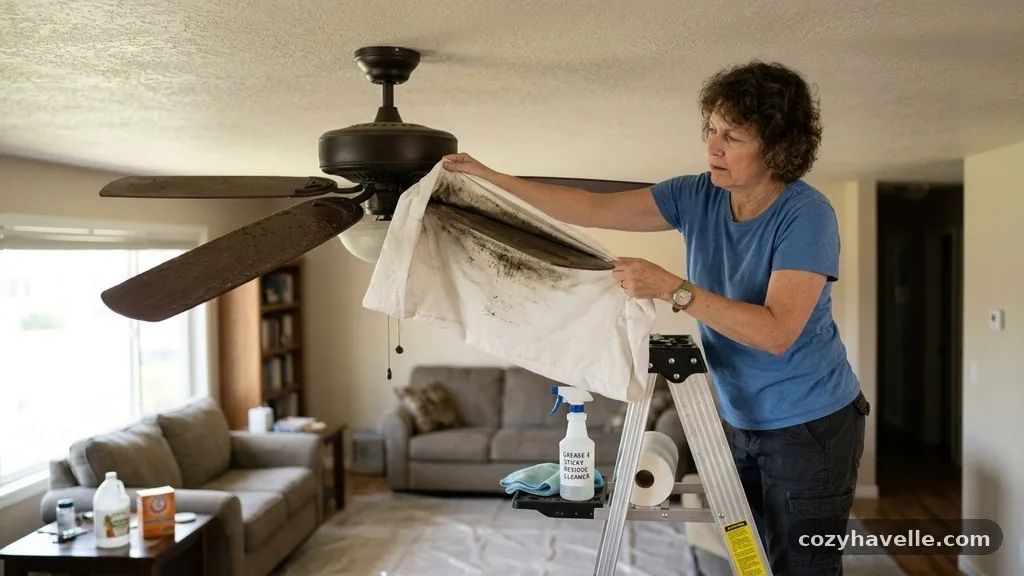
Sometimes, you will encounter a layer of grime that refuses to budge with simple soap and water. This usually happens in homes where cooking grease has been allowed to bake onto the blades for months or years.
For these instances, a specialized degreasing agent designed for kitchen surfaces can be a lifesaver. Ensure the product is safe for the material of your fan blades, whether they are wood, metal, or plastic.
Apply the degreaser to a microfiber glove and wipe each blade individually. The glove allows you to wrap your fingers around the curved edges of the blade, ensuring you reach the front and back in one pass.
This tactile approach gives you more control than a cloth, allowing you to focus pressure on the most stubborn spots. Once the grease is lifted, follow up with a clean, damp cloth to remove any chemical residue.
Common Mistakes to Avoid
Many people make the mistake of using a feather duster, which is essentially useless for greasy buildup. Feather dusters are designed to move light, dry dust from one place to another, but they will simply smear grease and fail to capture the heavy particles.
Avoid this tool at all costs if you want to keep your floor clean. Another common error is failing to turn off the power to the fan.
Always ensure the fan is switched off and, if possible, the wall switch is locked or taped to prevent accidental activation. If you have a remote-controlled fan, keep the remote in a different room while you work to avoid any surprises. Finally, do not rush the process.
Taking the time to properly enclose the blade or vacuum the debris is what prevents the mess. Patience is the most important tool in your kit.
Frequently Asked Questions
Why do my ceiling fan blades get so greasy?
Ceiling fans pull air from the room and circulate it over the blades. If you cook frequently, the air contains microscopic grease particles that land on the blades. Once the grease is there, it acts as an adhesive, trapping household dust and creating a thick, dark film that is difficult to remove with dry dusting alone.
Does cleaning dust off a ceiling fan make it work better?
Yes, removing heavy dust buildup improves the aerodynamic efficiency of the blades. A clean blade cuts through the air more cleanly, which allows the fan to move more air with less effort from the motor. This can lead to quieter operation and potentially lower energy usage over time.
Can I use a dryer sheet to clean the blades?
Dryer sheets are excellent for light, dry dust and can help reduce static charge. However, they are not effective against heavy, greasy kitchen grime. Use a dryer sheet for quick maintenance sessions, but rely on a damp cloth with mild detergent for deep cleaning.
How often should I clean my ceiling fan blades?
For most homes, a thorough cleaning every three to four months is sufficient. If your fan is located in a kitchen or a high-traffic area, you may want to perform a quick wipe-down every month to prevent the buildup of oily residue. Regular maintenance makes the deep-cleaning process much faster.
What if the dust is too high to reach safely?
If you cannot reach your fan safely with a step stool, do not attempt to clean it. You can purchase extendable duster poles with specialized covers designed to grip the blades from the ground. While this is less effective for deep cleaning, it is a safe way to manage dust without needing a ladder.
Final Thoughts on Fan Maintenance
Maintaining your ceiling fan is a simple task that significantly improves your home’s air quality and aesthetic appeal. By choosing the right tools, such as a microfiber pillowcase or a vacuum with a soft brush, you ensure that the process of cleaning greasy dust off ceiling fan blades without making a floor mess remains straightforward. Consistency is the key to success; by addressing small amounts of dust regularly, you avoid the need for intensive, time-consuming deep cleans later on.
Remember to prioritize your safety by using stable equipment and turning off the power before you begin. With these strategies, you can keep your home feeling fresh and your fans spinning smoothly throughout the seasons. If you have any specific tips or tricks that have worked for your own home, feel free to share them with others to help make this common household chore easier for everyone involved.